


OPENED ON THIS DAY IN 1968, AT 34TH STREET EAST THEATER IN NEW YORK
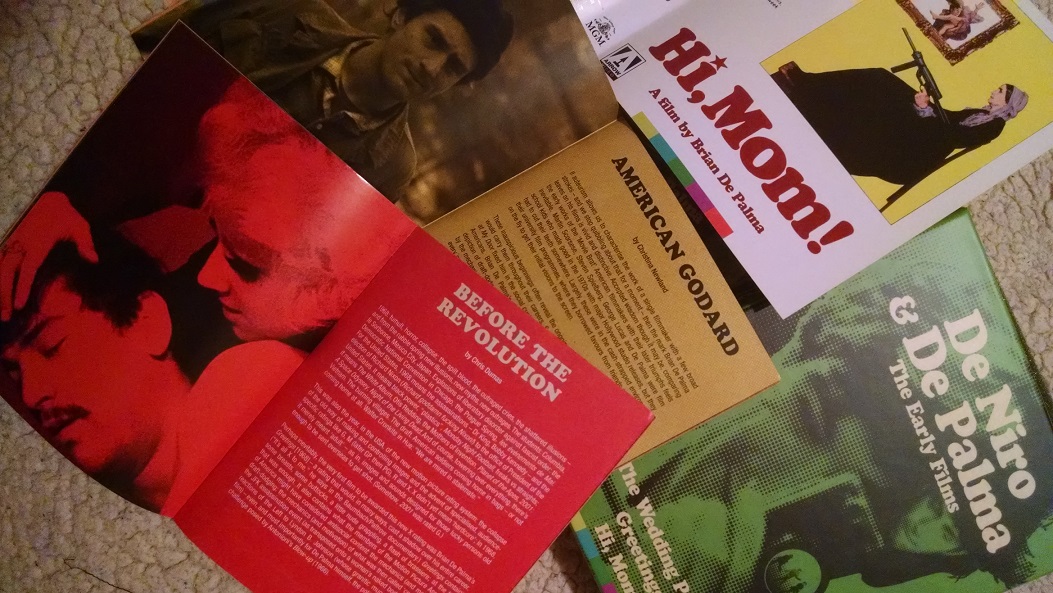
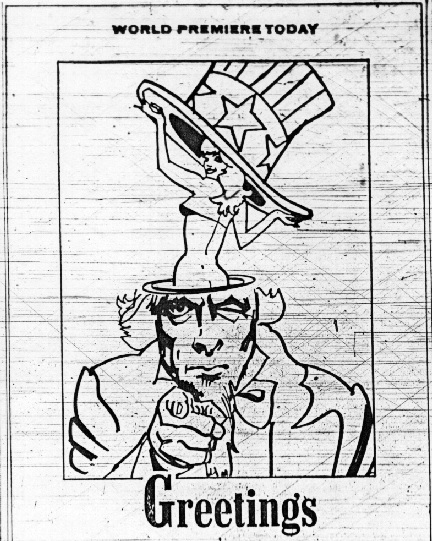 Brian De Palma and Charles Hirsch's Greetings opened at New York's 34th Street East Theater on December 15, 1968. It was the first movie to be rated X by the MPAA. As Glenn Kenny discusses during an audio commentary track included on Arrow Video's new Blu-ray of Greetings, Hirsch pitched the idea for the movie to De Palma as an American version of Jean-Luc Godard's Masculin Féminin. They began shooting on 16mm film, but quickly realized that the format would limit the potential release to very few art houses, according to Laurent Bouzereau, in his book The De Palma Cut. Bouzereau adds that the film initially made three times what it cost (the cost was about $43,100). The film was panned in the New York Times by Howard Thompson, who stated that while De Palma and Hirsch "are determined and camera-minded," they should try next time "for something that matters instead of the tired, tawdry and tattered." A few weeks later, the paper ran three letters from readers in defense of the film, under the headline, "Was That Any Way To Greet 'Greetings'?" William Bayer's letter began, "When a good film is misunderstood and then characterized by Howard Thompson of The New York Times as 'tired, tawdry, and tattered,' it is time to come to the rescue." Kenny quotes more from these letters in his audio commentary.
Greetings follows three young men as they attempt to dodge the Vietnam draft (the film's title directly refers to the first word seen on the page when someone would open up a letter from the U.S. government telling them they've been drafted). Along the way, each of the men, played by Robert De Niro, Gerrit Graham, and Jonathan Warden, grapples with his own personal obsessions (respectively, voyeurism, the JFK assassination, and computer dating). In his commentary, Kenny links the buddies-hanging-out aspect of Greetings to Federico Fellini's I Vitelloni. Aside from a general Godardian influence throughout, there is also direct reference to another Godard film, Vivre sa vie, and, of course, overt references to Michelangelo Antonioni's Blow-Up, the latter of which Chris Dumas has explained (in his book, Un-American Psycho) "was recently in theaters when Greetings was in production; its specific presence here - like Une Femme Est Une Femme in Bertolucci's Before The Revolution* - signifies that the film's logic was, as they say, a topic of conversation."
At one point in the film, Lloyd (played by Graham) asks pop artist Richard Hamilton (playing himself) if he's seen Blow-Up. Shortly after that, Lloyd brings a photo of Dealey Plaza to Tina, a photo assistant played by Tina Hirsch (at the time of filming, her name was Bettina Kugel-- by the time Greetings was released later in the year, she had married Charles Hirsch and changed her name). While this scene makes overt visual reference to Blow-Up, it was Tina Hirsch who insisted on adding a verbal reference in this scene. As she told William Chamberlain a few years back, "Brian and Chuck [Charles Hirsch], the producer and co-writer, wrote the scene. As originally written, Gerrit Graham was, you know, he played a Kennedy assassination buff, and he wants me to blow up a picture taken on the grassy knoll to prove that officer Tippet is Oswald’s accomplice. And that he’s hiding behind a tree. I was supposed to answer that if he blew it up, all you’d see is the grain. I mean a funny side story is that that literally was a studio in which I was working as a photographer’s assistant, and I actually blew up those shots that are shown at the end. I told Brian that I couldn’t say that line, that the movie Blow-Up was all about that. I didn’t feel comfortable saying it without crediting the other movie. So my answer became something like, 'You’re not going to be able to see anything. I’ve seen Blow-Up, I know how this turns out. You’re not going to see anything but grain the size of golf balls.' Years later, Pauline Kael, the movie critic for the New Yorker, quoted the line as one of Brian’s great citations. [Laughing] But, in fact, I was the one who cited Blow-Up. That’s the way it goes."
*Incidentally, Dumas' essay about Greetings in the booklet of Arrow's new disc set is titled, "Before The Revolution."
Posted by Geoff
at 12:01 AM CST
Updated: Sunday, December 16, 2018 3:29 PM CST
Post Comment | View Comments (4) | Permalink | Share This Post
Updated: Sunday, December 16, 2018 3:29 PM CST
Post Comment | View Comments (4) | Permalink | Share This Post
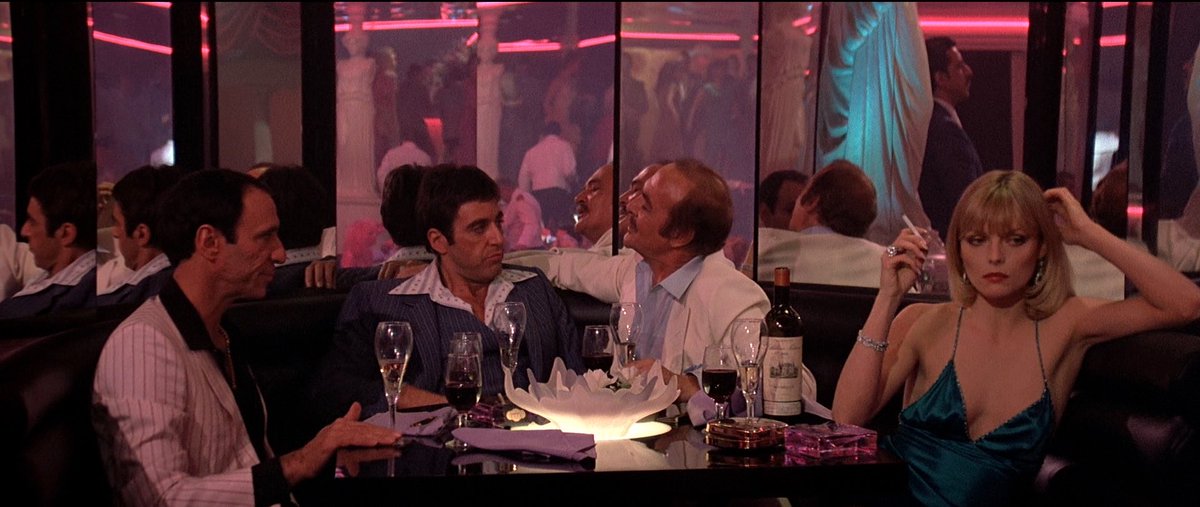
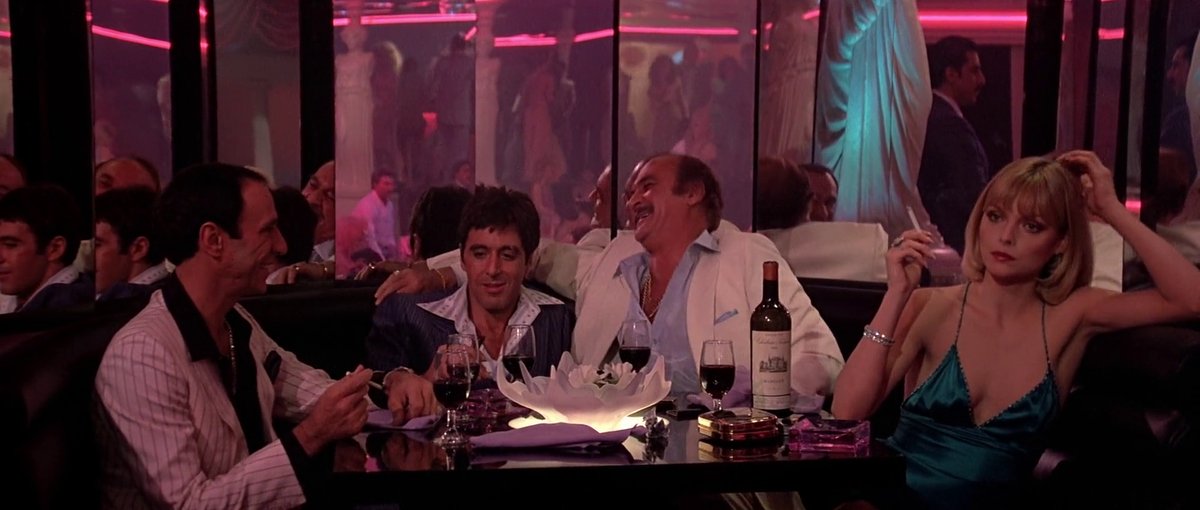
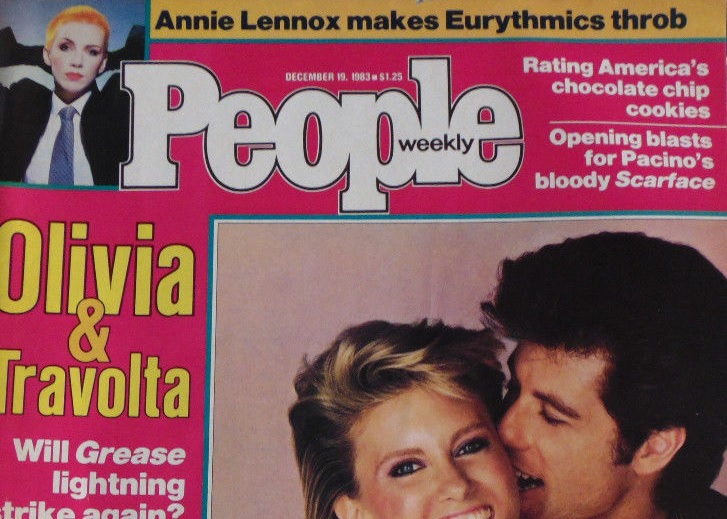
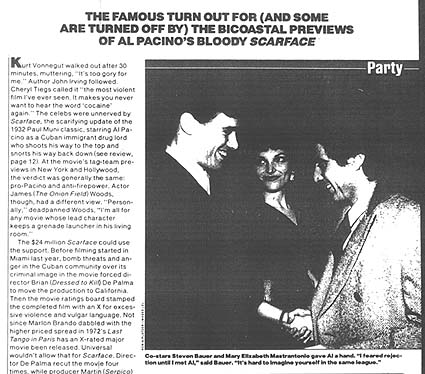
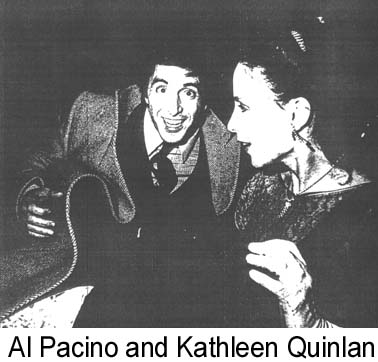 Pacino himself missed the New York preview because he was performing in a Broadway revival of David Mamet's American Buffalo, although he appears to have made it to the afterparty. In the photo to the left, Pacino is leaving the New York party by limo with his then-current girlfriend Kathleen Quinlan. In the photo at the top of this page, he is shaking hands with co-stars Mary Elizabeth Mastrantonio and Steven Bauer. The caption underneath the photo quotes Bauer: "I feared rejection until I met Al. It's hard to imagine yourself in the same league."
 The article says that Lucille Ball was the favorite of fans watching from the sidewalk, until Eddie Murphy arrived to upstage her. Murphy is pictured at left with Diane Lane, who arrived late herself. Murphy said, "Al Pacino is my favorite actor. I know the dialogue to all his movies. When I met him, I groveled." The article says that the preview audience was more subdued after the screening, quoting Lucille Ball (whom the article consistently refers to as simply "Lucy") as saying, "We thought the performances were excellent, but we got awful sick of that word."
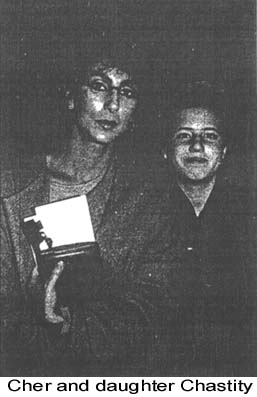 Martin Bregman hosted an after-preview party for 130 guests at Sardi's in New York, where Cher, who brought her 14-year-old daughter Chastity along, told People, "I really liked it. It was a great example of how the American dream can go to shit." Raquel Welch, who also brought along her daughter Tahnee, said, "A lot of people will enjoy the comic-strip violence that goes on ad nauseam." Welch is also quoted in a photo caption as saying that "the violence is just for effect."
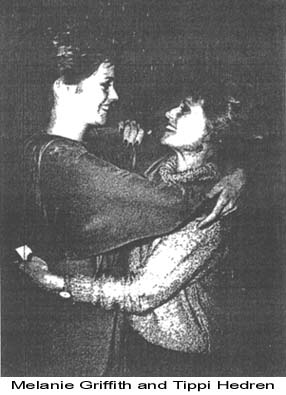 Another mother-daughter pair of interest showed up at the Los Angeles premiere: Tippi Hedren and daughter Melanie Griffith. Griffith at the time was married to Steven Bauer, and would go on to star in Brian De Palma's very next film in 1984, Body Double. According to the September 16 2003

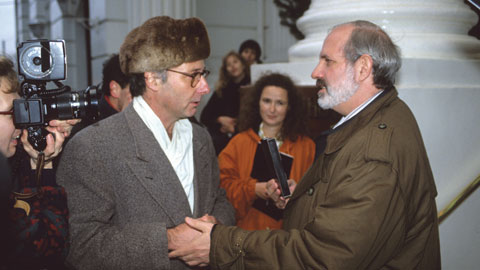 Something about Hans-Christoph Blumenberg's Rotwang muß weg! (1994) must have impressed Brian De Palma, because he agreed to appear in the German satire, billed in the credits as the "famous American movie director." The film itself has always been hard-to-find, but I located the images included in this post at