

'SHOCK VALUE' AUTHOR MAKES CASE THAT DE PALMA'S FILMS ARE HIGHLY PERSONAL
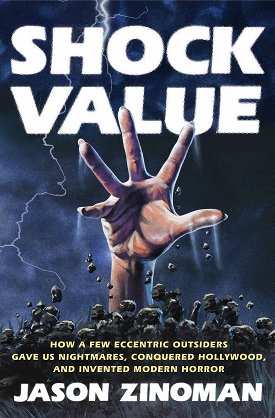 A new book on modern horror films that officially comes out tomorrow (Thursday, July 7th) has been getting quite a bit of pre-release web publicity this week. In the book, Shock Value, New York Times writer Jason Zinoman looks at the way horror movies changed in the 1960s, moving through the early 1980s, and, according to reviews, blasts several myths about these films and their makers along the way (notably citing "the problem with Psycho," and how these filmmakers responded to that "problem"). See reviews from Drew Taylor at the Playlist, Joe Meyer, Bookgasm's Rod Lott, and Johnny at Freddy In Space, who says he'll never look at a De Palma film the same way again. That's apparently because Zinoman begins his discussion on De Palma by relating the story about how as a teenager who wanted to impress and help out his mother, De Palma spied on his father (a doctor), and caught him cheating with his father's nurse. Zinoman, it is said, links this story to De Palma's films in a way that he argues makes them highly personal, and not the cold exercises in pure style they are often mistaken for. NPR's Fresh Air posted an audio interview, as well as an excerpt from the book.
Posted by Geoff
at 11:55 PM CDT
Updated: Friday, July 8, 2011 6:50 AM CDT
Post Comment | View Comments (3) | Permalink | Share This Post
Updated: Friday, July 8, 2011 6:50 AM CDT
Post Comment | View Comments (3) | Permalink | Share This Post
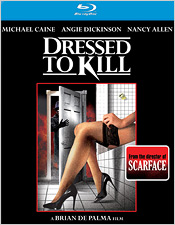 September 6 will be a big day for De Palma fans who have a Blu-Ray player, as two early De Palma classics are released that day. FOX and MGM announced this past week that they will release Brian De Palma's Dressed To Kill on Blu-Ray September 6th, with all the same extras as the regular DVD a few years ago. Earlier this year, Universal announced its Scarface Blu-Ray, also for September 6th. Judging by the cover of Dressed To Kill, shown here, the Scarface date may have had a lot to do with FOX's strategy to release Dressed To Kill on the same date (re: "From the director of Scarface).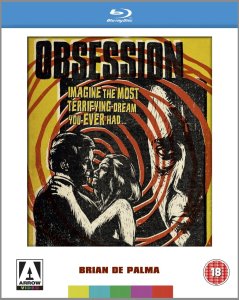

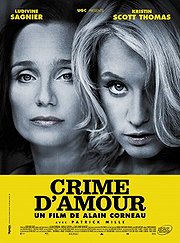 Alain Corneau's Love Crime is teasingly taut and seductively compelling in all the right places. The main tease comes in the form of a mystery wherein the viewer knows that the protagonist is up to something, and the film challenges us, dares us, to try to figure out what the details might be prior to the climactic comeuppance. While watching this film study of "the perfect crime," I wasn't reminded so much of Hitchcock's Dial M For Murder as I was of Kieślowski's Three Colors: White. In both films, the main character begins doing things that at first don't seem like much more than personal ways of coping with recent humiliation and lost love. Only as they keep going on does the viewer begin to realize that every detail of their behavior has been carefully, almost silently planned. This is perhaps a bit less so in Corneau's film, which, as I suggested above, delights in teasing the audience.
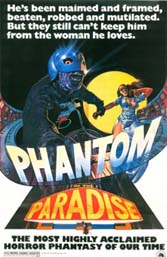 Brian De Palma's Phantom Of The Paradise will screen at 9:30 tonight as part of
  Somehow I missed this, but a couple of months ago,