
Hello and welcome to the unofficial Brian De Palma website.
Here is the latest news:

De Palma a la Mod

E-mail
Geoffsongs@aol.com

De Palma Discussion
Forum

-------------

Recent Headlines
a la Mod:

Domino is
a "disarmingly
straight-forward"
work that "pushes
us to reexamine our
relationship to images
and their consumption,
not only ethically
but metaphysically"
-Collin Brinkman

De Palma on Domino
"It was not recut.
I was not involved
in the ADR, the
musical recording
sessions, the final
mix or the color
timing of the
final print."

Listen to
Donaggio's full score
for Domino online

De Palma/Lehman
rapport at work
in Snakes

De Palma/Lehman
next novel is Terry

De Palma developing
Catch And Kill,
"a horror movie
based on real things
that have happened
in the news"

Supercut video
of De Palma's films
edited by Carl Rodrigue

Washington Post
review of Keesey book

-------------

Exclusive Passion
Interviews:

Brian De Palma
Karoline Herfurth
Leila Rozario

------------

AV Club Review
of Dumas book

------------

« August 2025 »
S M T W T F S
1 2
3 4 5 6 7 8 9
10 11 12 13 14 15 16
17 18 19 20 21 22 23
24 25 26 27 28 29 30
31

Interviews...

De Palma interviewed
in Paris 2002

De Palma discusses
The Black Dahlia 2006


Enthusiasms...

De Palma Community

The Virtuoso
of the 7th Art

The De Palma Touch

The Swan Archives

Carrie...A Fan's Site

Phantompalooza

No Harm In Charm

Paul Schrader

Alfred Hitchcock
The Master Of Suspense

Alfred Hitchcock Films

Snake Eyes
a la Mod

Mission To Mars
a la Mod

Sergio Leone
and the Infield
Fly Rule

Movie Mags

Directorama

The Filmmaker Who
Came In From The Cold

Jim Emerson on
Greetings & Hi, Mom!

Scarface: Make Way
For The Bad Guy

The Big Dive
(Blow Out)

Carrie: The Movie

Deborah Shelton
Official Web Site

The Phantom Project

Welcome to the
Offices of Death Records

The Carlito's Way
Fan Page

The House Next Door

Kubrick on the
Guillotine

FilmLand Empire

Astigmia Cinema

LOLA

Cultural Weekly

A Lonely Place

The Film Doctor

italkyoubored

Icebox Movies

Medfly Quarantine

Not Just Movies

Hope Lies at
24 Frames Per Second

Motion Pictures Comics

Diary of a
Country Cinephile

So Why This Movie?

Obsessive Movie Nerd

Nothing Is Written

Ferdy on Films

Cashiers De Cinema

This Recording

Mike's Movie Guide

Every '70s Movie

Dangerous Minds

EatSleepLiveFilm

No Time For
Love, Dr. Jones!

The former
De Palma a la Mod
site

Entries by Topic
A note about topics: Some blog posts have more than one topic, in which case only one main topic can be chosen to represent that post. This means that some topics may have been discussed in posts labeled otherwise. For instance, a post that discusses both The Boston Stranglers and The Demolished Man may only be labeled one or the other. Please keep this in mind as you navigate this list.
All topics  «
Ambrose Chapel
Are Snakes Necessary?
BAMcinématek
Bart De Palma
Beaune Thriller Fest
Becoming Visionary
Betty Buckley
Bill Pankow
Black Dahlia
Blow Out
Blue Afternoon
Body Double
Bonfire Of The Vanities
Books
Boston Stranglers
Bruce Springsteen
Cannes
Capone Rising
Carlito's Way
Carrie
Casualties Of War
Catch And Kill
Cinema Studies
Clarksville 1861
Columbia University
Columbo - Shooting Script
Congo
Conversation, The
Cop-Out
Cruising
Daft Punk
Dancing In The Dark
David Koepp
De Niro
De Palma & Donaggio
De Palma (doc)
De Palma Blog-A-Thon
De Palma Discussion
Demolished Man
Dick Vorisek
Dionysus In '69
Domino
Dressed To Kill
Edward R. Pressman
Eric Schwab
Fatal Attraction
Femme Fatale
Film Series
Fire
Frankie Goes To Hollywood
Fury, The
Genius of Love
George Litto
Get To Know Your Rabbit
Ghost & The Darkness
Greetings
Happy Valley
Havana Film Fest
Heat
Hi, Mom!
Hitchcock
Home Movies
Icarus
Inspired by De Palma
Iraq, etc.
Jack Fisk
Jared Martin
Jerry Greenberg
Keith Gordon
Key Man, The
Laurent Bouzereau
Lights Out
Lithgow
Magic Hour
Magnificent Seven
Mission To Mars
Mission: Impossible
Mod
Montreal World Film Fest
Morricone
Mr. Hughes
Murder a la Mod
Nancy Allen
Nazi Gold
Newton 1861
Noah Baumbach
NYFF
Obsession
Oliver Stone
Palmetto
Paranormal Activity 2
Parker
Parties & Premieres
Passion
Paul Hirsch
Paul Schrader
Pauline Kael
Peet Gelderblom
Phantom Of The Paradise
Pimento
Pino Donaggio
Predator
Prince Of The City
Print The Legend
Raggedy Ann
Raising Cain
Red Shoes, The
Redacted
Responsive Eye
Retribution
Rie Rasmussen
Robert De Niro
Rotwang muß weg!
Sakamoto
Scarface
Scorsese
Sean Penn
Sensuous Woman, The
Sisters
Snake Eyes
Sound Mixer
Spielberg
Star Wars
Stepford Wives
Stephen H Burum
Sweet Vengeance
Tabloid
Tarantino
Taxi Driver
Terry
The Tale
To Bridge This Gap
Toronto Film Fest
Toyer
Travolta
Treasure Sierra Madre
Tru Blu
Truth And Other Lies
TV Appearances
Untitled Ashton Kutcher
Untitled Hollywood Horror
Untitled Industry-Abuse M
Untouchables
Venice Beach
Vilmos Zsigmond
Wedding Party
William Finley
Wise Guys
Woton's Wake
Blog Tools
Edit your Blog
Build a Blog
RSS Feed
View Profile
You are not logged in. Log in
Saturday, August 9, 2025
HOWARD S. BERGER DISCUSSES DE PALMA AT THE HORROR XPRESS
INTERVIEWED BY KURT SAYENGA
https://www.angelfire.com/de/palma/dressedtokillend39.jpg

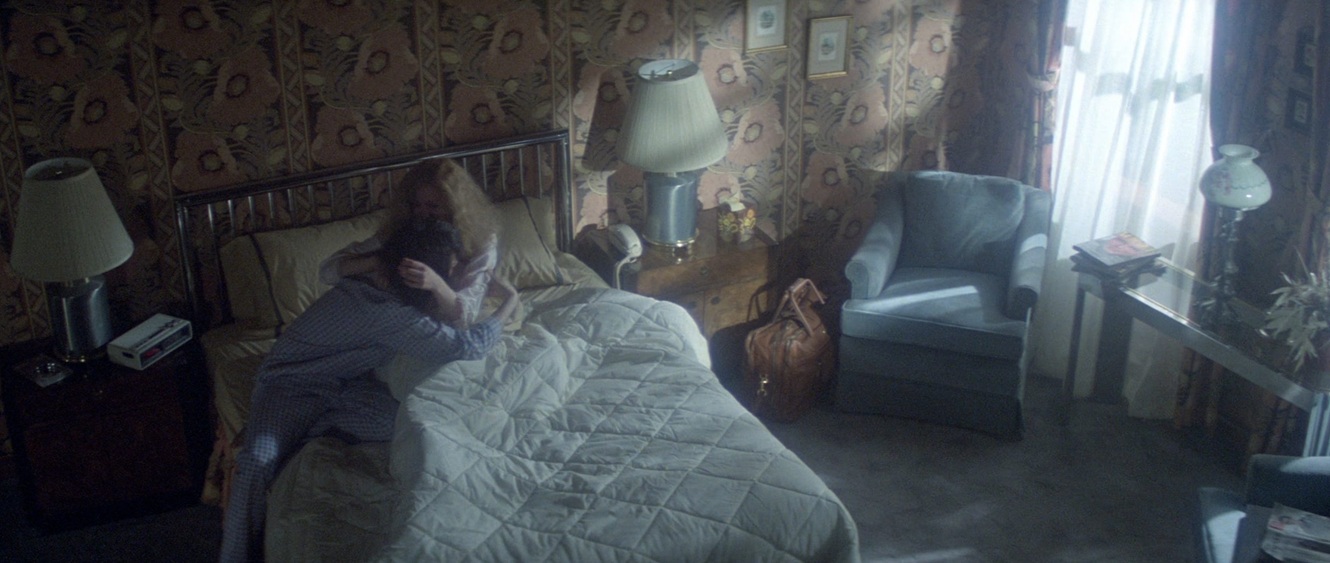
Under the headline, "Brian De Palma vs. The Audience," The Horror Xpress' Kurt Sayenga interviews Howard S. Berger about Brian De Palma. Here's an excerpt from the discussion:
KURT: After The Fury comes the ultimate De Palma film: Dressed to Kill.

HOWARD: Dressed to Kill is important because thematically De Palma is at the height of his focus with ideas of femininity, masculinity, religion – in other words, things that in modern society have been made to cripple individuality and dwarf identity and sometimes remove identity, things that just shouldn’t belong in society for a successful society or for successful mental and physical health. And Dressed to Kill in 1980, we’re going out of the ‘70s now into a new era. And he just takes all this along with a slightly more self conscious wink to his own work. So in Dressed to Kill, sure, he’s making some very sophisticated jokes about psychology – obviously jokes, again, but look where he came from. He’s a satirist. He’s not going to let you forget this. So even though there’s this wonderful tricky story about who performed this horrible vivisection with a razor blade in an elevator, he starts to stack up the thought process of the mainstream commercial critics and the audience at the time. The whole point of Carrie was to provoke, provoke, provoke, then explode when your audience and your studio is just not getting it. This is going a little bit farther now. There are scenes in Dressed to Kill where he shows that. You could call it a wink or a spoof – I hate using that word, but it’s just to make you laugh: the very last scene is this dream that Michael Caine is coming for revenge on the woman who put him away, the prostitute played by Nancy Allen. It looks like Halloween! – this subjective camera moving outside the house. In the very next film that he made, Blow Out, he spoofs the spoof. He’s taking that and he’s making it obvious: “This is how you make that scene.” And he replicates the scene that he staged and shot as the dream in the climax of Dressed to Kill, and now he’s using that as an example of how a low-budget director makes a film. So the success of Dressed to Kill as a thriller, because it was shot so elegantly and poetically by Ralf Bode, when he moves on to Blow Out just a year later, it’s all self examination, self reflection, and everything is out in the open. “This is what I have to think about when I make something like this. I need a good scream. I need a good scream. How do I get that scream?” Of course that’s a play on Vertigo with Jimmy Stewart trying to figure out he’s going to get rid of his vertigo, and he has this whole contrived psychological horror thriller he has to put himself through just for the punch line – “Okay, I don’t have vertigo anymore.” And the end of Blow Out, it’s, “Okay, I got my scream.”

It's all connected. The language is all connected. I hate to say they’re jokes, but they are. They’re amusements to him, because this is why you do it. Dressed to Kill is important because once again, like Carrie, his ability to hone emotional capital from these characters was profound for that time. Movies that made you care about horror movies, that made you care about women – not putting them in distress porn horror, that’s not what he’s doing. He’s creating characters that you, the audience, are to identify with. Are you identifying with aspects of someone with transgender passion and an inability to break through that? Michael Caine’s character ultimately is quite a poignant character, especially the use of mirrors in that movie. Mirrors from the very opening scene are very important. What’s obscured? What’s hazed over by condensation? What’s visible? Michael Caine looking at himself in a mirror is so much more indicative of a pain that his character is dealing with which causes a schizophrenia, a violent combination of parts of your mind working against each other, ultimately trying to reconcile. But like Carrie’s mother did to Carrie, your upbringing is dwarfing your ability to process life naturally.

The end of that movie once again reiterates that the nightmare will stay with you if you’re someone who has compassion and who understands why you’re a human being, how you interrelate with other people, how you look at yourself and how you can be healthy or how you can be aberrant. This is not just a moral director but a voice of honest humanitarian concern. People overlook that completely. And Dressed to Kill is a phenomenally emotional film if you look at it even on the superficial level and you don’t look at the Hitchcock winks and jokes and nods.


Read the full discussion at The Horror Xpress.

Posted by Geoff at 9:59 PM CDT
Post Comment | Permalink | Share This Post
Tuesday, August 5, 2025
ALEX ROSS PERRY INTERVIEW DISCUSSES 'VIDEOHEAVEN'
AND THE CHANGES IN DEPICTIONS OF VIDEO STORES IN MOVIES & TELEVISION OVER THE YEARS
https://www.angelfire.com/de/palma/videoheaveninsta.jpg

At The Brooklyn Rail, Jim McDermott interviews Alex Ross Perry about his new movie, Videoheaven:
For filmmaker Alex Ross Perry, whose new documentary Videoheaven (2025) considers the lifespan of video stores through their depiction in films and TV shows, trying to understand what happened to the video store was not simply an academic concern. Born in 1984, just a few months before Brian de Palma’s Body Double depicted a video store in a film for the first time, Perry spent his whole early adult life working in video stores. “My first job was at Suncoast video,” he told me in an interview on Zoom. “The whole time I was in college at NYU and then for a year and a half after, I worked at Kim’s Video on St. Mark’s between 2nd and 3rd Avenue.”

Kim’s, which opened in 1987 and stayed open until 2008, was an extraordinary place, known for the size of its collection and the knowledge of its staff (a number of whom, like Perry, went on to become filmmakers). “Go to any film school, and you can draw a line around the thousand most canonical films,” Perry explains. “That’s what you’re getting. And that’s a lot. Kim’s had fifty thousand movies. And the idea that you came to one physical room to access these things was very special. It’s how I grew up.”

Over the years Perry, who has written and/or directed more than a dozen films, has pitched any number of stories involving video stores without success. Then he read Daniel Herbert’s 2014 book Videoland: Movie Culture at the American Video Store. In subsequent conversation with Herbert, he came up with the idea to document the depiction of video stores in film and TV shows, from their earliest portrayal in the eighties through to their collapse in the 2000s.

The more Perry dug into the project, the more he discovered a possible solution to this mystery he had been struggling with for so long. He acknowledges most believed there was no real mystery to solve: just as streaming is now cannibalizing cinema, it previously devoured the video rental business. But he was not fully convinced. “Yes, streaming started roughly the time stores went away, but so does music streaming—even earlier actually, and you can’t go to a small-town Main Street and not still find a credible music store.”

“Streaming didn’t end music sales—though it brought it very low. E-books didn’t end book stores.” So again, why was it different for video?

What he discovered in his research is that as the years went on, films and TV shows took a more and more hostile view of video stores. After initially portraying them as places where people are exposed to danger—David Cronenberg’s 1983 film Videodrome, though it doesn’t show a store, treats the video tape itself as a sort of monster we let into our houses—for a time video stores were imagined as spaces of discovery, even adventure. These were places where visitors had the chance to have richly curated cultural experiences, and also perhaps to experience for themselves the kinds of stories they watched. Clerks found themselves thrown into action movies. Customers looking for a romcom had their own meet-cutes. “This video space was advertised as a portal to a world of experience that was transportive,” Perry explains. “At Kim’s, you had fifty thousand futures waiting for you.”

But then other, darker ideas started to creep in. Video stores started to be presented as places where your own private desires were on public display, and as such, sites of potentially uncomfortable revelation. How many times have we watched scenes where someone hides the movie they want to rent because they’ve run into a friend or family member? Suddenly visiting a video store was like buying condoms or a pregnancy test at the pharmacy. “Being in public at the video store,” the film explains, “was a cause for concern.”

Likewise the knowledge and good taste that had been ascribed to clerks early on started to metastasize in movies and TV shows into characters who were condescending, belligerent, and at the same time, pathetic. They were, Perry writes in the film, “the modern equivalent of the eternally shushing fuddy duddy librarian,” but for some reason movies and TV shows made them a thousand times more intrusive and demeaning. Who would want to deal with people or places like that?

As video stores became a staple of modern life, Perry notes how movies and TV shows went one step even further, treating them as banal, brightly-lit, cookie-cutter purgatories, each with the same basic set of movies. Perry opens the film with a clip of Ethan Hawke in Hamlet wandering the aisles of a video store. Could there be any more fitting place to ask, “To be, or not to be?”


Read more at The Brooklyn Rail

Posted by Geoff at 10:45 PM CDT
Post Comment | Permalink | Share This Post
Monday, August 4, 2025
THE FILM STAGE - NEW FILM BOOK RECOMMENDATIONS
INCLUDING RECENT BOOKS BY DE PALMA & WALTER MURCH
https://www.angelfire.com/de/palma/ambrosechapelbook785.jpg

Posted earlier today, The Film Stage's Christopher Schobert recommends new film-related books, including Ambrose Chapel: A Screenplay by Brian De Palma and Russian Poland by David Mamet (Sticking Place Books) -
Let us give thanks for the good people at Sticking Place Books, a publishing company that has released everything from studies of Casualties of War to the poems of Abbas Kiarostami. Two of the latest releases are unreleased 1990s scripts from Brian De Palma (yay!) and David Mamet (boo—oh wait, this is a David Mamet work from three decades earlier—yay!) Russian Poland is the strange, compelling story of two Jewish World War II veterans on a mission into late 1940s Israel. De Palma’s Ambrose Chapel is the more enticing of the two scripts, and its release is, I think, very noteworthy. As James Kenney explains in his introduction, “Ambrose Chapel adopts the sleek posture of a geopolitical thriller, all international intrigue and stealthy rescues. But before we’ve even found our footing, games are underway.” Kenney says the script’s DNA is “deeply De Palma, but the tone is surprisingly giddy, even liberatory.” Actors whose names had been bandied about for starring roles include Brad Pitt, Liam Neeson, Tea Leoni, and even Madonna. What a shame Ambrose never took flight, but thank goodness we can ponder what might have been.

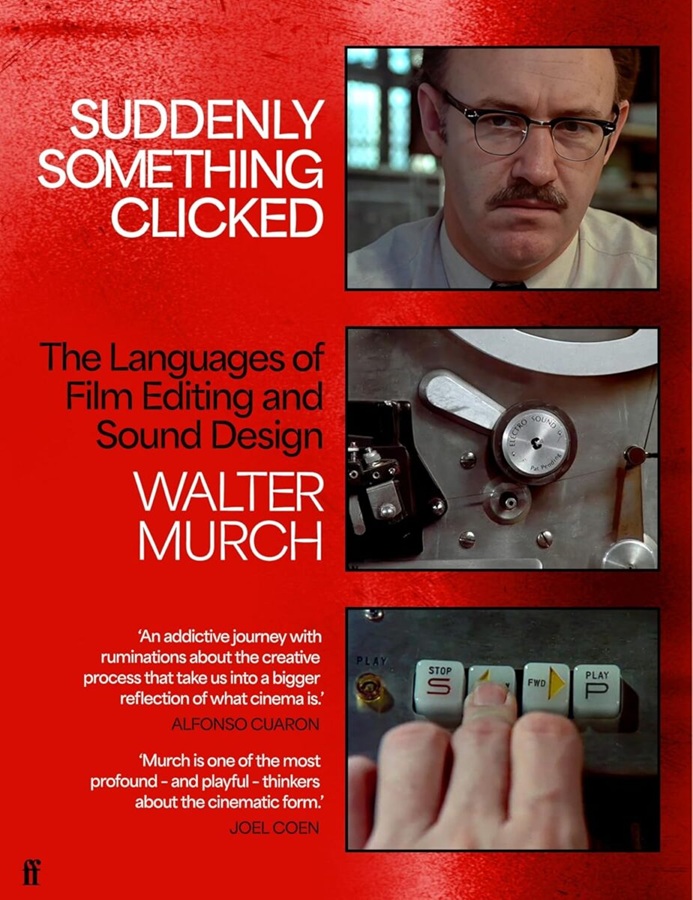
In the same column, Schobert also recommends Suddenly Something Clicked: The Languages of Film Editing and Sound Design by Walter Murch (Faber & Faber) -

There is no one better suited to discuss film editing and sound design than Oscar-winner Walter Murch, the editor of a litany of greats: The Conversation, Apocalypse Now, The Godfather. His first book, 1992’s In the Blink of an Eye: A Perspective on Film Editing, is a classic. “Much has happened in those years,” Murch writes, “but the most significant development was the two-decades-long (1990-2010) transformation of cinema from an analogue to a digital medium. As I suggested in Blink, it is a shift whose closest analogy in the history of European art might be when oil painting began to displace fresco in the fifteenth century.” Suddenly Something Clicked goes to great lengths to not repeat details from Murch’s earlier book. Rather, it is a worthy companion. The chapters covering his work on The Conversation and the restoration of Welles’ Touch of Evil are riveting.


Posted by Geoff at 10:14 PM CDT
Post Comment | Permalink | Share This Post
Sunday, August 3, 2025
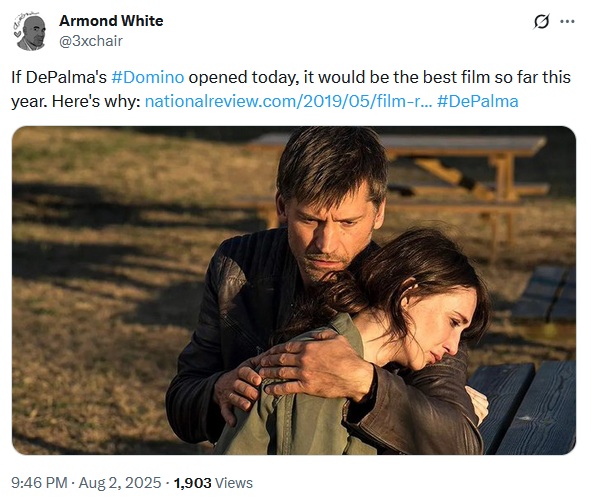
'IT'S TOTAL ILLUMINATION OF OUR DIGITAL-AGE CRISIS'
https://www.angelfire.com/de/palma/armonddominotweet.jpg

Posted by Geoff at 10:14 PM CDT
Post Comment | View Comments (6) | Permalink | Share This Post
Friday, August 1, 2025
BLOG LOOKS AT SOSA'S 'SUBDUED STYLE' IN 'SCARFACE'
QUIET MENACE IS IN CONTRAST TO THE LOUD SUITS WORN BY TONY AND OMAR
https://www.angelfire.com/de/palma/scarface1835.jpg

BAMF Style is a blog focusing on "iconic and interesting men's fashions from movies and TV." A post from July 19, written by Nick (luckystrike721), is headlined, "Scarface: Paul Shenar’s Subdued Style as Sosa." Here's an excerpt:
For as long as gangster movies have been made, costume designers have used clothing to visually communicate the difference between the flashier crooks—those who dress as loud as they act, often attracting law enforcement or a rival’s bullet—and their more subdued counterparts, who may be just as brutal but carry themselves with quieter menace that extends to their wardrobes. This dynamic is clearly illustrated through Patricia Norris’ costume design in Scarface, a movie in which few make it out alive—and those who do are rarely the ones drawing attention.

Tony and Omar arrive in Cochabamba dressed in the de facto uniform of 1980s mid-level Miami coke dealers: low-slung, double-breasted suits in offbeat colors; non-white shirts unbuttoned to mid-chest with matching pocket squares; and plenty of gold flashing from their necks and fingers. In contrast, Alejandro Sosa presents a more refined image with his head-to-toe neutrals anchored by a silky windbreaker. Though some pieces mirror his visitors—like a low-buttoned shirt or pinky ring—Sosa’s look is ultimately more restrained, closer to smart, timeless sportswear than flashy criminal couture.

The most casually dressed man at the table—and also the one with the most power—Sosa sets himself apart in a creamy beige windbreaker likely made from silk or a silk-like synthetic fiber, soft and lightweight with a subtle luster that catches the South American sun. White inset stripes run down each sleeve from the shoulder seam to the elastic cuffs, adding a touch of sporty contrast.

A tonal plastic zipper runs up the front, offset by about an inch from the edge with a narrow storm flap tucked behind it, to a short standing collar—squared at the edges and fastened with a single beige button. Slanted hand pockets keep the design simple, while an inverted box pleat across the back adds mobility and contributes to the jacket’s fashionably loose, sporty drape—gently cinched at the waist by the elasticized blouson-style hem that sharpens the silhouette without sacrificing ease.

Matt Spaiser wrote for Bond Suits that “it takes both a bold and elegant man to wear a shirt made of voile.” While his description naturally applied to James Bond (the subject of his excellent blog), Alejandro Sosa also applies as such a bold and elegant man, who makes his first appearance wearing a white voile long-sleeved shirt layered under his windbreaker.

Voile is a lightweight, breathable fabric made from high-twist cotton or silk yarns, giving it a signature semi-sheer quality that sets it apart from similar weaves like poplin. Paired with its soft hand and wrinkle resistance, this subtle translucence makes it ideal for refined warm-weather attire. While most of the a voile shirt’s structure is sheer, reinforced pieces like the collar and placket are often more opaque due to the extra layer of fabric required.


Posted by Geoff at 12:01 AM CDT
Updated: Saturday, August 2, 2025 12:10 AM CDT
Post Comment | Permalink | Share This Post
Tuesday, July 29, 2025
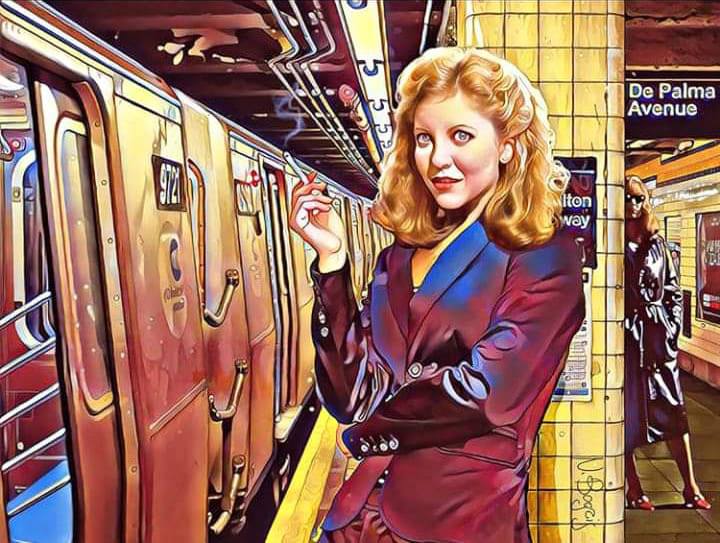
POSTER ART FROM 2019, INSPIRED BY 'DRESSED TO KILL'
ART BY NIKOS BOGRIS
https://www.angelfire.com/de/palma/depalmaavenue.jpg

Posted by Geoff at 12:01 AM CDT
Post Comment | Permalink | Share This Post
Monday, July 28, 2025
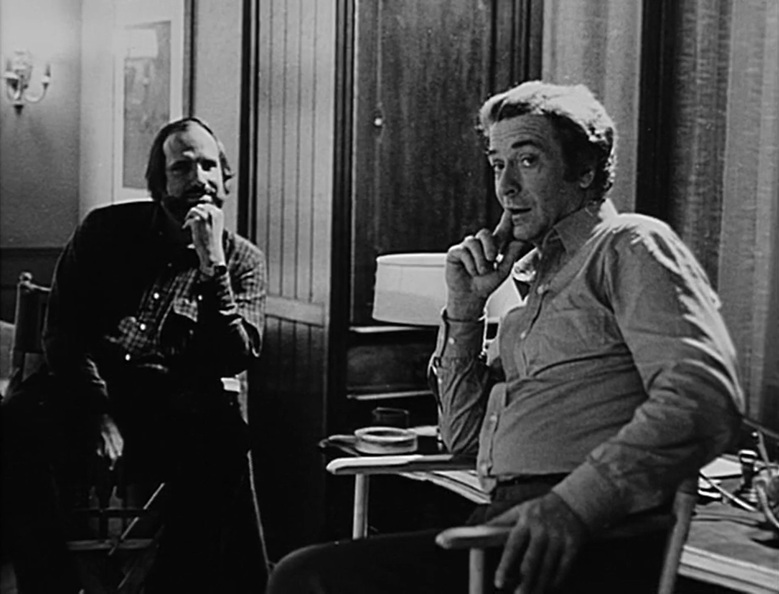
'THAT ONE SEQUENCE TOOK A WHOLE DAY TO SHOOT'
MICHAEL CAINE, FROM HIS 1990 BOOK, RECALLS WORKING WITH DE PALMA IN 1980
https://www.angelfire.com/de/palma/brianmichael1.jpg

In 1990, Michael Caine wrote the book, Acting In Film. The chapter on "Directors" includes a paragraph about Dressed To Kill:
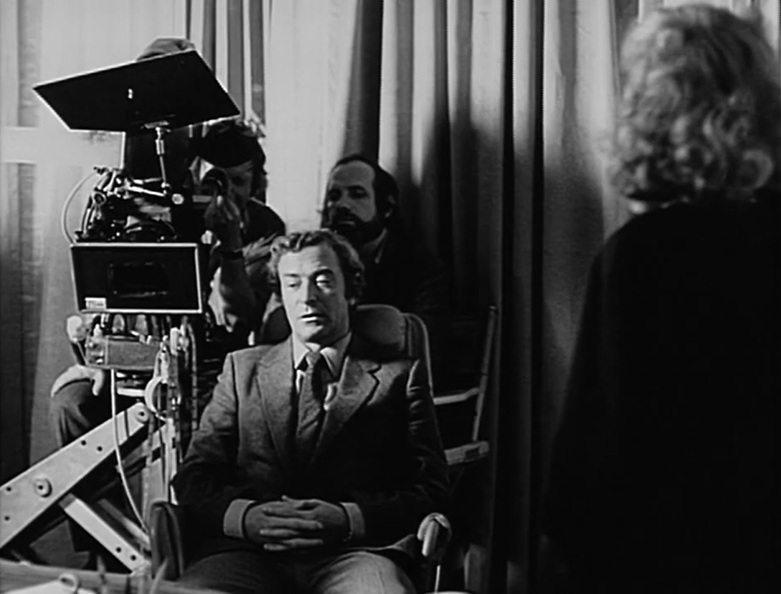
Brian de Palma has a bit of a chilly personality, but I admire him as a director and technician. So when he offered me a rathar weird horror film called Dressed to Kill, I figured this was a gamble that might pay off. He was very demanding, often shooting on and on until he got precisely what he wanted. I remember one nine-page sequence that incorporated a 360-degree swing of the camera and required 26 takes (a record for me); whenever we actors got the scene right, the camera didn't and vice versa. That one sequence took a whole day to shoot.


Posted by Geoff at 5:57 PM CDT
Updated: Monday, July 28, 2025 6:01 PM CDT
Post Comment | View Comments (5) | Permalink | Share This Post
Sunday, July 27, 2025
'WE NEVER SEE HIS EYES'
LAURENT BOUZEREAU ON THE COP IN PSYCHO, AND THE STRANGER IN DRESSED TO KILL


From the chapter about Dressed To Kill in The De Palma Decade, by Laurent Bouzereau:
The man is wearing sunglasses, a clear indication that he is not there to appreciate art. But this detail also foreshadows Bobbi, who hides her identity behind dark sunglasses, day and night. Through this association of two characters with “no eyes,” the stranger is the dark angel, the one who delivers Kate to Bobbi, her killer. This approach of connecting worlds is also present in a similar fashion in Psycho; Marion has fallen asleep on the side of the road and is awakened by a policeman, who is wearing dark sunglasses. He never takes them off; we never see his eyes. This very much presages the other character with no eyes, Norman Bates’s dead, mummified mother in the cellar. When she is revealed—as a lightbulb swings back and forth above her face—we see dark holes instead of eyes, just like the cop who wouldn’t take off his sunglasses.

https://www.angelfire.com/de/palma/psycho165.jpg

Posted by Geoff at 9:58 PM CDT
Post Comment | Permalink | Share This Post
Saturday, July 26, 2025
45 YEARS AGO - SISKEL & EBERT REVIEWS OF 'DRESSED TO KILL'
FROM THE CHICAGO TRIBUNE & CHICAGO SUN-TIMES, POSTED FRIDAY BY WINDY CITY BALLYHOO


Posted by Geoff at 12:01 AM CDT
Post Comment | View Comments (1) | Permalink | Share This Post
Friday, July 25, 2025
DRESSED TO KILL - RELEASED 45 YEARS AGO TODAY
PHILLY VOICE'S KRISTIN HUNT POSTED THIS MORNING ABOUT WHY MUSEUM SCENE WAS SHOT IN PHILLY
https://www.angelfire.com/de/palma/dressed18s.jpg

This morning, PhillyVoice's Kristin Hunt posted an article headlined, "Dressed to Kill, released 45 years ago today, was set in New York but its most famous scene was filmed in Philly." The subheadline reads, "On the anniversary of Brian De Palma's movie, revisit why Angie Dickinson's flirty chase scene was shot at the art museum here and not the Met in Manhattan." In the article, Hunt lists several pieces that appear in the film:
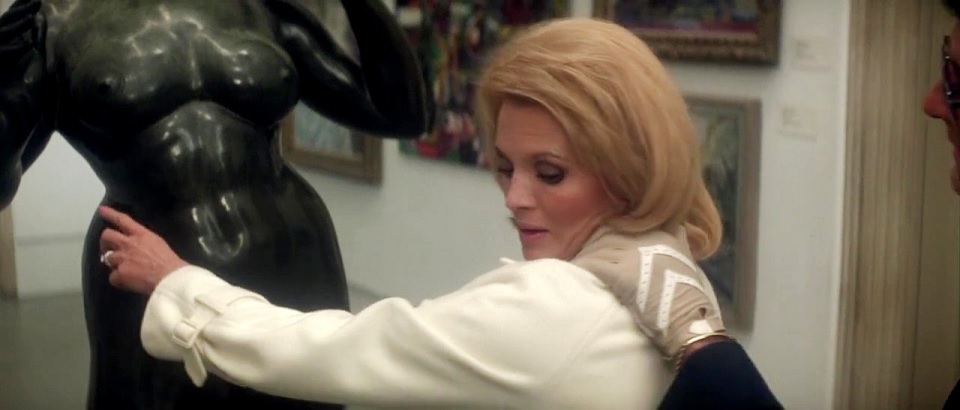
The 1980 thriller "Dressed to Kill" may not have the same reputation as other movies in director Brian De Palma's filmography. (He did, after all, helm "Scarface," "Carrie" and "Mission: Impossible.") But one particular scene sent critics swooning at the time, and still comes up in retrospectives: the extended, wordless sequence inside the art museum.

The eight-minute sequence follows bored housewife Kate (Angie Dickinson) through the galleries as she trails and dodges a handsome stranger. It's supposed to take place at the Metropolitan Museum of Art in New York, and the exterior shots are, unmistakably, of uptown Manhattan. Look a little closer at the interior, however, and you might recognize the winding halls of the Philadelphia Museum of Art.

PMA posed as the Met for the movie, released in theaters 45 years ago today. It was natural choice for De Palma, a Philly native who graduated from Friends' Central School and won the Delaware Valley Science Fair with his homemade computer. Despite his scientific pedigree – his dad was also an orthopedic surgeon at Thomas Jefferson University – he ultimately chose to tinker with film reels, not motherboards.

The director, who would later use the city as his backdrop for "Blow Out," leaned on his hometown for "Dressed to Kill" when New York shut him down.

“We scouted the sequence in the Metropolitan Museum of Art, but they didn’t like the script," De Palma later recalled. "They thought it was in bad taste. And because I grew up in Philadelphia, we were able to move the interior to the Philadelphia Museum of Art."

De Palma said he got the "visual idea" for the scene from his trips to museums as a college student. After visiting PMA, taking photos and obsessively tweaking his storyboard, he was ready to film.

Viewers will notice art on the walls that would've been contemporary for the time. Kate sits on a bench in front of "West Interior," a 1979 piece by Alex Katz that is no longer on view but still in the museum's collection. As she glances around the room, her eyes fix on "Reclining Nude," a 1976 portrait of a gorilla by Tommy Dale Palmore. It also remains at PMA, though off display. As she chases the stranger through the museum, "2 Priory Walk" by Jennifer Bartlett is visible.

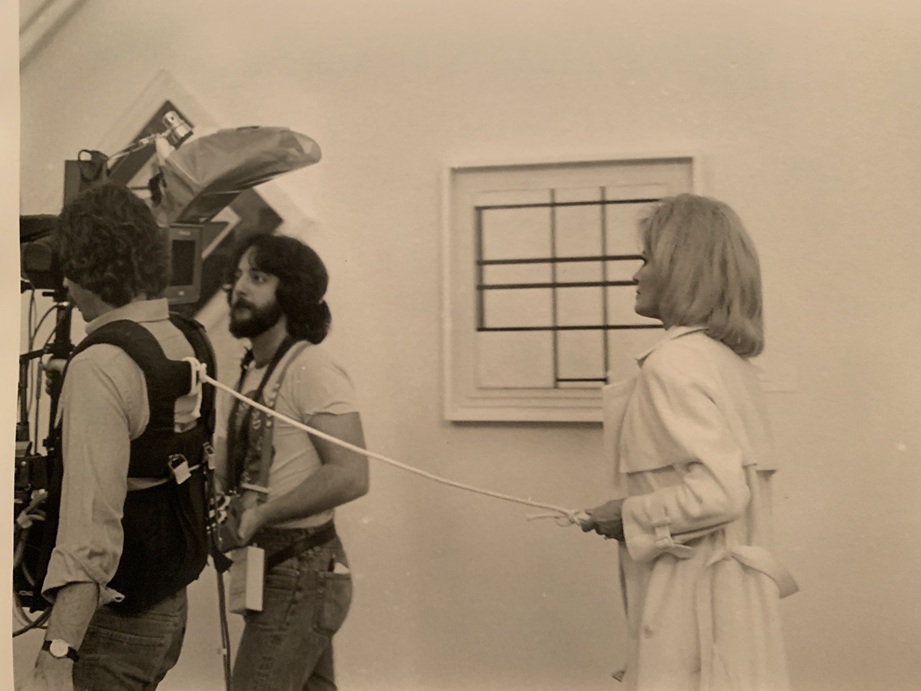
Dickinson remembered the scene as a tricky bit of choreography, emotionally and physically, in the book "The De Palma Decade."

"As serious as the scene is, it is also humorous, because it gets desperate," she said. "At first, she is intrigued. And then she finds him rude. Now, she’s going to confront him but can’t find him. And technically, it was so complicated, and complex to do – in fact, I was (at times) holding a rope attached to the camera, so I would stay in focus as I walked."

The scene made an instant splash when the movie hit theaters on July 25, 1980. Roger Ebert called it "absolutely brilliant." Critics at the New York Times, Los Angeles Times, Pittsburgh Post-Gazette and other publications also singled out the sequence in their reviews.


Posted by Geoff at 7:38 AM CDT
Updated: Monday, July 28, 2025 6:07 PM CDT
Post Comment | View Comments (1) | Permalink | Share This Post

Newer | Latest | Older