 Hello and welcome to the unofficial Brian De Palma website. Here is the latest news: |
|---|
E-mail
Geoffsongs@aol.com
-------------
Recent Headlines
a la Mod:
Listen to
Donaggio's full score
for Domino online
De Palma/Lehman
rapport at work
in Snakes
De Palma/Lehman
next novel is Terry
De Palma developing
Catch And Kill,
"a horror movie
based on real things
that have happened
in the news"
Supercut video
of De Palma's films
edited by Carl Rodrigue
Washington Post
review of Keesey book
-------------
Exclusive Passion
Interviews:
Brian De Palma
Karoline Herfurth
Leila Rozario
------------

------------
| « | August 2025 | » | ||||
 |
||||||
| S | M | T | W | T | F | S |
| 1 | 2 | |||||
| 3 | 4 | 5 | 6 | 7 | 8 | 9 |
| 10 | 11 | 12 | 13 | 14 | 15 | 16 |
| 17 | 18 | 19 | 20 | 21 | 22 | 23 |
| 24 | 25 | 26 | 27 | 28 | 29 | 30 |
| 31 | ||||||
De Palma interviewed
in Paris 2002
De Palma discusses
The Black Dahlia 2006

Enthusiasms...
Alfred Hitchcock
The Master Of Suspense
Sergio Leone
and the Infield
Fly Rule
The Filmmaker Who
Came In From The Cold
Jim Emerson on
Greetings & Hi, Mom!
Scarface: Make Way
For The Bad Guy
Deborah Shelton
Official Web Site
Welcome to the
Offices of Death Records

For as long as gangster movies have been made, costume designers have used clothing to visually communicate the difference between the flashier crooks—those who dress as loud as they act, often attracting law enforcement or a rival’s bullet—and their more subdued counterparts, who may be just as brutal but carry themselves with quieter menace that extends to their wardrobes. This dynamic is clearly illustrated through Patricia Norris’ costume design in Scarface, a movie in which few make it out alive—and those who do are rarely the ones drawing attention.Tony and Omar arrive in Cochabamba dressed in the de facto uniform of 1980s mid-level Miami coke dealers: low-slung, double-breasted suits in offbeat colors; non-white shirts unbuttoned to mid-chest with matching pocket squares; and plenty of gold flashing from their necks and fingers. In contrast, Alejandro Sosa presents a more refined image with his head-to-toe neutrals anchored by a silky windbreaker. Though some pieces mirror his visitors—like a low-buttoned shirt or pinky ring—Sosa’s look is ultimately more restrained, closer to smart, timeless sportswear than flashy criminal couture.
The most casually dressed man at the table—and also the one with the most power—Sosa sets himself apart in a creamy beige windbreaker likely made from silk or a silk-like synthetic fiber, soft and lightweight with a subtle luster that catches the South American sun. White inset stripes run down each sleeve from the shoulder seam to the elastic cuffs, adding a touch of sporty contrast.
A tonal plastic zipper runs up the front, offset by about an inch from the edge with a narrow storm flap tucked behind it, to a short standing collar—squared at the edges and fastened with a single beige button. Slanted hand pockets keep the design simple, while an inverted box pleat across the back adds mobility and contributes to the jacket’s fashionably loose, sporty drape—gently cinched at the waist by the elasticized blouson-style hem that sharpens the silhouette without sacrificing ease.
Matt Spaiser wrote for Bond Suits that “it takes both a bold and elegant man to wear a shirt made of voile.” While his description naturally applied to James Bond (the subject of his excellent blog), Alejandro Sosa also applies as such a bold and elegant man, who makes his first appearance wearing a white voile long-sleeved shirt layered under his windbreaker.
Voile is a lightweight, breathable fabric made from high-twist cotton or silk yarns, giving it a signature semi-sheer quality that sets it apart from similar weaves like poplin. Paired with its soft hand and wrinkle resistance, this subtle translucence makes it ideal for refined warm-weather attire. While most of the a voile shirt’s structure is sheer, reinforced pieces like the collar and placket are often more opaque due to the extra layer of fabric required.

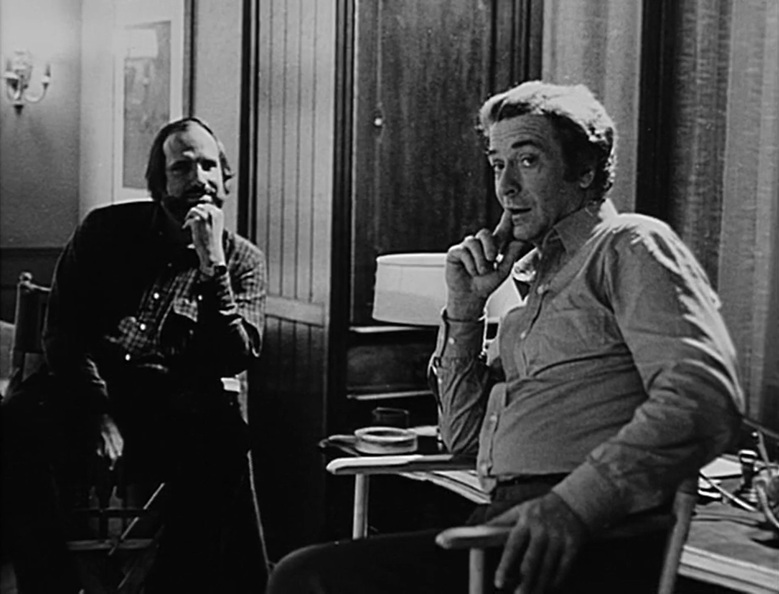
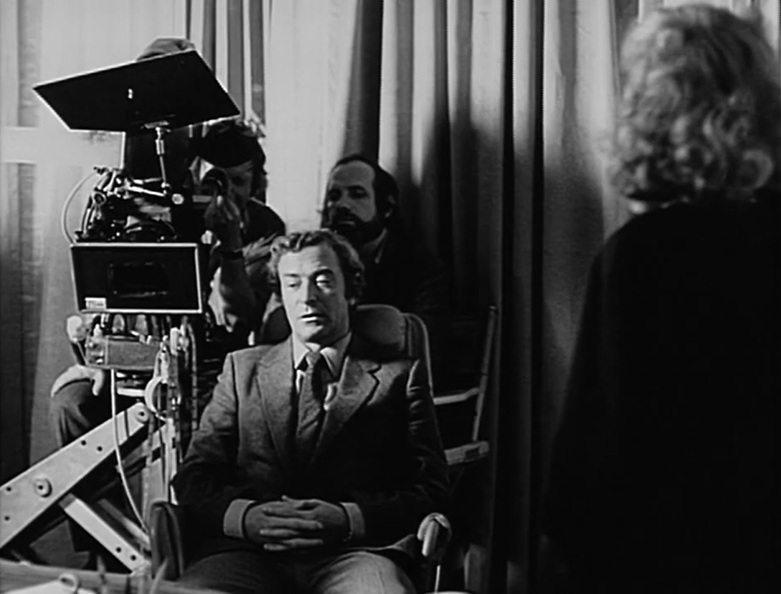
Brian de Palma has a bit of a chilly personality, but I admire him as a director and technician. So when he offered me a rathar weird horror film called Dressed to Kill, I figured this was a gamble that might pay off. He was very demanding, often shooting on and on until he got precisely what he wanted. I remember one nine-page sequence that incorporated a 360-degree swing of the camera and required 26 takes (a record for me); whenever we actors got the scene right, the camera didn't and vice versa. That one sequence took a whole day to shoot.

The man is wearing sunglasses, a clear indication that he is not there to appreciate art. But this detail also foreshadows Bobbi, who hides her identity behind dark sunglasses, day and night. Through this association of two characters with “no eyes,” the stranger is the dark angel, the one who delivers Kate to Bobbi, her killer. This approach of connecting worlds is also present in a similar fashion in Psycho; Marion has fallen asleep on the side of the road and is awakened by a policeman, who is wearing dark sunglasses. He never takes them off; we never see his eyes. This very much presages the other character with no eyes, Norman Bates’s dead, mummified mother in the cellar. When she is revealed—as a lightbulb swings back and forth above her face—we see dark holes instead of eyes, just like the cop who wouldn’t take off his sunglasses.


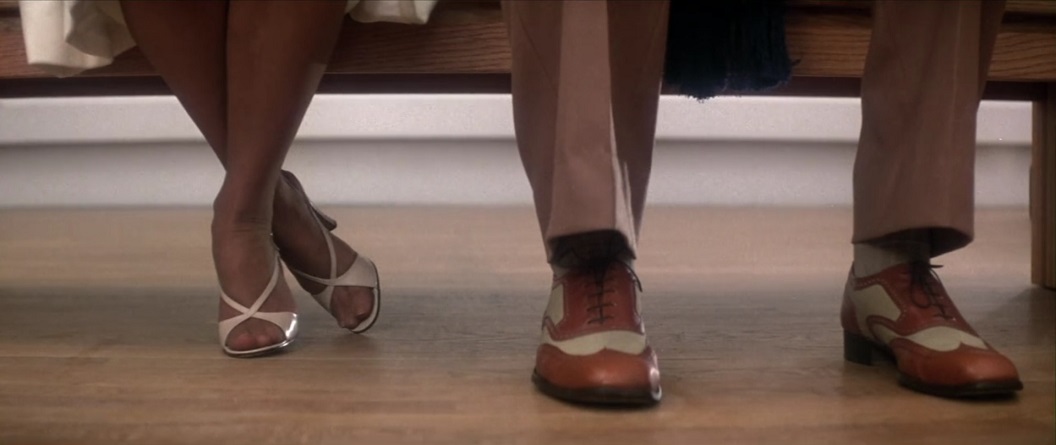
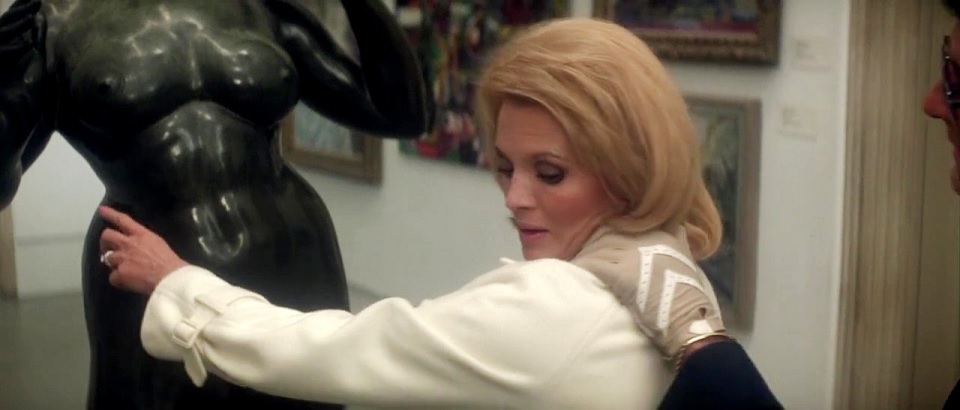
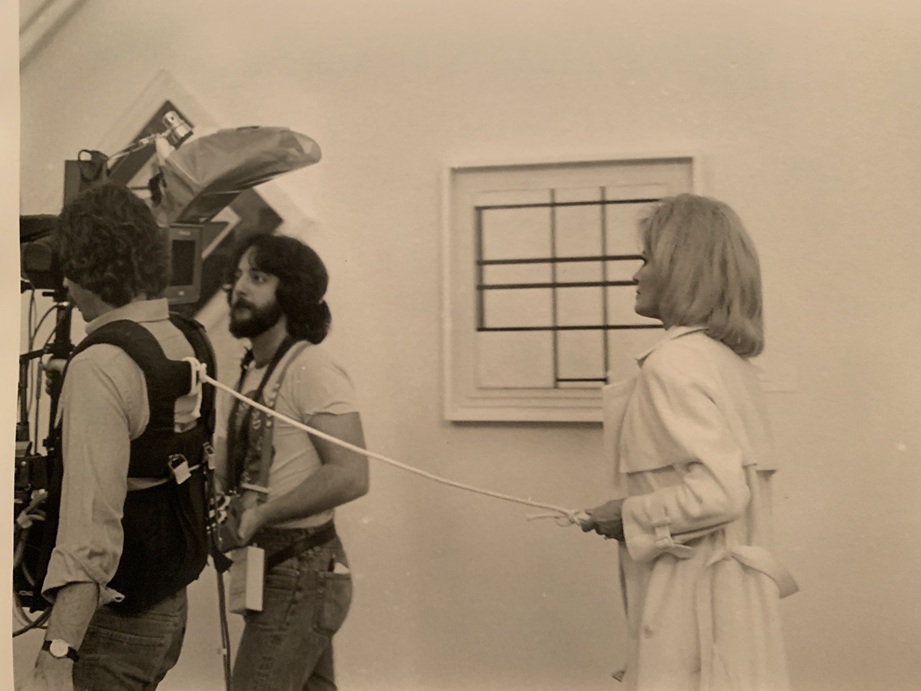
The 1980 thriller "Dressed to Kill" may not have the same reputation as other movies in director Brian De Palma's filmography. (He did, after all, helm "Scarface," "Carrie" and "Mission: Impossible.") But one particular scene sent critics swooning at the time, and still comes up in retrospectives: the extended, wordless sequence inside the art museum.The eight-minute sequence follows bored housewife Kate (Angie Dickinson) through the galleries as she trails and dodges a handsome stranger. It's supposed to take place at the Metropolitan Museum of Art in New York, and the exterior shots are, unmistakably, of uptown Manhattan. Look a little closer at the interior, however, and you might recognize the winding halls of the Philadelphia Museum of Art.
PMA posed as the Met for the movie, released in theaters 45 years ago today. It was natural choice for De Palma, a Philly native who graduated from Friends' Central School and won the Delaware Valley Science Fair with his homemade computer. Despite his scientific pedigree – his dad was also an orthopedic surgeon at Thomas Jefferson University – he ultimately chose to tinker with film reels, not motherboards.
The director, who would later use the city as his backdrop for "Blow Out," leaned on his hometown for "Dressed to Kill" when New York shut him down.
“We scouted the sequence in the Metropolitan Museum of Art, but they didn’t like the script," De Palma later recalled. "They thought it was in bad taste. And because I grew up in Philadelphia, we were able to move the interior to the Philadelphia Museum of Art."
De Palma said he got the "visual idea" for the scene from his trips to museums as a college student. After visiting PMA, taking photos and obsessively tweaking his storyboard, he was ready to film.
Viewers will notice art on the walls that would've been contemporary for the time. Kate sits on a bench in front of "West Interior," a 1979 piece by Alex Katz that is no longer on view but still in the museum's collection. As she glances around the room, her eyes fix on "Reclining Nude," a 1976 portrait of a gorilla by Tommy Dale Palmore. It also remains at PMA, though off display. As she chases the stranger through the museum, "2 Priory Walk" by Jennifer Bartlett is visible.
Dickinson remembered the scene as a tricky bit of choreography, emotionally and physically, in the book "The De Palma Decade."
"As serious as the scene is, it is also humorous, because it gets desperate," she said. "At first, she is intrigued. And then she finds him rude. Now, she’s going to confront him but can’t find him. And technically, it was so complicated, and complex to do – in fact, I was (at times) holding a rope attached to the camera, so I would stay in focus as I walked."
The scene made an instant splash when the movie hit theaters on July 25, 1980. Roger Ebert called it "absolutely brilliant." Critics at the New York Times, Los Angeles Times, Pittsburgh Post-Gazette and other publications also singled out the sequence in their reviews.

Paul Williams is the guest on the above episode of The Magnificent Others with Billy Corgan, and it's a great conversation, with Corgan asking Williams questions that cover his long career in music, TV, and films. These two songwriters also discuss songwriting. About an hour in, they talk about Phantom Of The Paradise.
"Speaking of Hollywood fantasies," Corgan says, "I’d seen reference to the movie Phantom Of The Paradise (1974), but somehow I ended up with the laser disc. And that’s one of those movies, like, you put it in, you sit back and watch a movie, you know, it’s quasi-musical, right? And, I don’t know whatever I was on substance-wise, but I remember thinking, how did this movie ever get made? Like, it’s so cool that it got made, and obviously it’s become – I don’t want to say it’s a cult classic because I think it’s better than that – but at the same time, you think like, who the f--- greenlit this movie?? It’s like, things like that don’t really happen, but, they do. You know, it’s like somehow when the inmates get to run the asylum for five minutes, look what they do – you know, they make a movie like Phantom Of The Paradise!"
Paul Williams, laughing so hard he can barely get the words out, responds, "That’s the best description of it I’ve ever heard! That’s exactly what it was like."

Meanwhile, posting a clip from De Palma's Carlito's Way, Cinema Tweets writes, "Brian De Palma’s never received the credit he deserves for his genius as a filmmaker. Overshadowed by his peers that exploded on the scene in the ‘70s, countless directors and actors owe part of their success to De Palma. That includes Al Pacino."

And one more - 1428 Elm's Stephen Rosenberg writes about De Palma's The Fury, with the headline, "You probably haven't seen this '70s Brian De Palma movie that channels Stephen King." Here's an excerpt:
In just premise alone, The Fury feels like it belongs right in the vein of Stephen King’s psychic powers-focused stories of that era, including Carrie, The Dead Zone, The Shining, and especially Firestarter, where a shadow government agency tries to use a pyrokinetic’s powers for their own gain. That’s not to say John Farris shouldn’t get his due for writing the story; he’s no one-hit wonder. Farris has written more than 40 novels over the course of his literary career.The Fury isn’t just good because of its strong, classic horror-sci-fi feel. It’s great to see Brian De Palma’s early fingerprints all over the screen. He has simply always thrived with mystery thrillers, using the camera’s zoom and lighting to increasingly build intensity throughout the scenes.
His split diopter shots and superimposing to showcase Gillian’s psychic abilities are unique and reminiscent of late Hitchcock films, and an early teaser into his best films, like Blow Out and The Untouchables.
At its core, The Fury is just a solid, if not slowly paced, government mystery movie. But peppered between some of the moments that lag are awesome displays of telekinesis, like Robin causing carnival rides to spin apart, or Gillian going full Johnny Smith from The Dead Zone.
From Bill Hader's Top 10 at The Criterion Collection, posted March 17, 2011:
SistersI love early Brian De Palma thrillers, and this is one of the best. Margot Kidder and Jennifer Salt are great. What Psycho did for taking a shower this movie did for giving a birthday cake to your girlfriend. And where Charles Durning’s character ends up is hilarious.