WITH GUEST STEVE PROKOPY, AKA "CAPONE" FROM AINT-IT-COOL-NEWS
Updated: Tuesday, December 16, 2025 11:05 PM CST
Post Comment | Permalink | Share This Post
![]() Hello and welcome to the unofficial Brian De Palma website. Here is the latest news: |
|---|
E-mail
Geoffsongs@aol.com
-------------
Recent Headlines
a la Mod:
Listen to
Donaggio's full score
for Domino online
De Palma/Lehman
rapport at work
in Snakes
De Palma/Lehman
next novel is Terry
De Palma developing
Catch And Kill,
"a horror movie
based on real things
that have happened
in the news"
Supercut video
of De Palma's films
edited by Carl Rodrigue
Washington Post
review of Keesey book
-------------
Exclusive Passion
Interviews:
Brian De Palma
Karoline Herfurth
Leila Rozario
------------
------------
| « | December 2025 | » | ||||
| S | M | T | W | T | F | S |
| 1 | 2 | 3 | 4 | 5 | 6 | |
| 7 | 8 | 9 | 10 | 11 | 12 | 13 |
| 14 | 15 | 16 | 17 | 18 | 19 | 20 |
| 21 | 22 | 23 | 24 | 25 | 26 | 27 |
| 28 | 29 | 30 | 31 | |||
De Palma interviewed
in Paris 2002
De Palma discusses
The Black Dahlia 2006

Enthusiasms...
Alfred Hitchcock
The Master Of Suspense
Sergio Leone
and the Infield
Fly Rule
The Filmmaker Who
Came In From The Cold
Jim Emerson on
Greetings & Hi, Mom!
Scarface: Make Way
For The Bad Guy
Deborah Shelton
Official Web Site
Welcome to the
Offices of Death Records

Here's a brief excerpt from Cowie's article:
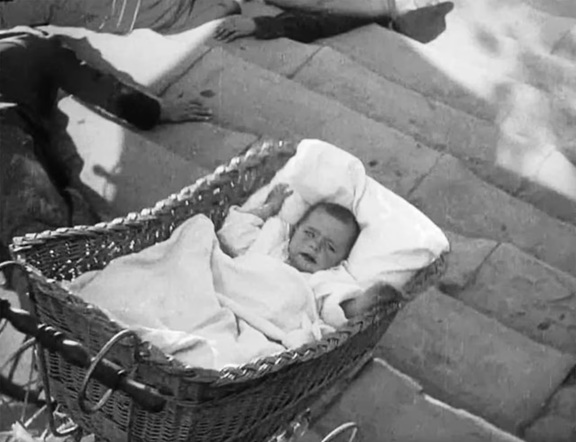
Eisenstein saw the film as an opportunity to test his theories of montage, which were innovative at the time. He believed that it was much more than just the editing of shots, and that the tone and rhythm of montage could be used to influence the intellectual and emotional response to art. He worked closely with Tissé to ensure that huge close-ups of human faces distorted with anguish or fury would exert the maximum effect on audiences of the time. The long shots in “Battleship Potemkin” are equally eloquent—ships at anchor in the dusk, a line of mourners stretching as far as the eye can see along a harbor wall. Eisenstein asserted that the film “looks like a newsreel of an event, but it functions as a drama.”“Battleship Potemkin” attracted international acclaim only after Eisenstein had traveled to Berlin and arranged for the Austrian composer Edmund Meisel to improve the score for the film, creating distinctive music for each scene and working with Eisenstein to give a vibrant cadence to the more dramatic sequences. “I need rhythm,” Eisenstein told his composer, “rhythm, rhythm!” Meisel obliged with a score at times touching 120 beats per minute.
The “inter-titles,” usually ponderous in silent cinema, are fluent and compelling, ensuring a relentless drive that propels the story forward. The plastic symmetry of “Battleship Potemkin,” its humanity, and its throbbing power still command respect, and Sergei Eisenstein endures as the finest film editor the world has seen.

#3 on Film Comment's Best Films of 2025:
Leave it to Kleber Mendonça Filho, a filmmaker for whom cinema feels as essential as breathing, to craft a political thriller that is equally steeped in the techniques of its classic-movie inspirations and the everyday atmospheres and textures of 1970s Brazil. Photographed in widescreen Panavision, and featuring De Palma–style split-diopter shots, Altmanesque zooms, and wipe transitions straight out of Star Wars, The Secret Agent is packed with period-perfect details and held together by Wagner Moura’s soulful performance as a scientist and father caught in the murderous headlights of Brazil’s military dictatorship. But this is also a movie that keeps wandering around—“a bit improvised, Brazilian-style,” as one character says. Mendonça is fascinated by how the history and tools of cinema become an archive; the film finds its most arresting images and moral conscience in all the supposedly unnecessary, extra stuff of life that one might imagine any other filmmaker excising from the record.—Michael Blair

How has Greta influenced your writing?Greta has influenced me in all ways. When we write together, it’s great, because she’s somebody I really want to impress, so I’m always trying really hard. I feel funnier when I’m with her, and wiser. When we’re working together, it’s the energy of being in a room with someone. You don’t know who started the conversation; you just know that you arrived somewhere. That’s what a great writing collaboration feels like. I had it with Emily Mortimer, too, on “Jay Kelly.”
How did that come about?
I got to know her better when we made “White Noise,” because her kids are in it. I’d had the idea for “Jay Kelly,” but I didn’t know quite how to do it. I was telling her about it, and I just liked everything she was saying. So I called her the next day and asked her if she wanted to write it with me.
I’ve always been curious about how co-writing actually works. Is one the talker and one the typer?
I think the one who’s going to direct it is more the typer, because they’re the one who’s harnessing it. The other one can be a little bit more far-reaching. But it happens both ways. I think ultimately the director knows what kind of story he knows how to tell. That was true when I wrote “Life Aquatic” and “Fantastic Mr. Fox” with Wes Anderson. With Greta and me, it’s different. With “Barbie,” we were essentially trying to write something that wouldn’t get made. And then we liked it so much that we felt like we should make it, and that she should direct it.
What’s a movie you saw recently that made you feel excited about cinema all over again?
When we’re working on a movie, once a week we screen films for the crew, in a theatre. It’s often a movie that has had some sort of influence on us or is a companion to what we’re all working on. After Robert Redford died we showed “All the President’s Men,” and I think that’s a near-perfect movie. I also really liked Rick Linklater’s new movie, “Nouvelle Vague,” about the making of Godard’s “Breathless.” I thought it was not an easy thing to do, making a movie about real people. I love those New Wave directors, and I love those movies. And it could have felt like, That’s not my Godard! That’s not my Truffaut! But he did it so well. There was such an affection for the making of movies.
Talk about how you fell in love with movies as a little boy.
I had parents who were both film critics, so I had movies all around me. I loved “The Adventures of Robin Hood.” I love “The Wizard of Oz,” which was always on TV around Easter, I think. And then all the ape movies were on around Thanksgiving. There was “King Kong,” “Son of Kong,” “Mighty Joe Young.” I was a great age for “Star Wars” and “E.T.” At some point early on, it was a language that I internalized—the movies—and, more than any art form, I felt very connected to them. I loved books about movies, when I could get my hands on them. But there wasn’t a lot of information. I didn’t know how to get Variety or anything like that. I was intimidated—I wanted to do something that I’m not sure regular people got to do. I wish I had read Lillian Ross’s “Picture” back then, about the making of John Huston’s “Red Badge of Courage,” because it really tells you everything. It’s an amazing telling of what it was like to make a movie. There was also the book Lillian wrote—interviews she did with actors where she took her voice out, so it’s just the actors.
That’s called “The Player.” She wrote it with her sister, Helen Ross, in 1968.
The documentary that Jake Paltrow and I did about Brian De Palma in 2016—in my head I was using Lillian’s technique. We had a long conversation with Brian over many days about his whole career, and that’s what the movie is. But we took our voices out, so it’s just him telling the story.
Here's an excerpt:
I rewatched Brian De Palma’s Body Double (1984) recently. Again. And once more I’m reminded why this film remains one of the most underrated entries in his impressive catalog. If you haven’t seen it I highly recommend you check it out. It’s also eminently re-watchable, and you can most certainly discover something new with each viewing.Released in 1984 to nearly universal critical scorn, Body Double was dismissed as gratuitously lurid, derivative Hitchcock worship. Critics at the time couldn’t see past the ample nudity and genre pastiche. Even Pauline Kael, typically a De Palma champion, called it “stupid yet moderately entertaining.” It bombed at the box office, earning just $8.8 million against a $10 million budget.
They were all wrong.
The De Palma Deep Cuts Hold Up
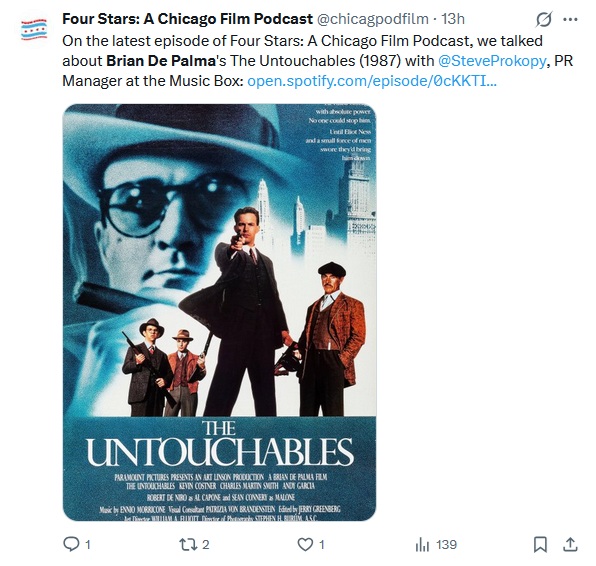
When casual moviegoers think of Brian De Palma, they reach for the obvious: Al Pacino’s cocaine mountain in Scarface (1983) or Kevin Costner stalking Robert De Niro through Prohibition-era Chicago in The Untouchables (1987). These are fine films, well-crafted crowd-pleasers that showcase De Palma’s technical prowess. Certainly nothing wrong with those, and I’m guessing they helped pay the bills.
But his lesser-known works are arguably where he’s at his best. Sisters (1972), Obsession (1976), and yes, Body Double form a more personal trilogy of Hitchcockian fever dreams where De Palma operates without the constraints of studio expectations or star vehicles. These are the films where he takes real risks. Where the voyeurism becomes uncomfortably explicit. Where style and substance merge into something genuinely unsettling.
Body Double might be the apex of this approach.
Meta Before Meta? (Yes!)
What those critics missed is that Body Double isn’t just another Hitchcock homage. It’s De Palma making a film about making films. It’s a director holding a mirror up to his own obsessions, his critics, and the entire Hollywood machine. This might be his take on Fellini’s 8 1/2 (1963), albeit told in a completely different style. Yet, equally entertaining in my opinion.

Weirdly — no really, weirdly, because this is a film where one character bashes in the head of another character with a baseball bat — I think what makes this film work is restraint. Brian De Palma is Brian De Palma-ing himself all over this film, with all his stylistic tics and touches and his oh-look-do-you-see-how-I’m-referencing-Eisenstein-aren’t-I-so-very-clever-ness, but he’s doing it at about an 8, rather than an 11. Yes, there is that (rather famous) scene involving a baseball bat, but here’s the thing: what makes it shocking isn’t the assault, it’s the context. De Palma shows us enough of the assault (and the aftermath) to make the point, but, unlike, say, Scarface, there’s no lingering. De Palma gets in, gets what the scene needs, and gets out.Now, I am going to accept there is skepticism for this thesis of mine. The Untouchables does not exactly skimp on the blood or the occasional shot of someone’s brains all over a window pane. This is a movie that rather handily earns it “R” rating. But my argument is that in these cases it’s not about quantity, it is about quality. Those brains on the window pane are actually in service to the story. They are just enough to fill in the scene, and then we’re moving on. For De Palma, for whom so much of his directorial style is basically more, of whatever it is, not just blood although certainly blood too, this sort of restraint in the service of story feels a little revolutionary. Turns out you can do a whole lot, if you’re not trying to bludgeon your audience into sensory overload.
De Palma didn’t have to drive his audience into sensory overload in no small part because the whole affair is just so incredibly handsomely mounted. The script, by David Mamet before his metaphorical cheese starting slipping off his metaphorical cracker, is sharp and pithy and melodramatic as hell. The set design offers up a version of Chicago that is a beautiful fable — 1930 Chicago didn’t look like this but how wonderful it would have been if it had. The wardrobe — the wardrobe! — is done by Georgio fucking Armani, and by God you can tell, everyone looks so ridiculously good. You can pause the movie at just about any point where there’s not blood being sprayed about, and it will look like a fashion shoot. It’s all so good that the terrific Ennio Morricone score is almost an afterthought. Almost.
And then there’s the cast. Sean Connery won an Oscar for his portrayal of a cop past his prime who decides to do the right thing, even if he knows how little good it will do, and as it’s the film’s only Oscar, it’s not unreasonable that this performance is what the film is remembered for. With that given, I will yet argue that this is Kevin Costner’s movie. It’s hard to remember on this side of Field of Dreams and Dances With Wolves and even Yellowstone, but this is the film that made Kevin Costner an actual star; before this he was playing corpses (The Big Chill, out of which he was mostly cut) and second bananas (Silverado).
In Elliot Ness, Costner found the character he’d carry forward: The compelling square, the do-right stiff you can’t actually take your eyes off of. He’d occasionally tilt off this character, mostly when Ron Shelton needed him to play a gone-to-seed sportsman, but it’s pretty clear that with The Untouchables, Costner learned how his bread would be buttered going forward. He went with it for a good long while.
As for De Niro as Al Capone; well, scenery is chewed, and the chewing is delicious.
The Untouchables is the one Brian De Palma movie I unreservedly love, and enjoy, and rewatch, but this is not to say it is a great film. Even Pauline Kael, famously a De Palma champion, understood this; she wrote that The Untouchables was “not a great movie; it’s too banal, too morally comfortable… But it’s a great audience movie — a wonderful potboiler.” This is exactly right. Not every film has to be great, sometimes “just really goddamned good” is good enough. It just needs every good thing in proportion, and for the director to understand when enough is enough.
For this one film, Brian De Palma seemed be content with just “enough.” It wouldn’t last, and that’s fine. It didn’t have to.

When one talks of the venerated American cinema of the 1970s, the same titles invariably come up: The Godfather, The French Connection, The Conversation, Chinatown, One Flew Over the Cuckoo’s Nest, Serpico, Dog Day Afternoon... and that’s just the tip of the uber-male iceberg. In this screening series, we flip the script on this legendary era, retraining the spotlight on the women, both in front of and behind the camera, who equally made filmmaking what it was. This exploration of American cinema during the cultural ascendance of second-wave feminism centers on megastars such as Jane Fonda and Barbra Streisand and Diana Ross, critical darlings like Gena Rowlands and Barbara Loden, trailblazing filmmakers such as Barbara Kopple and Claudia Weill, fiction and documentaries alike. The series will be kicked off by an extended conversation with groundbreaking 1970s feminist film critic Molly Haskell and will feature a host of special guests and conversations around these unforgettable films, some of which remain controversial and provocative to this day, but all of which are classics worth seeing on the big screen.
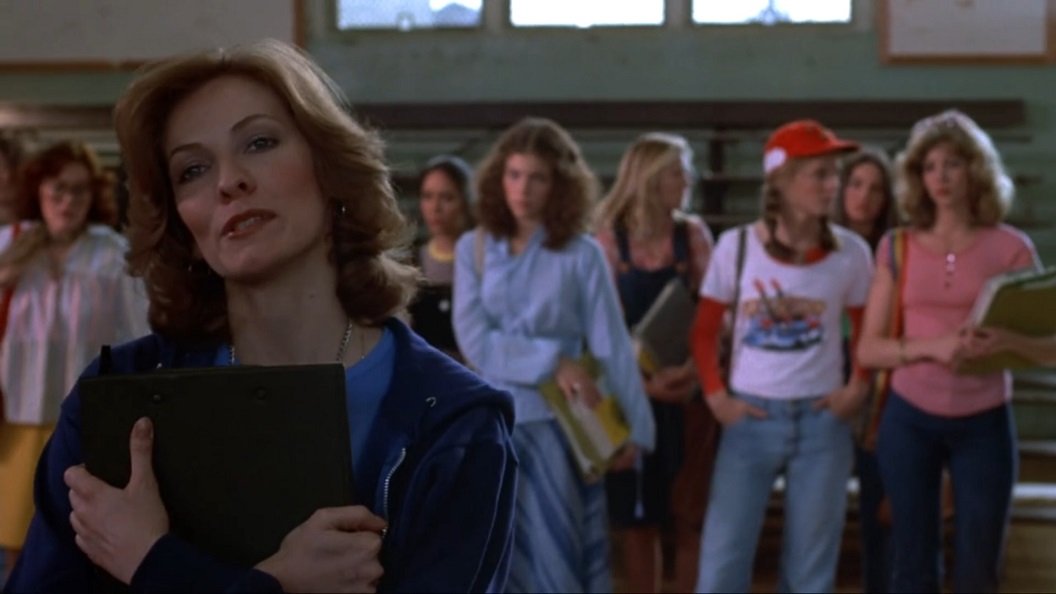
Dir. Brian De Palma. 1976, 98 mins. DCP. With Sissy Spacek, Piper Laurie, Amy Irving, Nancy Allen, John Travolta. In the able hands of the suspense maestro Brian De Palma, Stephen King’s best-selling debut novel became one of the big screen’s greatest supernatural chillers, a wildly stylish and intensely emotional throat-grabber about a mercilessly teased—and telekinetic—high schooler who exacts outsized revenge on her peers at the prom. Grounding all the kinetic mayhem is a brilliant, Oscar-nominated Sissy Spacek, whose achingly humane portrayal of this misunderstood monster makes her plight all the more tender and scary. As her abusive, religious zealot mother, a staggering Piper Laurie, also Oscar-nominated, transformed into one of horror cinema’s most frightening villains. The grabber of an ending still has yet to be matched.

BETA AXE #1 – Deluxe Collector’s Edition Contents Each set is individually numbered and housed within a collectable display box, offering an anthology of film-inspired memorabilia and premium collectables:
Limited & Numbered Deluxe Collector’s Box – 0001 / 1200
Matching Numbered Collector’s Editions – 0001 / 1200
Luxury Magnetic-Closure Collector’s Box, Satin finish, textured embossing & spot gloss detailing
Collector’s Edition Premium Slipcase, Exclusive artwork with gloss & textured embossing
Zavvi Exclusive 4K UHD SteelBook With Acetate O-Ring
Pendant & Key Replica Set
1664 Racine Matchbook Replica
Eliot Ness Identification Card
Prohibition-Era Drinks Token
Two Perfect-Bound Photo Booklets (A5 & A6 formats)
Collector’s “Ledger” Folder
Exclusive Numbering Sticker
6 Character Art Cards
6 Concept Art Cards
Vintage-Style Restaurant Photograph
Premium Foil-Stamped Envelope
A definitive collector’s release for one of cinema’s most iconic crime dramas. The Steelbook design draws inspiration from the gritty newspaper print aesthetic of Prohibition-era Chicago, recreated in authentic halftone styling to evoke the look and feel of front-page crime reports from the time. Beneath the artwork, a subtle vintage street map forms the background, grounding the design in the city itself and deepening the sense of place. Finished with a tactile textured coating, the surface brings the piece to life in the hand, adding both physical depth and visual character.

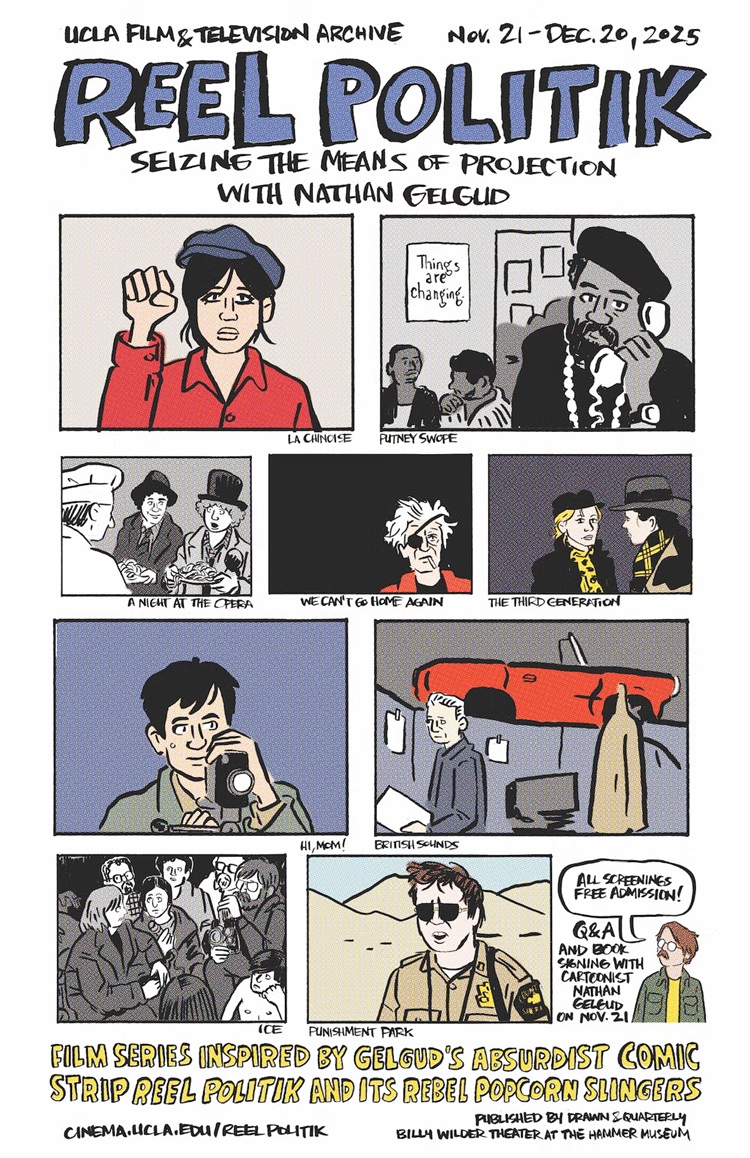
Here's a series description at the UCLA Library:
Cartoonist and illustrator Nathan Gelgud is probably best known for his series of auteur tote bags, illustrated filmographies on canvas for directors such as Chantal Akerman, Rainer Werner Fassbinder, Yasujiro Ozu and Agnès Varda. Since 2009, when he was commissioned to design a poster for a re-release of François Truffaut’s Small Change, Gelgud’s work has graced cinema ephemera for film screenings and retrospectives at major venues in New York, Paris and Los Angeles. His nonfiction comics about directors and actors have been featured in the New York Times, The New Yorker, Paris Review and Hyperallergic. Lately, Gelgud has turned his attention to Reel Politik, a daily Instagram comic about a ragtag group of cinephile movie theater workers beset by the algorithmic indignities of the streaming age. Gripes about assigned seating and in-theater dining quickly lead to open rebellion when they “seize the means of projection,” then turn their sights on hijacking the Criterion Mobile Closet. Gathered together in a new collection published by Drawn & Quarterly, the Reel Politik strips comprise an absurdist, loving satire of all things arthouse with a Marxist-Leninist twist, an accessible primer on revolutionary thought and a wry, movie-mad antidote for troubled times. The Archive is thrilled to turn over the Billy Wilder Theater to Gelgud for this five-night series of revolutionary films that inspired him and his rebel band of popcorn slingers.Series programmed by Senior Film Programmer Paul Malcolm and Nathan Gelgud. Notes written by Paul Malcolm.
Putney Swope (1969)Anarchic trickster of American cinema, Robert Downey Sr. is another pillar in the canon of radicalized movie theater workers in Nathan Gelgud’s book Reel Politik, and Putney Swope stands at the zenith of Downey’s devilish, bomb-throwing career. After the corporate board of a Madison Avenue ad firm accidentally votes its only Black member to be chairman, Putney Swope (Arnold Johnson) transforms the company’s image-making apparatus into a machine for revolution and profit. Soon, a parade of CEOs and activists alike are beating a path to his door to pay respects (and cash) to get their piece of the action.
35mm, color and b&w, 85 min. Director/Screenwriter: Robert Downey Sr. With: Arnold Johnson, Stan Gottlieb, Allen Garfield.
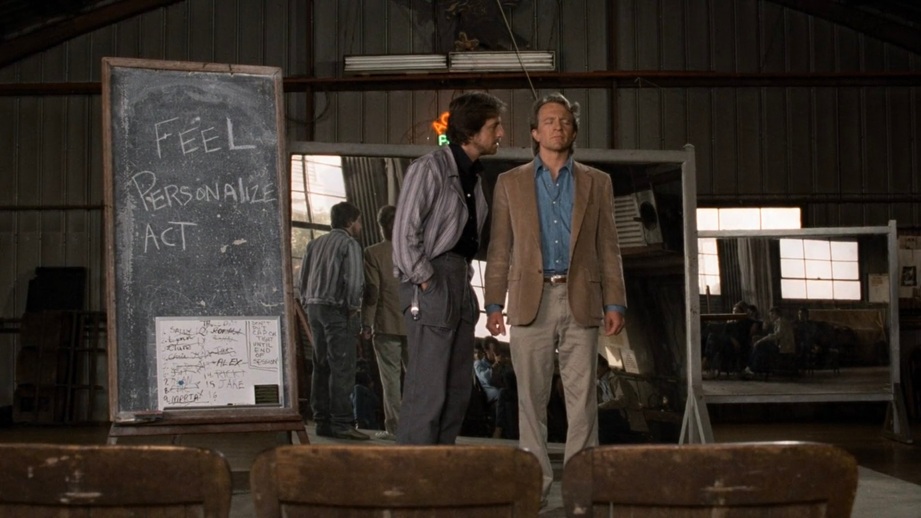
Hi, Mom! (1970)Raw and raucous, Brian De Palma’s early career dark comedy with Robert De Niro fuses underground aesthetics and Hitchcock homage on the streets and in the tenements of New York. De Niro reprises his character Jon Rubin from De Palma’s Greetings, now struggling to make a living, first with a voyeuristic pitch to a porn producer then as an actor in a political theater troupe looking to cash in on radical chic. Revolution is in the air and everyone seems in on the hustle as De Palma veers wildly from broad comedy to sexual farce to documentary-style realism and outright shock, deftly capturing the tumult of the times.
35mm, color and b&w, 87 min. Director/Screenwriter: Brian De Palma. With: Robert De Niro, Jennifer Salt, Allen Garfield.