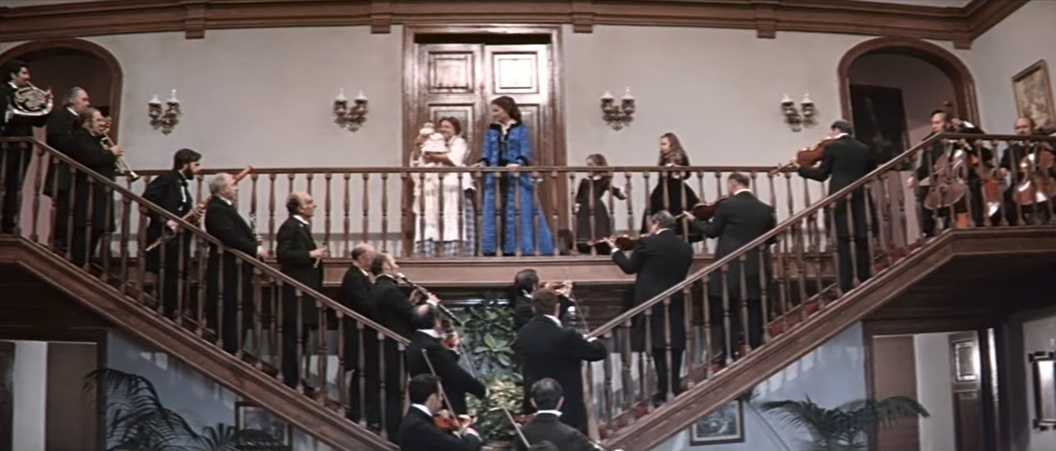
A TWEETED EXCERPT FROM ROBBIE ROBERTSON'S NEW MEMOIR, INSOMNIA
 Hello and welcome to the unofficial Brian De Palma website. Here is the latest news: |
|---|
E-mail
Geoffsongs@aol.com
-------------
Recent Headlines
a la Mod:
Listen to
Donaggio's full score
for Domino online
De Palma/Lehman
rapport at work
in Snakes
De Palma/Lehman
next novel is Terry
De Palma developing
Catch And Kill,
"a horror movie
based on real things
that have happened
in the news"
Supercut video
of De Palma's films
edited by Carl Rodrigue
Washington Post
review of Keesey book
-------------
Exclusive Passion
Interviews:
Brian De Palma
Karoline Herfurth
Leila Rozario
------------
------------
| « | November 2025 | » | ||||
 |
||||||
| S | M | T | W | T | F | S |
| 1 | ||||||
| 2 | 3 | 4 | 5 | 6 | 7 | 8 |
| 9 | 10 | 11 | 12 | 13 | 14 | 15 |
| 16 | 17 | 18 | 19 | 20 | 21 | 22 |
| 23 | 24 | 25 | 26 | 27 | 28 | 29 |
| 30 | ||||||
De Palma interviewed
in Paris 2002
De Palma discusses
The Black Dahlia 2006

Enthusiasms...
Alfred Hitchcock
The Master Of Suspense
Sergio Leone
and the Infield
Fly Rule
The Filmmaker Who
Came In From The Cold
Jim Emerson on
Greetings & Hi, Mom!
Scarface: Make Way
For The Bad Guy
Deborah Shelton
Official Web Site
Welcome to the
Offices of Death Records

I think the thing that Brian De Palma does that I love is when the films become fully operatic. It’s not like it’s self-conscious, but it really has this larger-than-life feeling. And my favorite – it’s in Carrie – is the long crane shot leading up from Tommy Ross and Carrie White on the dance floor, through the crowd as they go to the stage, going up the rope to the bucket – with that Pino Donaggio score, it’s just fantastic. And that, to me, that is pop opera at its best. I love it.
After that, Wright talks about the extended exposition long take in De Palma's Raising Cain, and also meeting John Lithgow, asking him if he had seen the Peet Gelderblom recut (Lithgow had heard about it but had not seen it).

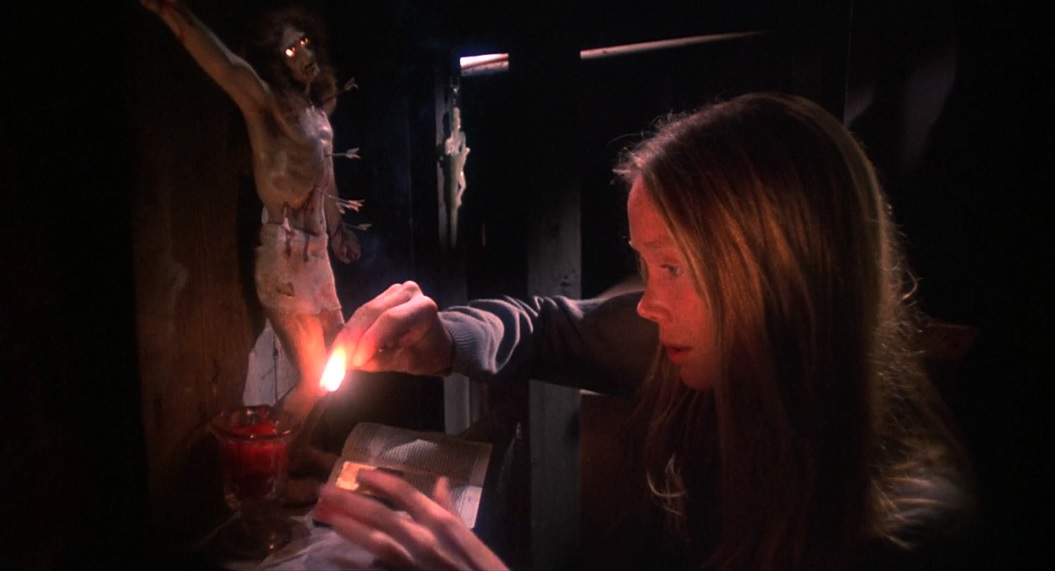
King’s writing in Carrie is raw, propulsive, and full of empathy for outsiders. The horror works because it’s rooted in real emotion – shame, isolation, and the desperate hunger for acceptance.Anyone who’s ever felt like an outsider will be able to empathise with Carrie. The book is also surprisingly concise by King’s later standards, coming in at under 250 pages, which keeps the pace taut and suspenseful. There’s an almost tragic inevitability to Carrie’s fate: even knowing what happens in the end, as you read or watch you’ll still find yourself rooting for a different outcome.
Brian De Palma’s 1976 adaptation captures the feverish atmosphere of the book and adds a lurid, dramatic flair. Sissy Spacek, with her wide eyes and eerie fragility, gives a performance that’s both haunting and heartbreakingly human. Piper Laurie, playing Carrie’s mother, delivers religious mania as high art. And the final prom sequence, with its split screens, slow motion, and silence before the storm, remains one of cinema’s most unforgettable moments.
The film streamlines King’s fragmented narrative, removing the reports and letters that frame the novel. Instead of a post-event investigation, it unfolds in real time, which makes the climax feel more immediate and emotive but less reflective.
The destruction in the book is also on a far larger scale – Carrie’s rage levels an entire town, not just a gymnasium. The epistolary fragments give a wider sense of the disaster’s aftermath, suggesting government cover-ups and long-term fallout. The film, by contrast, tightens the focus on the human emotion and spectacle at the core of the story.
The endings also differ: the novel ends with a hint that another telekinetic child has been born, leaving open the possibility of future incidents. De Palma opts for a pure horror punchline to the film – that infamous hand bursting from the grave – designed to make audiences jump out of their seats. It’s very effective.
So, which is better: book or film?
This is one of the rare cases where both are brilliant in their own right. The book is a better psychological study: claustrophobic, strange, and full of pathos, with a wider and more ambitious scope. The film, though, is the better experience: stylish, shocking, and unforgettable, it brings you up close to all the emotion and the human story underneath the destruction of the book.
In this instance, I don’t think it matters which way around you take them: the book will unsettle your mind, while the film will unsettle your nerves. Either way, it’s clear that this is the type of horror that works best precisely because it makes us feel sorry for the monster.


Double Indemnity (1944)Directed by Billy Wilder
Written by Billy Wilder and Raymond Chandler, from a novel by James M. CainFemme Fatale (2002)
Written and directed by Brian De Palma
The stark monochrome. The Germanic shadows. The fatal ironies, the ironic fatalism. The sun-shattered Los Angeles and its inky nights. The libidinal allure of death, the existentially terrifying sex. The obsessive investigator. The lust-hammered sap willing to risk all for money or a woman or both. The ice-veined femme fatale in need of a murderous fool. More than any other, Double Indemnity is the film that most obsessively, efficiently, and thrillingly gathered together the tropes of a nascent genre and shotgunned them at the movie screens of the 1940s. No other picture so ably managed to articulate the potential of noir than this wickedly funny (and just plain wicked) tale that plays out as smirking, sensuous flashbacks during a gunshot man’s final moments when death envelops him in its permanent seduction.
The neo-(also erotic-, anti- and deconstructive-)noir Femme Fatale renders subtext as text in its opening shot: Double Indemnity playing on a TV, with its lone viewer’s body—a naked Hitchcock blonde thief (Rebecca Romijn)—reflected across the screen like a full-colored ribbon. That ribbon also thematically binds the film to works like David Lynch’s then-just-released Mulholland Drive, as De Palma crafts a maniacal cinematic essay on everything from noir to neo-noir, crime pictures to the cinema of the surreal, the nature of fantasy to the nature of identity. Above all else, as the movie’s failed Cannes Film Festival heist sequence sends Romijn’s mysterious thief into an (unreal?) double life, De Palma uses the visual language of Hitchcock, the dream language of Lynch and the thematic language of noir to finally take us into the minds of the troubled women who’ve always been lurking at the heart of this genre. This is the movie they have always been watching—and living within.

After a plot description, Cinema Tweets continues:
Some of you may have come across my recent review of Kathryn Bigelow’s recent release A House of Dynamite, a film I criticized for misusing the “vantage point” mechanism as a means of telling its story. Snake Eyes succeeds where A House of Dynamite fails. With Snake Eyes, throughout the second act, we go back in time and revisit the terrorist attack as it unfolds, but from a different character’s vantage point- usually as Detective Santoro interviews a new character. The difference between Bigelow’s film and De Palma’s film is we actually learn something new with each vantage point. There’s more mustard added to the story with each character’s version of events. That’s why the way in which this story is told actually works super well.But in addition to the vantage point storytelling, we get vintage De Palma artistry. Draped & drenched in split diopters, extreme close-ups, and an unbelievable long, over-head tracking shot throughout the corridors of a hotel. The camera work here is just spectacular. Had you just played this film for me without ever telling me the name of the director, I would’ve known within minutes that this was made by Brian De Palma. His fingerprints are all over this - and I mean that in the best way possible.
Mixed in with a good story & awesome direction from De Palma is a sneaky-excellent Nicolas Cage performance. Cage has always been bombastic & over-the-top in a sort of take it or leave it manner. In this case, I’m definitely taking it because Cage fits the sleazy detective bill perfectly. Part of what I enjoy about Cage’s performance here is that his character Detective Santoro is put on his heels about halfway through the film & never totally regains traction. It brings out a different side of Cage, who appears to be in control throughout the first act of this film. I very much enjoyed the Cage- De Palma partnership.
We don’t get films like Snake Eyes anymore & it’s a damn shame.