

AND ANOTHER PASSAGE ABOUT REDACTED
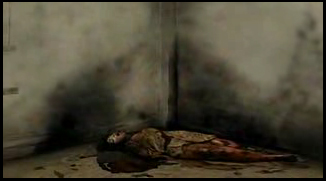 BBC News reports that Steven Green has been given five life sentences, with no possibility of parole, for the rape and murder of a 14-year-old Iraqi girl, and the murder of her family. The incident was the basis for Brian De Palma's 2007 film, Redacted.
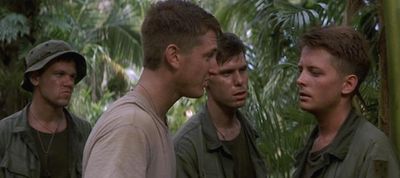
 Nick Lacey posted an excerpt the other day from his recently published second edition of Image and Representation, which looks at key concepts in media language. The excerpt he posted, called "Representing the war in Iraq," looks at several of the films made in recent years about the conflict that began in 2003. Lacey provides a brief but interesting analysis of Redacted, although he seems to say that the photograph that ends the film is an actual photograph (which therefore leads him to call the film "exploitative"), although the final photograph (shown here) was actually a staged photo. Here is Lacy's passage about Redacted:
Redacted, the most unconventional of the ‘Iraq films’, also uses new media technologies to represent the rape of a 15-year-old girl and the murder of herself, and her family, by US marines. The film starts with a disclaimer that the film is ‘a fiction inspired by true events’. The writer-director, Brian De Palma, uses a mix of texts to show what (might have) happened: a ‘home video’ made by one of the marines; a pastiche of a French (intellectual) documentary about Iraq; CCTV cameras; Internet postings; a video made on a mobile phone; photojournalism. Although it may seem that it is a realist text, the multimedia mixing instead draws attention to the artifice of what is shown. This may suggest that such horrendous events cannot be convincingly rendered by realism. Indeed De Palma also deploys melodrama; the one good guy, who tries to publicise what’s happened, is called Lawyer McCoy. This melodrama extends to the use of an aria from Puccini’s opera Tosca, the protagonist of which murders the man who is trying to rape her. This, highly passionate, aria could be seen as an ironic comment upon the Iraqi teenager’s inability to kill her rapists. However, the last image of the film is an actual photograph of the dead girl which needs no melodramatic heightening to appall its audience and so, ultimately, De Palma’s film comes across as exploitative.
Updated: Saturday, September 5, 2009 3:58 PM CDT
Post Comment | View Comments (4) | Permalink | Share This Post
 Michael Phillips, the new co-host (with A.O. Scott) of
 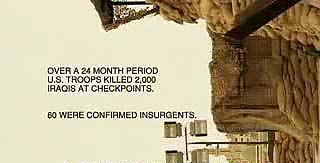 Two years after Brian De Palma's Redacted had its world premiere in Venice, the collective known as
  Samuel Blumenfeld, co-author of Brian De Palma: Conversations with Samuel Blumenfeld and Laurent Vachaud, interviewed Quentin Tarantino a couple of weeks ago for
  And with so much discussion going on about Tarantino's new film in relation to some of Spielberg's WWII films it is nice to see what Tarantino himself has to say about them. Here is what Tarantino told Blumenfeld about Saving Private Ryan:
  The passing of Ted Kennedy has inspired at least two bloggers to recall Brian De Palma's Blow Out, which had definite echoes of the infamous Chappaquiddick incident from 1969. In that incident, following a party on Chappaquiddick Island, Mary Jo Kopechne was found dead inside Kennedy's overturned car, which was submerged in a tidal channel. Kennedy had left the scene of the incident, and later said that the night before, he had taken a wrong turn and accidentally drove off a bridge and into the water. A scandal quickly took hold, and Kennedy's presidential hopes seemed forever scarred by the whole affair. Conspiracy theories emerged, as well, as Kennedy had apparently driven down the original road (before he made that "wrong turn") on several occasions, and also altered his story in a televised address about a week later.
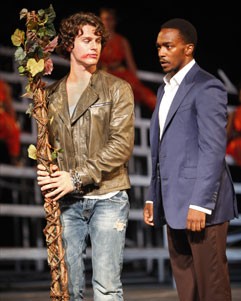 When Joan MacIntosh portrayed Dionysus' aunt Agave in Richard Schechner's Dionysus In '69, itself a 1968 adaptation of Euripides' The Bacchae, she was twenty-something years old. Now in her sixties, she is playing the same role in a new version of the play directed by Joanne Akalaitis (and with music by Phillip Glass), now running through August 30th at