
| |||||
| Wexford | Kilkenny | Waterford | Getting There | Tours | Gallery |
| Cork | Kerry | Clare | Tipperary | Galway | Mayo |
|
Places of Interest
Home Page
|
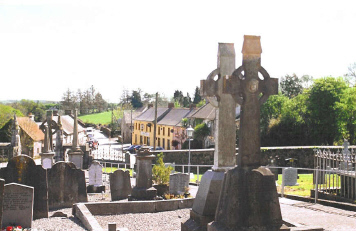 The Village of Kilmacow It was once the center of a thriving mill industry, 14 in all where on the Kings river and Blackwater river. These mills were for linen and corn. There are three castles in Kilmacow - Grannagh Castle, situated beside the River Suir, was home to the Butler family, Dangan Castle of which nothing remains and the ruined remains of Dunkitt Castle. Recently as plans for new roads progress, surveyors discovered the remains of a 14th century mill in Cloone. On the eastern extremities of the Parish is Bishopshall, where there is a ruined church. It is said that a secret passage runs from here to Granagh Castle.
Following is a list of fourteen known mills in Kilmacow which include , linen paper , linen and carding mills, corn and flour mills.
Linen paper mill
Flax carding mill
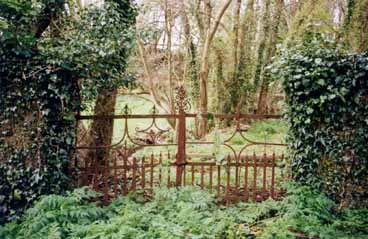 An old Gate
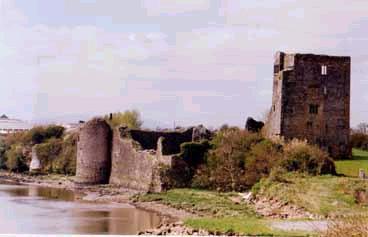 Grannagh Castle Granagh Castle despite its ruined state still has an awesome and majestic stance on the banks of the river suir just 5km from Waterford city in the parish of Kilmacow. Caisleán Greannach, the Castle of the Gravelly Place, was also known as Dón Braum. It is said that Braum erected a fortification here to guard the river and later to repel the attacks of the Norsemen from their settlement at Waterford. When the Normans came, the site fell to the De Poers who occupied it until Eustace De Poer was executed for treason in 1375. Edward the Third then granted the castle to James 2nd Earl of Ormond. Tradition says that the present Castle was built by James the 3rd Earl of Ormond in the 1300s. This is the same Earl of Ormonde who established Kilkenny Castle. The Castle remained in the Ormond family at least up to the 1640's. It endured several attacks throughout the ages. In Cromwellian times two cannons were fired on it and his soldiers besieged the castle. The partially demolished castle ensured a victory for Cromwell's army. In the 19th Century its owner George Roche of Limerick carried out repairs in 1824. As it was very delapidated mainly because locals carted off large parts of it for building material. The Board of Works did some restoration in 1925. There is stone tablet embedded in the wall of the Castle and it states that it was restored by George Roche through a Waterford mason by the name of O'Rourke. On a part of the ruin facing the main road there is a plaque erected by Board Failte. It says: "This ruin once the favourite residence of Máiréad Moore wife of Piers,8thEarl of Ormonde.This Castle a 15th Century fortress was taken by assault by Cromwellian forces by Axtel in 1650". It has always been said that there is a tunnel going from Granagh Castle, under the river suir to the estate of Mount Congreve. Tunnels dos exist beneath the castle ruins that once held prisoners. But it has yet to be proven if they go all the way under the river. 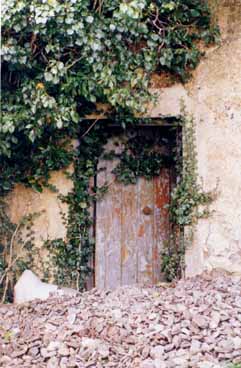 Percy's Shop 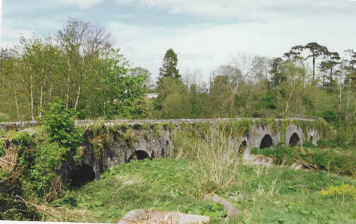 Bridge to Village 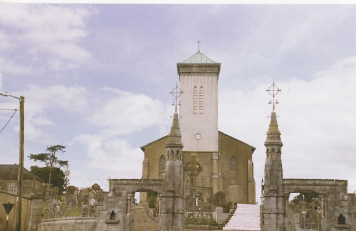 Parish Church
|
