
| |||||
| Wexford | Kilkenny | Waterford | Getting There | Tours | Gallery |
| Cork | Kerry | Clare | Tipperary | Galway | Mayo |
|
Places of Interest
Home Page
|
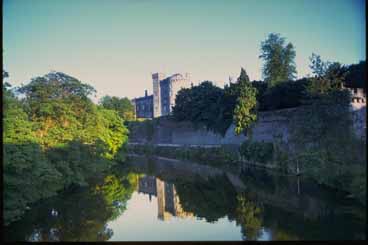 Kilkenny Castle Kilkenny Castle was first constructed in the 12th Century by Strongbow. Back then it was just a tower. By 1260 William the Earl Marshall built the first stone castle on the site. This castle square in shape with towers at each corner; three of these original four towers survive to this day. The Butler family bought the Castle in 1391. Until 1935 it was their main residence. So for 500 years the Butler Family, Earls, Marquesses and Dukes of Ormonde lived here in the. This family was totally faithful to the crown and to Ireland. In 1967 the property was handed over to the State and the castle and grounds are now managed by Dúchas, The National Heirtage Council. Tours take place every 20 mins during July and August and take approx 45-50 Mins. Opening Times : October to Daily 10.30am to 5.00pm (Closed for lunch 12.45 to 2.00pm) April - May Daily - 10.30am to 5.00pm. June -August Daily 9.30am to 7.00pm. September Daily - 10am to 6.30pm. Admission Adults € 4.40 Children/students € 1.90 Senior Citizens €3.10 FamilyTicket (€ 10.10),
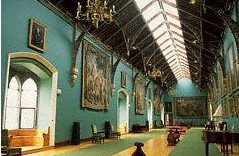 Long Gallery Kilkenny Castle Ireland's second largest medieval cathedral was established by St.Canice as a monastic settlement in the 6th century. The round tower (31 m high) alone survives from the Monastery and was used as a belfry and a refuge in times of danger. William the Earl Marshall built the cathedral on the site in the first decade of the 13th century. Much of the building was carried out between 1215 and 1260. Cromwell's troops decimated a lot of the cathedral in 1650, but it survived and was restored in the 18th century along with its fabalous limestone grave slabs. . The Cathedral was begun by Hugh de Rous (1202-1218) in the Early Gothic style from the Angevin district in France, continued by his successors, and completed during the episcopacy of Geoffrey St. Leger (1260- 1286). Despite an eventful history, including the the Reformation in the mid-sixteenth century, wrecking by the Cromwellians in the mid-seventeenth century and restoration in the mid-eighteenth century, the Cathedral is unusually consistent in style. Its present appearance is due to a general restoration begun in 1866 by the Architect Sir Thomas Newenham Deane. The doorway is the finest surviving early Gothic doorway in Ireland and features many foliage cusps and two fine label-stops in the form of a human head. The master-mason for much of this late work is known as the Gowran Master since his handywork is most noticeable at Gowran church some of his characteristics appear at Thomastown. As a sculptor he was perhaps the most gifted craftsman in Ireland during the thirteenth century. 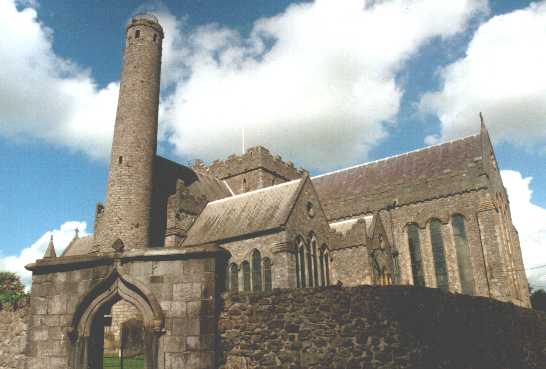 St. Canice Cathedral
The Black Abbey or the Convent of the One and Undivided Trinity was founded by William Marshall the younger, Earl of Pembroke, for the Dominican Friars in 1225. The site was an unfortunate one as subsequent events proved, for to this day, it is subjected almost annually to severe flooding. Despite this handicap the Abbey has shown vitality and tenacity of life rare in monastic institutions. ST FRANSIS ABBEY This abbey (more correctly friary) of the Franciscans was founded between 1231 and 1234 by Richard Marshall, Third Earl of Pembroke. In 1331 Dame lsabelia Pairner extended the Chancel and erected the high altar and present east window, which extends almost the entire height and width of the church and consists of a seven-light window. In 1347 a confraternity was established to raise funds for a bell tower, but in the following year the Black Death devastated the country and was chronicled by one of the friars, John Clyn. It was probably not completed until much later in the century. In I540 the friary was suppressed and its properties granted to the Corporation. The subsequent ruin of the monastery was accelerated by the seemingly inevitable building of a barracks in the grounds. 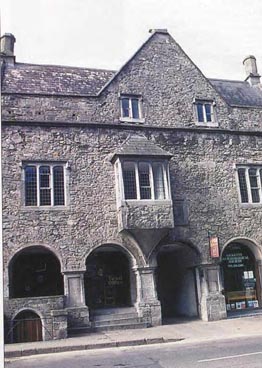 Rothe House
Rothe house was built in 1594. It illustrates how the merchants of Kilkenny lived over their shops and how the streets of the city were lined with arcaded footpaths. John Rothe FitzPiers and his wife Rose Archer belonged to minor branches of two of the leading civic families of medieval Kilkenny. When he died in 1619 business was already being carried on by some of his eleven children and their families. The house is traditionally associated with the National Ecclesiastical Assembly convened by Bishop Rothe, who was a cousin of John Rothe, in May 1642. This meeting was attended by all the Catholic Bishops of Ireland with representatives of the clergy. It led to the formation of the Parliament of the Confederation in October 1642
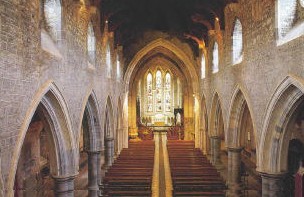 St Canice Cathedral
|
