
| |||||
| Wexford | Kilkenny | Waterford | Getting There | Tours | Gallery |
| Cork | Kerry | Clare | Tipperary | Galway | Mayo |
|
Places of Interest
Home Page
|
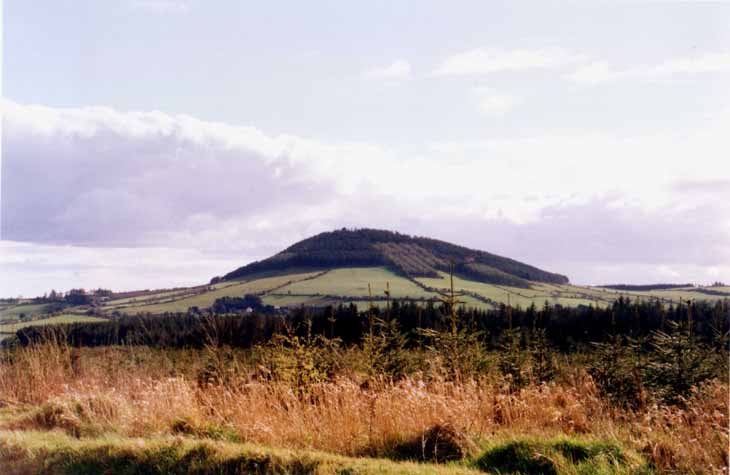 Tory Hill Situated in the Parish of Mullinavat, Tory Hill stands at 1,000 feet high. And is the highest point in South Kilkenny. Standing on the top you can see a 360 view of the sorrounding countryside. Its was named after (Tory) Outlaw Edmund Dean who lived here in the 1700s. He was a Tory landlord who was dispossessed of his estate. The cave where Denn used to sleep known as "Leaba Eamoinn" can be seen exactly as it was 300 years ago. James Freaney also hung out here and rumour has it that his plundered gold is buried on the slopes of Tory. In Irish Tory Hill is called Sliabh Grian, Hill of the Sun God. Its sheer prominence and vantage point made it a celtic sight of worship, where the festival of Lughnasa, probably would have been practised. A tradition, which still continues in the form of an annual pattern to the Marian cross on its summit on the second Sunday of July. There are quiet a few archaeological remains on Tory Hill. There is a very rare dual court Cairn tomb on its slopes and the site of an altar stone and cairn on its summit. The alter stone is now called the Giants chair and is used as a wishing stone.
 The Three Friars
Passing Tory Hill on our left we head up Bishops Mountain and come to the cross roads where the right hand turn leads to Listerlin. Here on the right hand side of this cross roads is the commerative headstone for the three Friars. These three Friars, were murdered at this spot in 1650 by Cromwell. On the hill sloping upward from the road to our right we see three standing stones, shining white against the green of the rising field. These stones are known as the three friars and are supposed to mark the resting-place of the martyred priests. Each year, some of the local people paint them white as a mark of remembrance.
|
