|
Home
Coping With Cancer
Kidney Cancer
Risk Factors/Causes
Signs & Symptoms
Diagnosis
Stage Info
Surgical Treatments
Non-Surgical Treatments
Cancer Immunotherapy
Recurrnet Kidney Cancer
Types of Kidney Cancer
My Father
Sources
|
Surgical Treatments
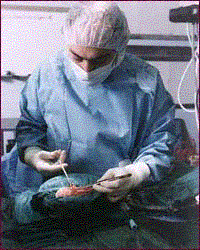
After being diagnosed, the patient and their family are faced with many problems. It is a lot to deal with all at once, and now there is a big decision to make, surgical treatments. Your doctor will plan your treatment by considering a number of factors, your general health, the type and size of your tumor and how far it has spread, if at all. The most common form of surgery is Radical Nephrectomy. It involves the removal of the entire infected kidney, often along with the attached adrenal gland, depending on how far the cancer has spread. It is very possible to live a completely normal life with just one kidney, the other normal kidney can pick up the pace. The choice of surgery for patients who have cancer in both kidneys and for those who have only one functioning kidney would most likely be Partial Nephrectomy which is the removal of only the cancerous tissue and part of the kidney if the tumor is small and confined to the very top or bottom of the kidney. The last choice is Arterial Emoblization, which is usually reserved for patients whose health does not permit surgery. In this procedure, the blood flow to the kidney and the cancerous tumor is cut off, and both die. The kidney is usually removed later on. Unfortunately, along with surgery come the risks. The patient could experience damage to blood vessels, damage to organs, failure to the remaining kidney, infection, pneumothorax (unwanted air in chest cavity), etc. Most people are ready to return home in 7-10 days after the operation. (Understanding Cancer of the Kidney)
|

