
 What is IRC? Network Structure IRC Clients PIRCH98 Commands and Services Responsibilities Netiquette Security IRC "Extras" Resources Introduction (Home)
Basic IRC Network Structure
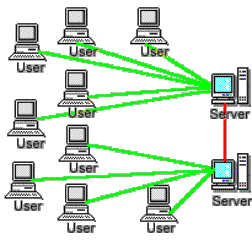
An IRC Network is a collection of servers linked together. An IRC server is a machine running a specialized program called ircd that processes client information into a communications network. When you log onto an IRC network, you are connecting to one of the servers on that network. Since all the servers are connected to each other, you are connected to all the other users even though they may not be connected to the same server as you. All servers on a network share and have access to the same information. Each server knows who is on the network, which channels the users are in, and which servers the users are on.
An IRC Network represents a client-server model of a network with multiple connected servers. Between any two servers on an IRC network, there is only one possible route. The servers in an IRC network are divided into "leaf" and "hub" servers. A leaf server is a server that connects to only one other server while a hub server can connect to multiple servers, providing the structure for routing for networks. On smaller networks, there may only be one hub. On larger networks, there can be multiple hubs. This routing structure enables information transfer through the network, allowing all the network servers to access the same information in real time. When a netsplit occurs, where a server or group of servers gets disconnected from the network due to connection issues or mechanical difficulties, the users on the "split" server cannot see or access the network; and those who are still connected to the network cannot see or access the split server(s). A netsplit divides the network into separate parts until it can be corrected. This is why multiple hubs are used on larger networks to cut down on the circumstances that create netsplits and to reroute traffic when servers are disconnected.
For the user, there are seldom situations where it makes a difference between connecting to a leaf or a hub server. This is generally only an issue when network lag and overloads are a problem. The choice of a server is generally based upon geographic location. To cut down on internet slow down from the distance information has to travel, it is usually better to connect to a server that is geographically close to you. An exception to this geographic rule is when the network is experiencing netsplits; during netsplits, it is usually a good idea to stay on hubs versus leaf servers. Different networks have various means of addressing this concern, Shadowfire for example, provides a server listing with geographic locations on their website.
For more information on IRC networks, DalNet's operator manual at http://www.wizzu.com/irc/doc/operator-1.1.1.txt includes a brief overview of IRC network structure.
Designed by: mynx
Viewable with Internet Explorer 5.5 at 800x600.