



Topic: Danny Queen

Danny R. Queen is a rarity among us. His poetry soars with personal power and conviction. For more than ten years, Danny has been the host and producer of Color Me Poetry, a popular show which airs on BSU-TV, Bowie State University television station. Currently, the show is being broadcast to an estimated 300,000 viewers every Monday night. Since the show beginning, Danny has introduced his viewers to a wide variety of creative artists and poets. Notable among the list of guest have been authors Marita Golden, J. California Cooper,Eloise Greenfield,Omar Tyree, Nathan McCall and Sharon Bell Mathis. Other notable guest as Willie Jolley. His most recent project was the release of SOUNDTRAK TO A DREAM, his first CD. Performed with some of the finest musicians and vocalist in the Washington Metropolitan area, SOUNDTRAK TO A DREAM is a masterful blend of poetry and prose. This CD was produced with none other than world renown musical genius Robert Northern (Brother Ah) who has performed with the likes of John Coltrane, Miles Davis, and Quincy Jones. Co-produced by Milton E. Russ II. Danny was featured in the Novemer 24, 1999 edition of the Washington Post in an article that highlighted some of the work he's done throughout the years and continues to do. Shortly before that, he was featured in the August 3, 1999 edition of the Prince George's Journal (Prince George's County, MD). Danny's work has earned him many awards, including the American Song Festival Certificate of Merit and the American Black Book Writers Association Award. 
Updated: Tuesday, 29 January 2008 6:47 PM CST
Permalink | Share This Post
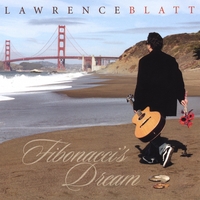 During his life, Fibonacci traveled throughout the Mediterranean region and studied mathematics with several Arab scholars. By the age of 32, he published a book called “Liber Abaci” (Book of Calculation), and introduced Europeans to the use of Arabic numerals (the system we use today). In his book, Fibonacci explained the solution to the question of how fast a hypothetical population of rabbits could breed. The solution encompassed a derivation of a series of numbers that have far reaching implications to explain physical realities found throughout the universe. Assuming that there was one mating pair to start, Fibonacci calculated that each generation of rabbits would increase by the sum of the two preceding numbers of rabbits. Fibonacci derived a series of numbers using this formula. Much of musical theory follows Fibonacci mathematics. Musical scales are based on 8 notes and an Octave is separated by 12+ 1 tones (8 and 13 are Fibonacci numbers). The basic structure of a chord uses the Fibonacci sequence 1, 3 and 5. Many great composers from Mozart to Beethoven to Bob Dillon have either consciously or subconsciously applied Fibonacci mathematics to their music. With Fibonacci math in hand, I set out to compose this series of recordings. I have tried to lace Fibonacci numbers and ratios in each composition. To hear the Fibonacci influence, look for phrases that are repeated in a Fibonacci sequence of numbers, melodies that follow tonal intervals separated by Fibonacci numbers and verses increasing in length by the Golden Ratio. As with my first album, Out of the Woodwork please try to listen to this album, at least once, in its entirety as the compositions are carefully ordered to take you on a journey of my musical and mathematical world. I hope you enjoy my music…and the math.---Lawrence Blatt
 Paul Potts (born 13 October 1970 in Bristol, England), from Port Talbot in South Wales, is a British singer who became the winner of the first series of ITV's Britain's Got Talent, singing operatic arias and impressing the judges in all of his performances. Potts had previously worked in unpaid opera productions from 1999 to 2003. However, a series of illnesses combined with a bicycle accident in 2003 brought an end to his amateur opera career. At the time of his 2007 victory on Britain's Got Talent, he had been working in The Carphone Warehouse, but following his win, he has been signed by the show's judge Simon Cowell to record an album.
  Another Day in Paradise is an offering of 11 instrumental compositions that celebrate the basic themes of a typical day in paradise: processions and celebration; morning, afternoon, and evening; the land, ocean, and sky; youth; spiritual/physical union; and dance. "Another Day In Paradise" is the second release from multi-instrumentalist Michael Stribling. This new CD is a soundtrack of sorts for a typical day in paradise, and literally picks up where "Out of the Darkness, Into the Light" left off. More electronic and ambient than acoustic or melodic, the music brings the listener an uplifting mood and a positive state of mind. Johnny Mathis' percussionist and a radio disc jockey for a number of years, Stribling combines those pop sensibilities with his advanced training in psychology and spiritual studies to present a unique musical point of view. Calling his label "Leelah," which means "divine play," Stribling's mission is "to help others in their journey toward wholeness through the gift of music, by creating works that inspire and uplift the human spirit." Stribling uses a variety of ethnic musical stylings to give his music a universal theme that can bridge a multitude of cultures. Unlike some of the other spirituality-themed recordings out there, Stribling does not present a world of all sweetness and light. His music has a strong positive feel to it, but does not ignore some of the darker moments or influences that come into everyone's lives.
 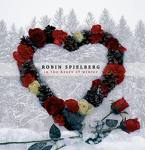 ROBIN SPIELBERG writes us...She has re-releaed her Holiday album with a few changes: "In the Heart of Winter" contains familiar holiday songs from around the globe as well as 4 Robin Spielberg originals that celebrate the Winter season. Instrumentation: piano, cello, flute, percussion. Please note: this album is now being manufactured by playMountain Music with updated sequence, cover art and mastering.
 "Ann Sweeten possesses a remarkable talent. A musician whose extensive classical training is immediately apparent, she is also someone who writes from a great emotional depth. As her producer it is a joy to hear someone who exploits the entire potential of the piano, finding both dynamics and beauty in all 88 keys. Her pieces have a broad stylistic range and yet create a cohesive program of music very distinctively hers. This is a brilliant recording from start to finish." William Ackerman
  Kitaro picks up the path of his sacred journey through Shikoku, an island that has 88 temples, each with its own distinct temple bells. The Sacred Journey of Ku-Kai, Volume 3, is the latest in a projected multi-disc series in which the Japanese keyboardist has been recording those bells and working them into the matrix of his music. Taking its name from Kukai, a Japanese monk and founder of the Shingon school of Buddhism in the 9th century, the series follows a path that gets more languid with each album. The synthesist has jettisoned most of the sappy strings that marred his previous journeys, opting for floating, ambient spaces centered around organic sounds. "Crystal Winds" might be the most carefully formed, albeit rhythm-free and melodically amorphous track Kitaro has composed in years. It builds from a floating array of Native American flute, zithers, Balinese gamelan, temple bells, and harmonic singing merging into filter-swept synthesizer before a brief santoor melody is teased out of it. It's not long before Kitaro tosses in electric-guitar leads on the grandiose sweep of "After the Rain," replete with his patented whooping Korg lead lines. If he'd left out the sampled choirs and strings, it might've risen above generic easy-listening new age, which is still preferable to "Winds Blow over the Hill," a thinly veiled lift from his own Silk Road that makes it sound like a score for a sanatorium. But Kitaro redeems himself with the last two tracks, a hypnotic jam with some uncharacteristically raving guitar over a sequencer ostinato called "Voice in Blue," and "Circle Dance," a ritualistic piece for bells, flute, and what sounds like metal mixing bowls. I kept looking into the kitchen to see if my wife was making something, but I liked the way it added three-dimensionality to the piece. With The Sacred Journey of Ku-Kai, Volume 3, Kitaro gives us hope that the trek might be worth continuing. --John Diliberto
 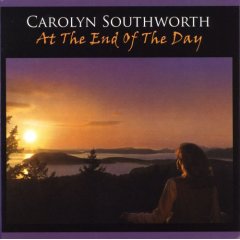 There's nothing more fulfilling than closing a musically diverse year with a complete work of art. Carolyn Southworth's "At the End of the Day" has the fragile beauty and soulful depth of a painting; every note is a graceful stroke of the brush. Labels such as "New Age" or "jazz" cannot aptly describe the haunting, evocative qualities of these gorgeous instrumentals. Southworth's stunningly rich piano playing already dazzles from the beginning, the poignant melodies that transform the title track into a transcendent, magical piece. What makes Southworth's piano playing so engrossing is the emotional pull they create; they simply draw you in unlike many of her peers who keep their distance, letting us admire the sounds they create but not feel them. --Adam Harrington, Whisperin & Hollerin (UK), December 2006 Southworth's piano is smooth, soothing and fresh from the opening title track to the reverent "Nocturne." Each work is melodic and catchy but also deep with emotion and musicality. Southworth has created a CD that will appeal to fans of healing new-age music. But it also set the bar high for fan's expectations. It can stand alongside such new-age artists as David Lanz, Suzanne Ciani and Tingstad & Rumbel. --Scott Iwasaki, Deseret Morning News, Music Editor, October 27, 2006
  Melody and pulse spin outward in a fusion of vibrant musical dialogue that soars through spatial imagination and passion to create astonishing dimensional compositions. Jeff Oster's new CD True is the brilliant formation of this congruent expedition... Oster's musical expression of flugelhorn and trumpet opened up an original sphere in the New Age/ World-Jazz genre last year, with his debut CD entitled Released. A CD infused with harmonious structure and moving, fluid sound captivated fans and critics alike. True embarks on a deeper exploration of Oster's innovative musical style, with an accompaniment of premiere musicians and co-writers. The line-up includes phenomenal musician and producer Will Ackerman, of Windham Hill, who produced True... World-class musicians include Keith Carlock, drums; T. Bone Wolk, guitar and bass; Philip Aaberg on piano, synthesizer; and Michael Manring, bass. In addition, Oster also enlisted the incomparable vocal talents of Melissa R. Kaplan, Ugandan artist Samite and Noah Wilding... True conveys multiple music configurations, yet seamlessly arrives in a cohesive expression. The album's tracks stratify from cosmos to world ethos with varying intensity, intonation and beat.