|
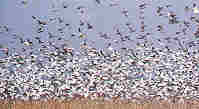
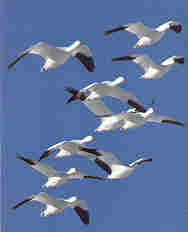
The very large Snow Goose Most geese are very aggressive and tend to keep to themselves during the breeding season but the snow goose is a big exception to the rule. They usually gather in very large colonies made up of about 100,000 to 200,000 pairs of geese. Snow geese pair for life although there is the occasional group made up of a female and several males. The breeding season for the snow goose takes place in the very breif Arctic summer. As soon as the snow begins to melt, paired birds migrate together to their breeding ground and immediatly start building a nest which is usually just a simple hole in the ground. The female incubates the egg for about a month while the male stands just outside the nest to stand guard mainly against other geese that don't want to make their own nest. The goslings are protected by both of the parents until they become self sufficient. Within a month they're ready to migrate south. The snow goose's diet is a variety of different foods according to availability and quantity. It is mainly a vegetarian feeding on grass, wheat, and rice but it will occasionally eat small insects as well. |
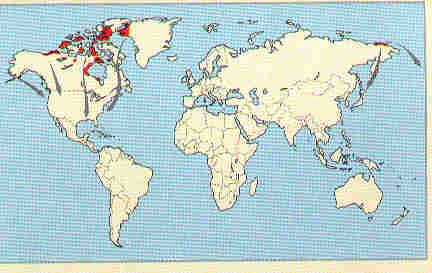 lives in northeast Siberia, northern Canada, and Greenland. However during the winter the goose's home is in Mexico, the southern United States, and Japan. It's very easy to see why this bird with it's snow white feathers is called the snow goose. It is one of the very few birds that is able to survive in the Arctic climate. It's thick feathers insulate it very well from the cold and protect it from predators and prey.There is really no danger of extinction since it lives in a land virtually undisturbed by and humans.