
 |
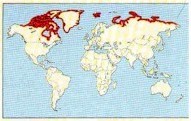
The majestic Polar Bear lives throughout the extreme northern parts of the continents of North America and Asia. Polar Bears have more than enough adaptations to survive on the Arctic ice cap. Their thick white fur not only serves as camouflage against enemies but it also insulates the polar bear from the harsh temperatures. Polar bears have a very unique feature about them as well; on the soles of their feet they have small patches of fur that allow them to keep a stable grip on the slippery Arctic terrain. They spend most of their time lounging around on coastal land just within a few miles from the open water. This huge animal remains active yearound never stopping to hibernate. One of the bear's important adaptations is it's ability to swim at nearly ten miles per hour. They can stay underwater for up to two minutes. |
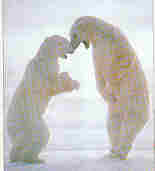 |
Springtime is the polar bear's mating season. Most of it occurs during April into early May. Males will look for available females, but most females only breed every third year. In October and November the bears start to build huge dens in the snow. These dens will be the place their babies will come into the world. The female will usually give birth to two young at one time. They usually weigh only one to two pounds and are hairless, blind, and deaf. They will first come out of the den in March or April and will stay with their mother for up to three years. |
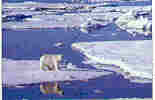 |
These huge animals usually feed on seals which they often swim thirty or forty miles to get. There are two methods for catching a seal. The first is a method in which the bear will watch the seal swim under the water and wait until the animals rises to the surface to breath or the bear can stalk them while they rest on the ice. The polar bear strikes the seal on the back of it's head with it's paw killing it immediatly. During summer polar bears resort to an easier way to catch food-look for carcasses. Sometimes you may find fifteen to twenty bears feeding at the same time. During autumn polar bears will eat lemmings, artic foxes, and eider ducks but like all bears they will eat vegetation when it is available. |