|
Hunting
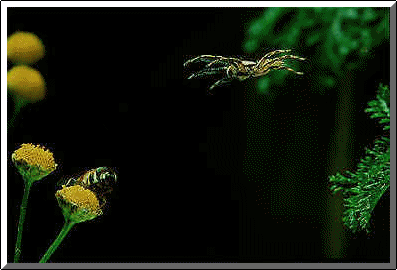
Not all spiders catch their prey with webs. Many use traps of a different kind, while others set off on patrol and pounce on anything that could make a meal. Spiders that trap their prey rely on disguise for a successful ambush. Crab spiders, for example, camouflage themselves and catch insects that land within reach. Trappers also include many species that build silk tubes, or tunnels with secret doors. If an unsuspecting insect wanders nearby, a trap-door spider flings open the door and lunges at its prey. Spiders that search for food operate either by day or by night. The busiest daytime hunters are the jumping spiders. They have extra large eyes to help them find their prey. When the sun sets, the jumping spiders hide away, and much larger and more sinister looking spiders, such as tarantulas, begin to emerge. Instead of hunting by sight, these spiders hunt by touch.
|

