History of the Inner Sphere
The Inner Sphere is a result of mankind's exploration and colonisation of space for around 500 years, beginning in the early 22nd century, with the expansion reaching its peak during the 26th century. With the advent of faster-than-light travel in 2108, the first colony of New Earth was established on Tau Ceti IV in 2116, paving the way for hundreds more in the decades that followed.
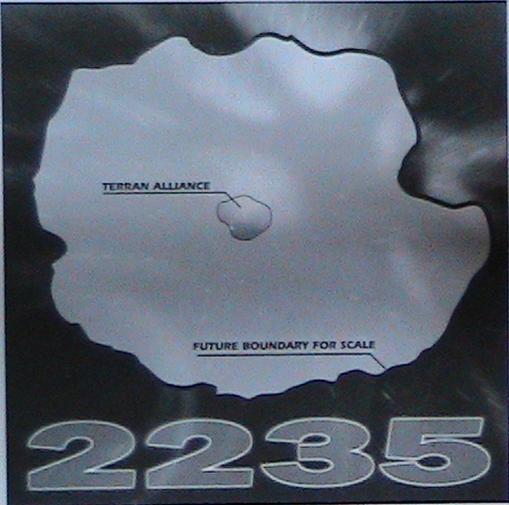
These worlds were first united under the banner of the Terran Alliance and by 2235, it numbered over 600 worlds, spread across 80 light years. It didn't take long, however, for mankind's innate yearning for independence to assert itself and for the seeds of discontent to begin to grow. Colonies on the fringes of the Alliance, which were self-sufficient and saw no benefit in being governed from a distant Earth, began petitioning for the right to self-rule. Their demands were dismissed out of hand by the Alliance government and two years later, a number of worlds declared independence from Terra.
A force of Colonial Marines, sent to quell the rebellion, failed miserably and within six years, faced with growing dissent, the Alliance government had little choice but to grant independence to all worlds more than thirty light years away from Terra.
The Terran Hegemony
During the decades that followed, the Alliance government slowly disintegrated under the financial burden of supporting its colonies and constant political infighting. Growing numbers of citizens experienced hardship and poverty, sparking riots and the rise of political extremism. By 2314, this unrest had grown into an Alliance-wide civil war.
Admiral James McKenna, a senior officer in the Alliance Global Navy, requested the intervention of the Alliance Global Militia, which, until then had remained neutral. With order restored and his new status as the saviour of the Alliance, McKenna was given free rein to abolish the corrupt government and establish a new order, the Terran Hegemony, in its place. Unsurprisingly, he was elected as the Hegemony's first Director General in 2316, by a grateful populace.
James McKenna remained in office for 23 years, during which time he launched three campaigns, to bring colonies that had declared independence from the old Alliance, under Hegemony control. While the first two were largely successful, the third, initiated during 2335, was little short of disastrous. By this time, an old man, James McKenna delegated control of the campaign to his son Konrad. It was the younger McKenna's persistent refusal to follow standard military doctrine that proved to be his undoing. In 2338, he led a naval convoy into the uncharted and as it turned out, densely-mined, Syrma system, losing all but 2 troopships in the process. This failure of epic proportions gave confidence to worlds opposed to Hegemony rule, who had begun forming alliances with each other in an effort to protect themselves.
With Konrad leaving his post in disgrace, James McKenna's death in 2339, left the Hegemony without an heir to take his place. The High Council's solution was to appoint the elder McKenna's third cousin, Michael Cameron. Cameron realised the futility of trying to impose unity by force and instead concentrated his efforts on diplomatic overtures to the former colony worlds, hoping to establish good relations with them, rather than attempting to conquer them.
The Peer List
In 2351, Cameron created the Peer List, bestowing land, titles and other honours upon people for outstanding achievements in the sciences and other fields, or for other valuable contributions to society. This act was the catalyst for the rapid growth of a modern feudal nobility and irrevocably altered the Inner Sphere's social structure.
One of the first recipients of such an award was Dr Gregory Atlas, whose work with myomer fibres, led to the development of WorkMechs, which ultimately led to the creation of BattleMechs, although he did not live to see the first of this new breed of war machine in action.
The Ares Conventions
Invariably, the creation of a new line of nobles, led to the formation of powerful ruling families, possessing great wealth and influence. As their affluence, power and territory increased, so did their determination to hang on to it. It wasn't long before disputes arose over resources, trade routes and borders. During the late 24th and early 25th centuries, diplomatic spats and minor skirmishes turned into all-out war.
There followed over half a century of interstellar conflict, a series of battles that merged into one drawn-out period of violence, bloodshed and destruction. During the early years, the fighting escalated rapidly until each side was inflicting acts of awful brutality against the other, culminating in the mass slaughter of civilians on the Capellan world of Tintavel.
This act of savagery was so shocking that it brought all the combatants to their senses, if only for a brief time. During this interlude, the Capellan Chancellor, Aleisha Liao, determined that no more such acts would be perpetrated against her people, or any others, devised a set rules to ensure future conflicts would be conducted with some measure of honour. Among them were a ban on the use of nuclear weapons and the outlawing of attacks on civilian populations. These became known as the Ares Conventions. On June 13th, 2412, the leaders of the Terran Hegemony, along with all the other heads of state, put their signatures to the document.
Although intended as a first step towards peace, all the Conventions really did, however, was make war a more viable option, as they removed the most destructive elements. Most of the signatory nations wasted little time in planning their next campaigns, merely taking care to ensure their actions would not violate any of the Conventions.
The Star League
Even the benevolent rule of Michael Cameron and his successors could not always forestall the necessity for military action and the Terran Hegemony's forces engaged in a number of battles over the next century. More importantly, however, it also engaged in peacekeeping efforts and its ambassadors also served as mediators in conflicts between the other nations. This gained the Hegemony a certain amount of credibility.
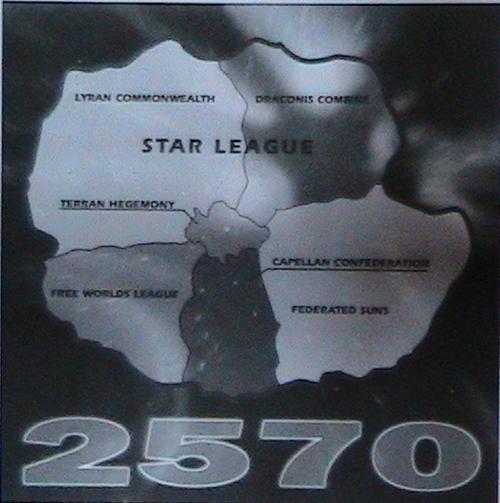
When Ian Cameron succeeded Michael as Director-General in 2549, he continued and expanded the Hegemony's peacekeeping duties and oversaw negotiations that ended a number of conflicts. He also began work to fulfil his ultimate ambition: to unite all the states and put an end to warfare. He accomplished the first step in 2556, when he persuaded the heads of the Free Worlds League and the Capellan Confederation to sign the Treaty of Geneva. This historic agreement set a precedent and the other states soon followed, with the Lyran Commonwealth signing the treaty in 2558, followed by the Federated Suns in 2567. The Draconis Combine was the last to sign in 2569.
With all the major nations now committed to the terms of the treaty, Ian Cameron had achieved his dream, uniting virtually all of humanity under the banner of the Star League.
The Cameron dynasty lasted just over 200 years and during this time, the citizens of the Inner Sphere knew peace and prosperity unlike any they had experienced before. War was restricted to low-scale conflicts that were dealt with relatively easily, either through diplomatic means, or as a last resort, the Star League's own formidable standing army, the SLDF.
This so-called "Golden Age" came to an end after the death of Lord Simon Cameron in 2751. His son, Richard, wasn't old enough to take over as First Lord, so the heads of the member states took turns in serving as regent and mentor to the young Cameron. It didn't take long for old habits to resurface and almost inevitably, they tried to gain the trust of the heir apparent, while attempting to discredit the other leaders, in the hope of gaining favoured status and becoming his sole confidante.
Recognising the actions of his regents for what they were, the lonely and confused Richard turned to Stefan Amaris, ruler of the distant Rim Worlds Republic periphery state, for friendship and advice. This was to prove to be a fatal mistake, however, as Amaris held a long-standing hatred of the Camerons. Richard's plea for help was a golden opportunity that he wasn't about to pass up. Answering the call, he took on the role of friend and advisor, while biding his time, waiting for the perfect moment to strike. That moment came on 27 December 2766, when Richard and his family were gathered in one room of the palace, engaged in festive celebrations. Troops loyal to Amaris stormed the palace, murdering the young First Lord and every other Cameron present.
With no other legal heir to the throne, Amaris was able to announce himself as the new First Lord of the Star League.
His tenure as ruler of the Inner Sphere was short-lived, however. Realising he needed the support of the military, if he were to retain his position, he tried to win over General Aleksandr Kerensky, commander of the Star League Defence Force. The General, however, had been a loyal supporter of the Camerons and despised Amaris for his treachery. Recalling SLDF units throughout the Inner Sphere, he declared war on the usurper, waging a bitter, 13-year campaign to liberate the worlds of the Terran Hegemony, which had been garrisoned with forces loyal to Amaris.
The struggle reached a conclusion on 29 September 2779, when Kerensky personally led an assault against Amaris' last remaining stronghold on Terra. On the General's orders, Amaris, his surviving aides and every member of his family were executed for crimes against humanity.
The Succession Wars
In return for saving the Star League from Amaris' tyranny, the Council Lords stripped Kerensky of his title of Protector of the Realm and ordered him to disperse all SLDF units back to their homeworlds. Meanwhile, in the absence of any central leadership, the heads of each member-state vied with each other to become the new First Lord.
The only issue they were able to agree on was the appointment of Jerome Blake as Minister for Communications, who was tasked with rebuilding the HPG network. Blake would go on to found Comstar, an act that would go on to have far-reaching consequences that no-one at the time could have foreseen.
Unable to function properly, the High Council was formally dissolved in August 2781 and the Lords departed Terra, returning to their homeworlds to prepare their own bids for power. Part of their plans included making overtures to former SLDF units to back them, leading General Kerensky to take drastic action.
On February 14th 2784, he called a meeting of his former subordinates. Such was the esteem they held him in that many responded to his call. On that fateful day he proposed to them that they should all abandon the Inner Sphere. With the Successor Lords intent on leading their nations to yet more destruction and bloodshed, he believed the SLDF should play no part in it and instead journey into uncharted territory to found a new society, based on the founding principles of the Star League. A large majority of them agreed with him and by November that year, his vision became reality. During Operation Exodus, more than eighty percent of the SLDF chose to depart the Inner Sphere. As with Blake and Comstar, this would have enormous repercussions centuries later.
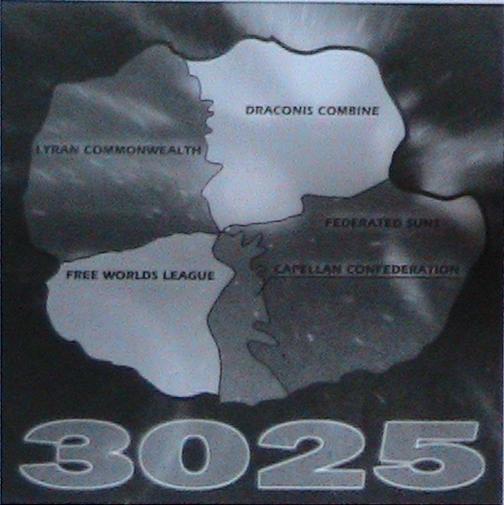
Having built up their militaries and with the threat of intervention by the SLDF removed, the former member nations, now known as the Successor States, fought a series of devastating wars against each other, with each Successor Lord determined to re-establish the Star League under their own leadership. These conflicts, which came to be known as the Succession Wars, achieved little beyond destroying most of the advanced technology developed during the Star League era, along with the means and knowledge to produce it. Only the ruthless enforcement of restrictions on attacks against Jumpships, HyperPulse Generators, space stations and other irreplaceable technologies allowed the interstellar warfare to continue. There were also other, less well-observed rules, regarding the destruction of Dropships, Battlemechs and other hi-tech equipment.
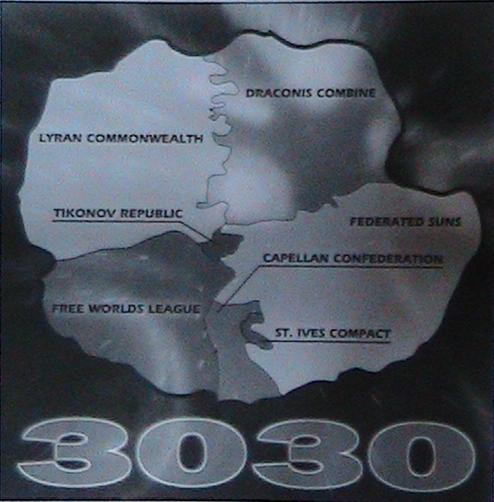
With no side willing to back down, the armies, economies and worlds of all the states were gradually destroyed and left in ruins. The fighting eventually scaled back to near-constant border skirmishes, as much through lack of men and equipment, as the war-weary populace's lack of appetite for further conflict.