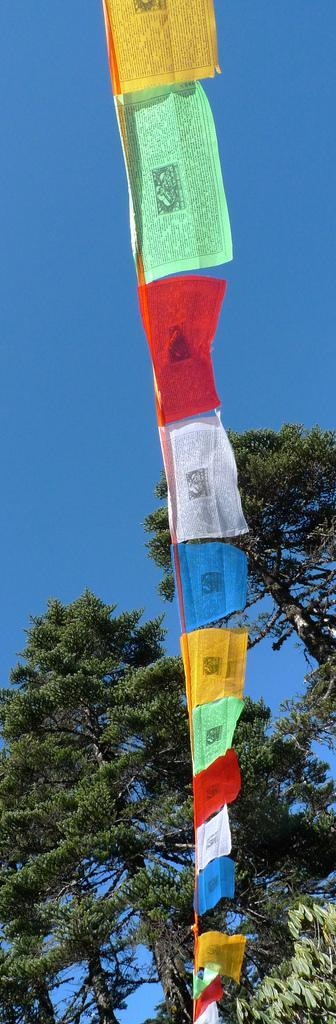
A piece written after a guest's trip to Dimaluo:
Getting off the truck first coming into Dimaluo, I found the village looked much less like China than I imagined and much more like a picture of Africa on a “please donate” card received in the mail in the States. I spent 17 days in the village offering simple advice to Alou, a local running a traveler’s lodge, and during that time lived more or less as a citizen in a place with more pigs than people. I will here describe a bit of what I saw. First, however, some background on the village:
Dimaluo is a small village located 20 km from Yunnan’s border with Tibet and 50 km from that of Burma. The people of Dimaluo are all ethnic minorities. The Nu, Lisu, and Dulong people have lived there for 200 years, the Tibetans coming 100 later. For as long as people have lived in this beautiful, remote village, influences have streamed in and been adopted. Dimaluo is an enigma. This tiny hamlet nestled in among steep, inhospitable mountains and far from any node of civilization has marvelously been influenced by an incredibly large variety of visitors.
Alou speaks the four local languages as well as Mandarin Chinese. Before attending Catholic mass, the primary Sunday activity of the village since the French missionaries visited in the late 1840’s, his wife and children put on traditional Tibetan clothing while he listened to a CD playing Celine Dion and Bryan Adams.
Throughout the village, many houses in the village had TV’s and VCD players and all had traditional wood burning fire pits. Basketball and Catholicism seemed to be the activities which most brought the village together and one of the two courts in the village was located next to the church. From celebrating the new year twice (both Catholic and Chinese) to singing “Say You, Say Me” without any idea of the meaning, the villagers of Dimaluo, like those of many other ‘underdeveloped’ places of the world, have picked up bits and pieces of different cultures and in doing so changing them, forming a unique set of customs and style of life whose evolution is at once amazing and comedic.
The sphere of influence affecting the flora and fauna of Dimaluo spreads larger even than that affecting culture. Sitting on the borders of three major climate regions, East Asia, Southeast Asia, and Tibet, the wildlife of Dimaluo has been affected by almost every visitor who has chanced to come through the narrow valley. Ferns and bamboo shoots spurting up like office fountains out of the hills fight for space with alpine spruce below the snowline. According to UNESCO, the area supports 25% of the world’s animal species and 50% of China’s. The area was a refuge during the last ice age and has been described by UNESCO as “one of the world's least disturbed temperate ecological areas, an epicenter of Chinese endemic species and a natural gene pool of great richness.”
Dimaluo, through some miracle of history, has harbored and been affected by far more plants and creatures than its remote location would suggest.
The village has had electricity for four years. The houses in the village are all made of wood and almost without exception house pigs and cattle beneath. In one of the houses I sat and warmed myself around the fire. Dirty old newspaper was used to insulate the cracks between the wood plank walls while a small, shiny flat-screen TV projected an ever-changing hologram of Jesus that lit up the room. Alou marveled at this and remarked that he would give a week’s work for one. Every house I visited had a painted image of Jesus or a saint with small Mandarin characters underneath explaining its meaning. This I found peculiar given the majority of the villagers’ Mandarin was limited to buying and selling soft drinks and baijiu to the ethnic Han engineers working at the dam down the road.
Residents’ all depended on farming and herding for subsistence. Every day pigs, cattle and donkeys were herded out to pasture. The children not yet in school would spend daylight hours playing at the edge of town, throwing rocks at the animals to keep them from coming back into town to nibble at the bright green crops planted around the houses. The food the villagers ate was quite simple, from Tibetan yak butter tea to the ubiquitous Chinese tomato egg stir-fry, from hash browns strikingly reminiscent of my father’s (extra garlic and onion) to many varieties of steamed or fried bread.
In the village, the only concrete structures that exist were put in by the government. There are concrete reservoirs placed strategically up and down the wide dirt path that winds through the village. The only public toilet is also a government work, as is the town square/basketball court combination.
For its next trick, the government is putting a dam in just south of Dimaluo. A team of engineers and workers stays at the government built apartment building. These Han Chinese were just as foreign as I, as an American, was in Dimaluo. They looked different, spoke a different language, and as far as the residents were concerned lived on the other side of planet.
20 houses will be displaced by the project. The villagers, for the most part, are apathetic. They know little about how to fight the dam. They look helplessly down the road and make plans to move. Alou’s perspective is surprisingly reminiscent of what I learned about Democracy in high school. He said that as he is a citizen of the PRC, the government exists to serve him and as such it ought to look out for his best interests. He opposes the dam and has voiced his opinion. His voice, he said, has had no affect to date.
As I left Dimaluo on foot, Alou accompanied me the 5 km to the nearest concrete road. As we passed the houses on lower ground and then the dam, I thought about the words “economic development” and all the implications they had; what they meant to the dam workers, to the displaced people of Dimaluo, and to the odd spectator who, much like myself, simply watches and has the privilege of a 3rd person, superficial reaction. I asked him what the people are doing about the dam and its effects. They will continue living, he said. They will move and start again.
Dimaluo is, above all other things, a place of striking contradictions, and this seems to hold for its future as well. Alou’s largest complaint about life in the village was that the education level was far too low. I wonder that perhaps Alou’s lodge will succeed. Perhaps the dam will provide cheaper electricity and the ever increasing reach of the Chinese government will make it to Dimaluo to ‘develop’ the area. Perhaps all these things will bring the village better education and living standards. What then? As it was confronted with Catholicism and basketball, so will it be with the rest of the modern world.
Coming to Dimaluo I was expecting to end up an undergraduate Columbus, peering over the edge of the world. Instead of the primitive society I expected, I found a community and a style of life built on a strange confluence of cultures and an amazing capacity for adaptation.
I think of the last time I stepped out of the back of the used army truck that took 30 locals and one harried American into the village. I offered to help unload the gratuitous amount of pig feed, the bucket of fish and other things considered imports. Asking about the dam, I was told that it will come, that Alou and company will adapt. The flippancy with which this topic was handled sparked a little naive prediction in this starry-eyed liberal arts student. I imagine that all the hubbub of ‘modernizing China’ and the global influence that is slowly creeping into the village will be adopted and adapted in stride like a larger group of missionaries or another public works project. Change will come, Dimaluo will adapt, but these differences are much less earth shattering to the basketball players and the worshippers of Dimaluo than they are to the globalization theorists I read and the 3rd party observers of which I am one.
Painted on the sides of the church in Dimaluo are pictures of angels, Chinese characters, and a few Tibetan religious designs. In this church I attended a funeral. Chants sung at the service reminded me more of African chants on my Paul Simon CD than Catholicism or China. After the service we walked the coffin back through the village up and up a hill. On the walk the villagers picked up large stones and when we arrived piled them next to the grave.
The sounds that ensued: the grunts and orders of those lowering the coffin into the ground; the clumps of dirt hitting the coffin – first loud and hollow thumps then quieter and quieter thuds until they faded into the roar of the stream below; the sound of the gathered rocks being piled around the grave; again the chants, falling back into the noise of the rushing water. From my view point on the hill I could see other villages up mountains and down valleys, I could see their churches and basketball courts and could almost make out the karaoke machine undoubtedly playing somewhere in the distance.
- Alex Eble -