|
|
|
|
The Statue of Zeus At Olympus This is the statue of the god in whose honor the Ancient Olympic Games were
held. It was located on the land that gave its very name to the Olympics. At the
time of the games, wars stopped, and athletes came from Asia Minor , Syria ,
Egypt , and Sicily to celebrate the Olympics and to worship their king of gods:
Zeus . The magnificent temple of Zeus was designed by the architect Libon and
was built around 450 BC. Under the growing power of ancient Greece, the simple
Doric-style temple seemed too mundane, and modifications were needed. The
solution: A majestic statue. The Athenian sculptor Pheidias was assigned for the
"sacred" task, reminiscent of Michelangelo's paintings at the
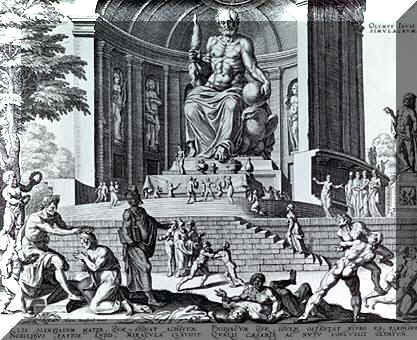
Sistine chapel . Olympia was further struck by earthquakes, landslides and floods, and the temple was damaged by fire in the fifth century AD. Earlier, the statue had been transported by wealthy Greeks to a palace in Constantinople . There, it survived until it was destroyed by a severe fire in AD 462. Today nothing remains at the site of the old temple except rocks and debris , the foundation of the buildings, and fallen columns. Pheidias began working on the statue around 440 BC. Years earlier, he had developed a technique to build enormous gold and ivory statues. This was done by erecting a wooden frame on which sheets of metal and ivory were placed to provide the outer covering. Pheidias workshop in Olympia still exists, and is coincidentally -- or may be not -- identical in size and orientation to the temple of Zeus. There, he sculpted and carved the different pieces of the statue before they were assembled in the temple. When the statue was completed, it barely fitted in the temple. Strabo wrote:
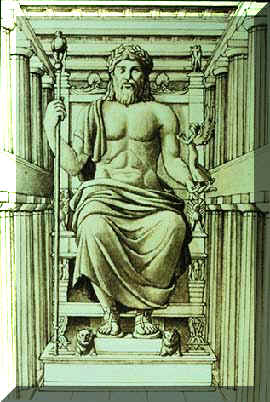
Strabo was right, except that the sculptor is to be commended, not criticized. It is this size impression that made the statue so wonderful. It is the idea that the king of gods is capable of unroofing the temple if he stood up that fascinated poets and historians alike. The base of the statue was about 6.5 m (20 ft) wide and 1.0 meter (3 ft) high. The height of the statue itself was 13 m (40 ft), equivalent to a modern 4-story building. The statue was so high that visitors described the throne more than Zeus body and features. The legs of the throne were decorated with sphinxes and winged figures of Victory. Greek gods and mythical figures also adorned the scene: Apollo , Artemis , and Niobe's children. The statue was occasionally decorated with gifts from kings and rulers. The Greek Pausanias wrote:
|