|
|
|
|
The Hanging Gardens of Babylon
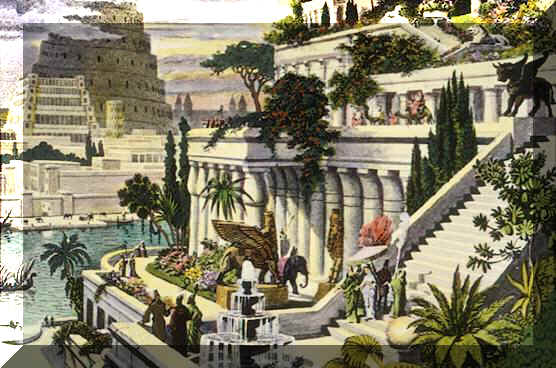
Fruits and flowers... Waterfalls... Gardens hanging from the palace
terraces... Exotic animals... This is the picture of the Hanging Gardens of
Babylon in most people's minds. It may be surprising to know that they might
have never existed except in the minds of Greek poets and historians! The Babylonian kingdom flourished under the rule of the famous King, Hamurrabi (1792-1750 BC). But it was only during the reign of Naboplashar (625-605 BC) of the Neo-Babylonian dynasty that the Mesopotamian civilization reached its ultimate glory. His son, Nebuchadnezzar II (604-562 BC) is credited for building the legendary Hanging Gardens. Tablets from the time of Nebuchadnezzar do not have a single reference to the Hanging Gardens, although descriptions of his palace, the city of Babylon, and the walls are found. Even the historians who give detailed descriptions of the Hanging Gardens never saw them. Modern historians argue that when Alexander's soldiers reached the fertile land of Mesopotamia and saw Babylon, they were impressed. When they later returned to their rugged homeland, they had stories to tell about the amazing gardens and palm trees at Mesopotamia.... About the palace of Nebuchadnezzar.... It was only in the twentieth century that some of the mysteries surrounding the Hanging Gardens were revealed. Archaeologists are still struggling to gather enough evidence before reaching the final conclusions about the location of the Gardens, their irrigation system, and their true appearance. Detailed descriptions of the Gardens come from ancient Greek sources, including the writings of Strabo and Philo of Byzantium. Here are some excerpts from their accounts:
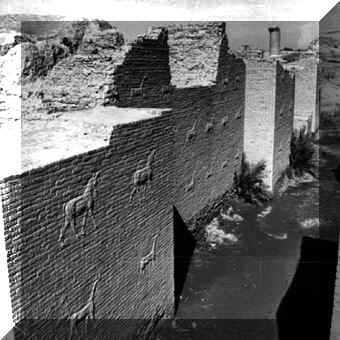
More recent archaeological excavations at the ancient city of Babylon in Iraq uncovered the foundation of the palace. Other findings include the Vaulted Building with thick walls and an irrigation well near the southern palace. On the banks of the river Euphrates, archeologists recently discovered massive walls 25m thick may have been stepped to form terraces... the ones described in Greek references.
|