|
Volcanoes
and the Environment
Ozone Effect - When volcanoes erupt, they release many gases that are
harmful to the ozone layer. One
such gas in volcanic HCl or hydrochloric acid.
After one eruption in Chile, ozone levels were 15-20% below
their normal levels. The
HCl by itself cannot harm the ozone, but when mixed with human
CFC’s, it forms a powerful ozone destroyer
Greenhouse Effect- The small amount of CO2 that volcanoes produce is not
enough to affect global warming. Volcanoes produce 110 million tons
per year, while humans produce 10 billion tons/year.
Haze Effect- This effect is caused by sulfur acid droplets in the
stratosphere. The
sulfur that is produced in volcanic eruptions combines with water
droplets to form sulfuric acid.
This acid absorbs solar radiation and sends it back into
space. After one large
sulfuric eruption, global temperatures dropped 0.5 degrees Celsius.
Effects of an Eruption
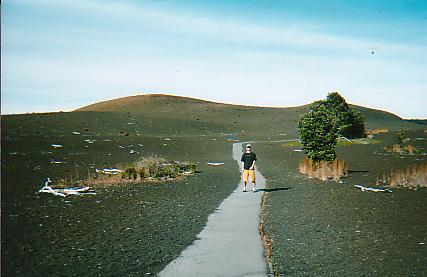
The
closer you get to the origin of the lava, the more devastating the
surroundings become. Around
the cone, there is little to no vegetation, even 5 years after the
eruption. Some grasses
have begun to grow, but the area is still largely barren.
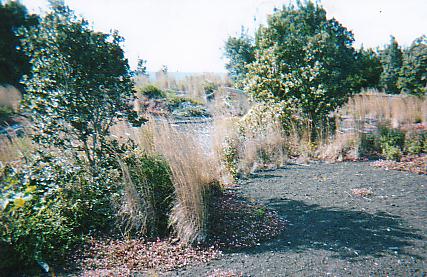
As you
move about 200 yards away, many grasses can be seen growing, the in
primary succession phase. Only
the hardiest of plants can survive in this soil, and trees are few
and far-between.
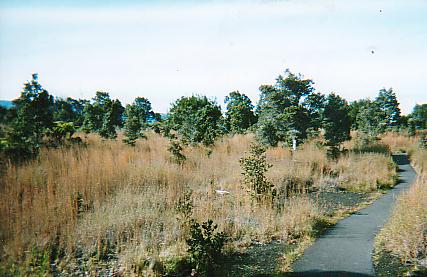
About
500 yards away, grasses cover the entire ground, and tress are more
plentiful. It will
still take many years for this environment to fully recover from the
eruption.
Bibliography
Chasing Lava: A Geologist's Adventures at the Hawaiian Volcano Observatory. Wendell A. Duffield.
Volcanoes in Human History: The Far-Reaching Effects of Major Eruptions. Donald Sanders.
See affiliates for further sources.
|


