|
|
| Main |
Global WarmingOne
of the most significant gases that is emitted when fossil fuels are burnt,
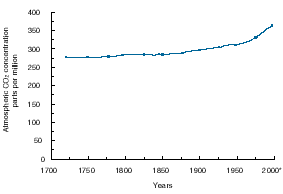
is carbon dioxide (CO2). CO2 traps heat in the earth’s atmosphere. Since
the initial use of fossil fuels, 150 years ago, the CO2 amount in the
earth’s atmosphere has increased by about 25%. Not only the level of CO2
has increase in our atmosphere, but also has the burning of fossil fuels
resulted in the amount of atmospheric methane and nitrous oxide, although
not being the major source of the production of these gases. The
earth’s global temperature average had supposedly already risen by
approximately 0.5°C in the last 100 years. www.ai.org/idem/soe/99report/ air/Air09.htmlThe below charts are examples of greenhouse gas emission from the U.S.A. The first one concerns only the state Indiana. The second graph concerns the entire United States of America. Carbon dioxide concentration trends
|
| Introduction | |
| Problems with the use of Fossil Fuels | |
| Global Warming | |
| Air Pollution | |
| Water and Land Pollution | |
| Thermal Pollution | |
| Alternatives | |
| Bibliography | |