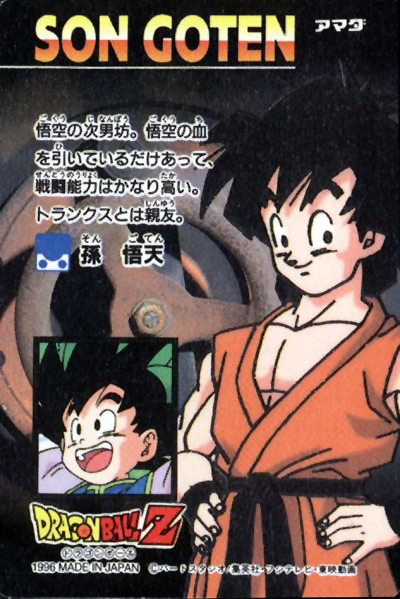
Lots of hiragana, katakana, and kanji examples here!
Ever wanted to learn a bit of Japanese? Throw in a cool word here and there, like "Well, I just returned from the kissaten." or "Man, I'm so isogashii today!"? Well, you're in luck, for I, Dana, have decided to put my cool Japanese skills to work for you! Learn some neato words and phrases to throw around randomly! Learn how easy the pronunciationss and phonetic alphabet actually are! Do I sound like an ad or what? Anyway, here's some stuff, if you actually want to take the time to learn a bit.
Quick Pronunciation Guide
Many people think that the Pronunciation is really tough, but it's not. Just follow these simple rules and you should be fine.
-"a"="ah" like in "la" or what the dentist says for you to say.
-"i"="ee" like in "bee" or how little girls shriek.
-"u"="oo" like in "boo" or when you're admiring something.
-"e"="eh" like in "let" or what Canadians interject into everything.
-"o"="oh" like in "Joe" or what you say when you realize something.
-"ai"="I" like in "pie" or how you refer to yourself (sound it out, it's just "ah"+"ee" said together fast).
-"ei"=long "a" like in "May" or what Fonzi says.
-"tsu" is a sound that is pronounced by almost making a "su" sound, but putting your tounge at the top of your mouth, behind your front teeth and pulling down as you speak it. It should have a bit more punch than just "su".
-The "r/l" sound is one of the toughest sounds to master. In Japanese, these letters are run together. The best way I've found to say it is to put the tip of your tounge in about the middle of the top of your mouth and make the "r" sound while rolling your tounge kinda like you're making the "l" sound. This one'll take some practice though.
-Two of the same vowels in a row, like "aa" or "ii", means that you just hold the vowel out longer.
-"ou" is just like "oo", just a longer "o" sound.
-Two of the same consonants in a row, like "ss" or "kk" indicates a slight pause before you say the letter or that you hold the consonant out longer. Like the word "ikkoku" would be i-little pause-ko-ku. In "kissaten" is like, ki-sssa-te-n with a held out "s". You'll kinda get the hang of which ones you hold out and which ones you pause.
-Many letters can have a "ya", "yu", or "yo" sound added onto them, like "kya", "kyu", and "kyo".
-And that's about it! You can make any word with just these little rules. Stick various letters in front of the vowels and ta-da! you've got a word! Fairly simple, huh.
A Bit about the Alphabet
-The Japanese pronunciation alphabet is based around the five vowels a, i, u, e, and o, in that order. There are actually two alphabets that use this system: Hiragana is for native Japanese words and Katakana is used for foreign words.
-They are set up exactly the same way, but with different symbols. Don't ask me why.
-Anyway, you start on the right side and read down. So "a" is at the top of the column. The next column, on the left side of the first, is the "k" column. First is "ka", next to the "a" then "ki" is under "ka" next to "i" and so on.
-Still reading right to left, you have the "s", "t", "n", "h", "m", "y", "r/l", and "w", columns. The last column is just the "n" sound by itself with no vowels after it.
-My handy-dandy little remember this phrase is this: (starting on the right, reading left. You'll have to remember that the vowels come first on your own.) Kana Signs, To kNow How Much You Read and Write them. And then remember "n". It's not perfect, but it helps me.
-Some symbols are modified to make the "g", "z", "d", "b", and "p" columns.
-The letters that can have the "y" sounds stuck onto them, like I talked about earlier, are "k", "s", "t", "n", "h", "m", "r", "g", "z", "d", "b", and "p". You use the "i" symbol with the "y" sound written smaller right after it.
-Once I get back to school, I'm going to figure out how to use the scanner and scan in some charts that I have that will help this make a lot more sense.
-Some letters have special pronunciations.
--"Shi" (like the girl) instead of "si".
--"Chi" instead of "ti".
--"Tsu" instead of "tu" (we talked about this pronunciation earlier).
--"Ji" instead of "zi".
--"Hu" is sometimes said "fu", depending on the dialect.
--There are no "yi", "ye", "wi", "wu", or "we" sounds.
--The letter "wo" is pronounced like "o". This doesn't exist in katakana (probably because it's pretty useless, only used as a direct object marker).
--"Su" is sometimes said as only "s". "Ku" also is sometimes only the "k"sound.
Confused yet?
I hope not, cause we've finally reached the
Words
People
-Me/I - Watashi or (male)Boku
-You - Anata
*Usually, it is more polite to address someone by their name instead of "you".
-Man (male person) - Otoko no hito
-Woman (female person) - Onna no hito
-Child - Kodoma
-Little Girl - Onna no ko
-Little Boy - Otoko no ko
-Mother - Okaasan
-Father - Otousan
-Older Brother - Oniisan
-Older Sister - Oneesan
-Younger Brother - Otouto
-Younger Sister - Imouto
-Grandmother - Obaasan
-Grandfather - Ojiisan
-Friend - Tomodachi
-Teacher - Sensei
-Upper classman - Senpai
-Doctor - Isha
-Student - Gakusei
-Last name - Myouji
Animals
-Dog - Inu
-Cat - Neko
-Fish - Sakana
-Bird - Tori
-Horse - Uma
Now that we've got a few words under our belts, let's go for some
Phrases
-Thank you - Arigatou Gozaimasu
-You're welcome - Douitashimashite
-Good morning - Ohayou gozaimasu
-Good afternoon - Konnichi wa
-Good evening - Konban wa
-Goodbye - Sayounara or Shitsureishimasu
-See you later - Jaa mata or Ja na (guys) or Ja ne (girls)
-I'm sorry - Sumimasen or Gomen nasai
Well, that's all I've got for now. More will be added when I have time. Ja ne!