|
|
| Slide 2: Sickle Cell Anemia | |
 Blood
Pathologies Blood
Pathologies
WBC |
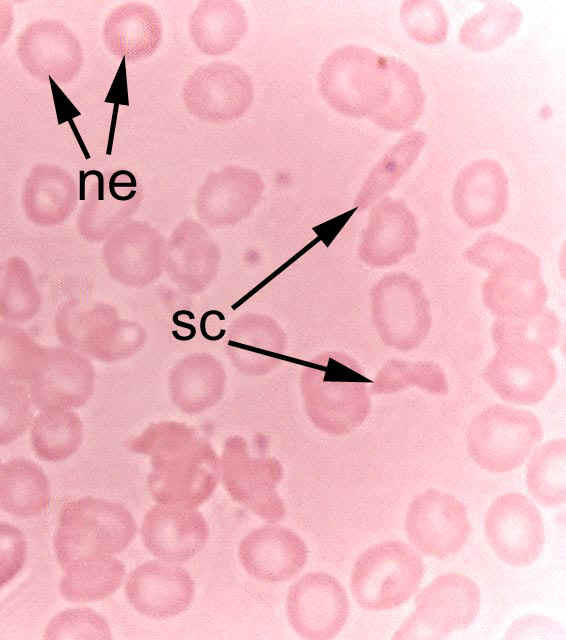
Sickle cell anemia is an inherited red blood cell (RBC) disorder that is caused by a hemoglobin defect. Hemoglobin is a substance that carries oxygen in the red blood cell. One small deviation in these molecules can cause them to have a tendency to stick to one another, forming strands of hemoglobin within the RBC. The cells that contain these strands become stiff and elongated, or sickle shaped. Normally, due to the RBC’s (ne, normal erythrocyte) doughnut shaped cell they move easily through blood vessels to deliver oxygen throughout the body. Sickle cells (sc) do not fit well through small blood vessels, and can become trapped. Trapped sickle cells form blockages that prevent oxygenated blood from reaching their target tissues and organs. Considerable pain results, as well as damage to the tissues and organs. This damage can lead to serious complications, including stroke and an impaired immune system. Further complications result due to the fact that sickle cells die much more rapidly than normal red blood cells, and the body cannot create replacements fast enough. Anemia develops due to the chronic shortage of red blood cells.
|