One of the biggest problems, facing persons with exceptionalities, is how they are perceived by society. You need look no further than the local news and hear stories about disabled persons rather than persons with disabilities. On the surface this may seem like semantics but it really speaks to what society sees first, is it the person or the disability? There are organizations like people first who have attempted to dispel some of the myths that surround people with exceptionalities but it all comes down to the comfort level of those within mainstream society and their willingness to accept people who are different than they are. Society fears anything that is not deemed to be normal, as if anyone actually is normal. There is such a high level of fear in society because people often fear what they don’t understand.
For the past 22 years I have supported people with exceptionalities in the private sector in every role from caregiver to residential and day program manager. I did consulting and training for the BC government and was part of the advisory board for the manual entitled, “Preventing and responding to abuse of persons with disabilities” which was distributed throughout the entire province. I have spoken to caregivers and their employers over the years about our own attitudes towards the people we have been employed to support.
As an inclusionist, I believe that everyone has the right to be educated and supported in a way that will maximize their potential and allow them the highest level of success. The problem with terms like fair and equitable is how they are perceived. Everyone gets the same verses everyone gets what they need to level the playing field. If someone can’t walk and needs a wheelchair they should get a wheelchair, this doesn’t mean that everyone should get a wheelchair. The same is true with adaptive technology, some children have visual or auditory processing issues so they benefit from laptop computers and the dragon software for example but this does not mean that every student should be entitled to their own laptop. As much as possible teachers need to use the universal design approach in lesson planning and even the way that the classroom functions, if this is done more students will experience success
Some children may need a 1:1 support person with them however with funding issues they may only get that support for that language arts block and not have it for math. Other students and parents may see all the extra support that the child with special needs gets and become frustrated that their own child is not getting the extra 1:1 time but that is where it becomes our responsibility as educators to teach the learning community, which includes the parents, as issues arise so they understand that fair and equitable does not mean that everyone gets the same thing.
We live within a society that celebrates it’s diversity and we understand that no two children are the same. Every child regardless of race, gender, socio economic reality, ability or disability is entitled to a high quality education. Every child has something to teach and every child has something to learn. Part of our goal as educators must be to dispel some of the myths that surround children with exceptionalities and present these kids every opportunity for success. We must strive to find the best possible way to deliver special education that differs according to each child’s unique needs and abilities. We must accord every child the dignity of choice and guard against doing what we think is right verses doing what is right for that child.
My Top 10 Teaching Beliefs
1. I must set a high standard of professionalism for myself so I walk the talk and be the kind of person children would want to be like as an adult. This includes my behaviour both at school and outside of school.
2. Every child is special, has a gift or talent and can succeed. I must find a balance between challenging and supporting my students so we can find out together what their gifts are. Once those gifts and talents are found it is my job to help develop them.
3. There is no such thing as a bad student, only a bad teacher: If a child is not learning what I am teaching then it is my responsibility to find a way to reach them and change my methods and approach accordingly.
4. I must above all teach love and compassion, without that I will help to create educated monsters. Education without a conscience is as dangerous as the invention of the atom bomb.
5. I will never sacrifice my beliefs or principals for my career even it means passing up great job opportunities.
6. I will strive to have balance in my life and not put all my energy into teachings other people’s children while neglecting my own family. Part of this process demands that I continue to engage in activities that bring me joy like playing guitar, writing and recording music.
7. I can’t teach if I stop learning therefore I will make a life long commitment to improving myself, upgrading my education, skills and qualifications on an ongoing basis. I will remain teachable, open to new ideas and methods and always welcome constructive criticism and feedback.
8. I will make my classroom environment welcoming and work hard to ensure that the children are excited to be in my class. My enthusiasm and joy for teaching will be obvious.
9. If I wish to be viewed as a professional I must dress as a professional. Wearing a suit and tie everyday will have an impact on how the children, their parents and other staff both view and interact with me.
10. I will employ clear and consistent classroom management strategies from day one to ensure that an environment of mutual respect exists.
Student Name:
Student Name:
Date:
Teacher:
SELC Teacher:
IEP
Development
Assessment
- Marks
Parent /
Guardian Contact Record
Subject
Learning
Expectations
Teaching
Strategies
Assessment
Methods
Term 1
Term 2
Term 3
Date
Time
Comments
Assistive or Adaptive Technology Definitions:
Assistive or Adaptive Technology
Assistive or Adaptive Technology commonly refers to "...products, devices or equipment, whether acquired commercially, modified or customized, that are used to maintain, increase or improve the functional capabilities of individuals with disabilities..." - Assistive Technology Act of 1998
Communication Aids
Products and equipment designed to help persons with speech disabilities or writing difficulties to communicate. At its very simplest, augmentative communication can be a page with picture choices or alphabet letters that a person points to. It can also involve highly sophisticated speaking computers with on-screen communication boards and auditory or visual scanning. Common sub-categories are:
Speech and Augmentative Communication Aids
Alternative and Augmentative Communication (AAC) involves alternate methods of communicating needs, feelings, ideas, and perceptions through the use of electronic and non-electronic devices that provide a means for expressive and receptive communication for persons with limited or no speech. Includes communication boards, speech synthesizers, text-to-speech software and hardware, head wands, light pointers, mouth sticks, signal systems, telephony equipment, etc.
Writing and Typing Aids
Includes tactile devices, Braille devices, note taking devices, spelling devices, word prediction/completion software, modified typewriters, portable typewriters, etc. Does not generally include products intended to facilitate computer access and usage (see Computer Access Aids).
Computer Access Aids
Hardware and software products that enables persons with disabilities to access, interact with, and use computers at home, work or school. Includes modified or alternate keyboards, switches activated by pressure, touch screens, special software, voice to text software, etc. Common sub-categories are:
Alternative Input Devices
Includes alternative and adaptive keyboards, expanded keyboards ,Keyguards, alternative and ergonomic mouse/pointing systems, head-operated pointing devices, Eyeglaze pointing devices, mouth/tongue pointing devices, Morse code input devices, brain-actuated pointing devices, switches, touch screens, voice input systems, speech-to-text software, voice recognition/voice command software, dictation software, on-screen keyboards, cursor enlargement software, ergonomic computer-based equipment, etc.
Alternative Output Devices
Computer-based output devices that generally enable Blind and Vision impaired persons to use or interact with a computer. Includes Braille display/output devices, Braille embosser/printers, screen reading software, screen magnification/enlargement software, large print monitor, etc.
Accessible Software
Includes software applications adapted for children and adults with disabilities, operating system accessibility options, accessible web browsers, etc.
Universal Design
Design methods, techniques and guidelines for making computers and their applications fully accessible to people with disabilities.



 Society fears anything that is not deemed to be normal, as if anyone actually is normal. There is such a high level of fear in society because people often fear what they don’t understand.
For the past 22 years I have supported people with exceptionalities in the private sector in every role from caregiver to residential and day program manager. I did consulting and training for the BC government and was part of the advisory board for the manual entitled, “Preventing and responding to abuse of persons with disabilities” which was distributed throughout the entire province. I have spoken to caregivers and their employers over the years about our own attitudes towards the people we have been employed to support.
Society fears anything that is not deemed to be normal, as if anyone actually is normal. There is such a high level of fear in society because people often fear what they don’t understand.
For the past 22 years I have supported people with exceptionalities in the private sector in every role from caregiver to residential and day program manager. I did consulting and training for the BC government and was part of the advisory board for the manual entitled, “Preventing and responding to abuse of persons with disabilities” which was distributed throughout the entire province. I have spoken to caregivers and their employers over the years about our own attitudes towards the people we have been employed to support. 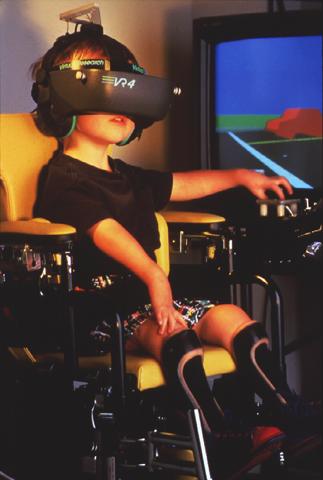 If someone can’t walk and needs a wheelchair they should get a wheelchair, this doesn’t mean that everyone should get a wheelchair. The same is true with adaptive technology, some children have visual or auditory processing issues so they benefit from laptop computers and the dragon software for example but this does not mean that every student should be entitled to their own laptop. As much as possible teachers need to use the universal design approach in lesson planning and even the way that the classroom functions, if this is done more students will experience success