
Organic by Composition: Where did your house come from? A simple question but one with a very complicated and increasingly critical answer today. Yet just a couple hundred years ago the answer to this question was so simple as to be inconsequential. Most people lived in homes built by their own hands and made from the materials they had around them.The architecture was dictated by the types of materials available and the cultural traditions of the inhabitants. In early America timber was plentiful. Forests were dense and rich and the process of simply clearing a plot of land for farming produced enough lumber and stone to build house, barn, and more. Most vernacular architecture did not require specialized skills or tools to construct since such labor was in extremely short supply on the frontier. The only specialist construction labor needed in most communties was that of the blacksmith and, in more urbanized areas, the mason.
Industrialization, increasing population, and an emerging technologically dependent infrastructure changed this pattern. Human society became a cash and clock society and the stablity and vitality of communities was lost to the demands of the corporate culture. Forests dwindled and the costs of lumber increased as wood became the fuel for factories, ships, and rail. And when wood was no longer plentiful and cheap enough to feed the ever hungry energy squandering industrial machine new resources were exploited; coal, oil, gas, uranaium. Industry replaced individual and community effort and the home evolved into a mass produced appliance designed by speciallists to suit the lowest common denominator in market tastes and constructed by specialialized labor using an ever growing list of artificial industrial products. As the legendary modernist architect Le Corbusier once tragically declared "The house is a machine for living in."
By the end of WWII that machine became a cancerous scourge upon the landscape. Western society had traded its soul for car keys and the structure of communties became focused more on the needs of the automobile than on the needs of people. All harmony between home and nature was replaced by a harmony between the car and the shopping mall. What else is contemporary suburbia but another kind of parking lot? Whole communities were demolished or turned into slums in order to improve traffic flow, the needs of middle-class commuters more important than the lives of the poor. Pollution from cars has become the single largest source of pollution worldwide.
And then came the energy crisis of the late 1970s. The sudden realization that natural resources were not endless and that technology alone could not solve every problem came as a slap in the face to the western world and forced architects to face up to three critical errors in judgement over the past century;
First, they had encouraged a dependency upon high-energy non-sustainable products of industry without regard for their impact on the environment or the long term viability of the resources required. Suddenly faced with the seemingly imminent depletion of those resources, architects had no viable alterantives to offer.
The initial attempts to accommodate a public and politcal demand for energy conservation involved increasing the energy efficiency of homes by sealing them up and this exposed the second great blunder. Increasing numbers of people began to get ill because the air in their homes was being polluted by the chemical-laden industrial materials used to build and maintain them. Some analysts today have suggested that as much as 50% of all illness in western countries can be linked in some way to indoor air pollution. The "...machine for living in" has become a Frankenstein's monster because architects and builders had simply assumed high-tech industrial materials were better without taking full account of their potential impact on people's health.
The third great blunder of the contemporary architects was to embrace and standardize building technologies which the common man could not use by himself. The delusion was that the use of higher-tech automatically afforded a higher quality of life for the common man but instead it only took away his ability, his right, to shelfter himself and handed it to corporations and their factories. By turning the home owner into a dependent consumer architects had unwittingly led a whole generation into indentured servitude. Based on industrial materials made with non-renewable resources the cost of homes can only increase without end as those resources are diminished. The houses of our ancestors cost little more than their own labor. Homelessness existed chiefly as a product of war, famine, and natural disaster. Today homelessness is the direct product of an increasingly impractical housing industry which has destroyed vernacular architecture, made it impossible to shelter people at a realistic individual and environmental cost, and taken away the individual's right to shelter himself through his own skills and labor.
In response to the emerging realization of these three great blunders a new movement in architecture began, one which is only now beginning to achieve some kind of critical mass. This movement is known as the Green Movement or the Sustainable Habitat Movement and it's objective is the development and advocacy of what was at first referred to as organic architecture. (though today it is most commonly referred to as Green architecture)
The Green Movement's form of organic archiecture is defined chiefly by the materials used in its construction and its methods of construction. For proponents of this approach 'organic' means made from natural sustainable non-toxic materials such as untreated tree-farm sourced wood, straw bales, earth, clay, and stone. Choosing a non-toxic and sustainable approach is not a simple task. The cult of chemistry is pernicious. Materials you would never suspect as being toxic are laden with chemicals. White and recycled paper can actually contain trace amounts of dioxin as well as many other chemicals. The seemingly natural cut logs of a log cabin home can be loaded with a witch's brew of preservatives and pesticides. Even fiber glass insulation, which one would expect to be nothing but glass fiber, is in fact loaded with added formaldehyde. Also, materials which may be natural and non-toxic may not always be sustainable. They may require unreasonable amounts of energy to prepare for construction use or may come from inappropriate sources. How do you insure the wood you buy in the hardware store comes from a tree farm rather than an old-growth forest? How do you know the tree farm wasn't using inappropriate pesticides and fertilizers? Our dependence upon industry has so distanced us from the sources of materials that these have become complex and vexing questions. It's rather like that old science fiction movie Soylent Green staring Charleton Heston. Just where does this stuff come from and what would it mean if we were to find out?
One way of dealing with this complex issue is to rely on materials available at hand on a building site generally earth and to owner-build homes using techniques that allow the inhabitants of a home, regardless of their skills, to be fully involved in the building process. This way the appropriateness of materials and techniques can be more easily verified. Thus one aspect of this organic architecture involves the revival of lost and traditional forms of vernacular architecture, since those forms of architecture were based on the use of at-hand materials and unspecialized skill. In England there is a revival of traditional Cob earth building. In France its the pisè de terra rammed earth technique. In the American southwest and midwest it's traditional adobe and straw bale construction. In Australia, where a veritable eco-housing boom is underway, a rich mix of techniques are being employed in projects ranging from individual homes to entire 'eco-cities' planned for Adelaide and New South Wales. Even the traditional architecture of Africa is enjoying a revival, which brings us back to that humble dung hut whose design has recently been directly transferred as a fixture of modern organic houses in Africa and Europe.

[straw bale suburban home in Canada]

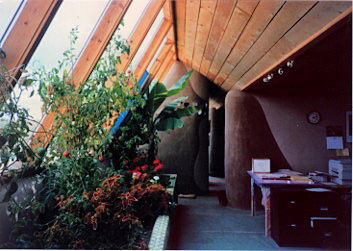

[the Earthship of Taos New Mexico]
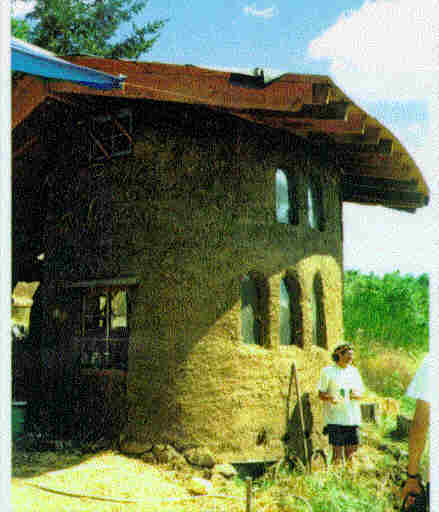
[Oregon cob cottage under construction]

[Oregon cob cottage interior]
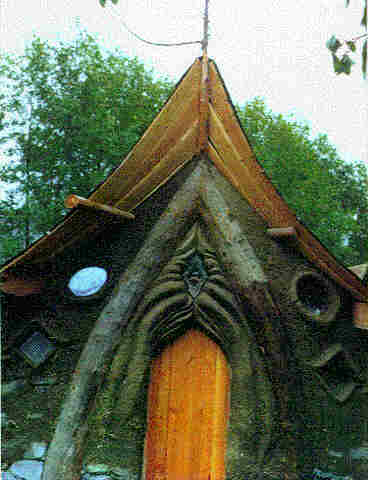
[cob yoga studio]
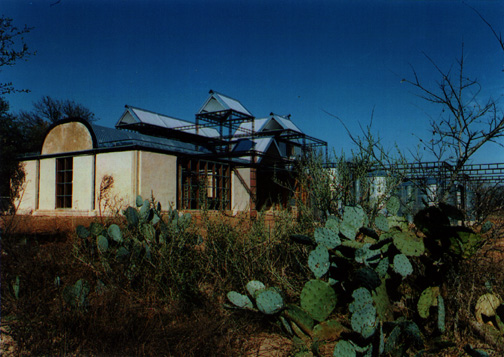
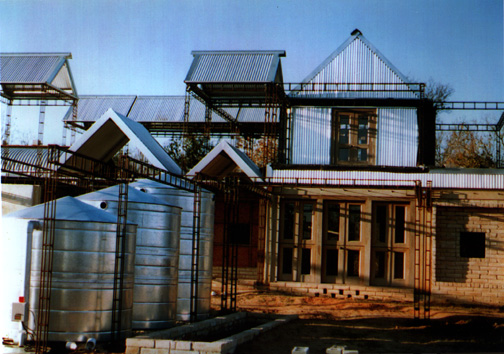
[two views of Green Builder Demo Home in Texas]
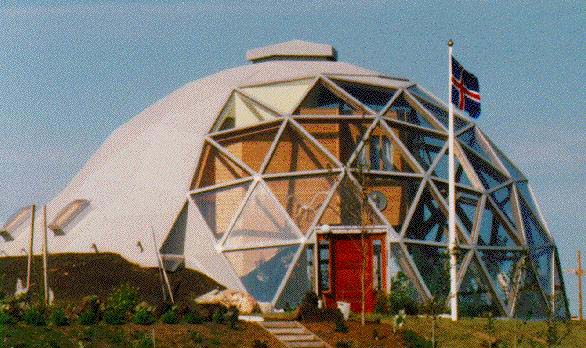
[solar dome structure in Iceland by Einar Thorsteinn, Iceland`s own Buckminster Fuller]
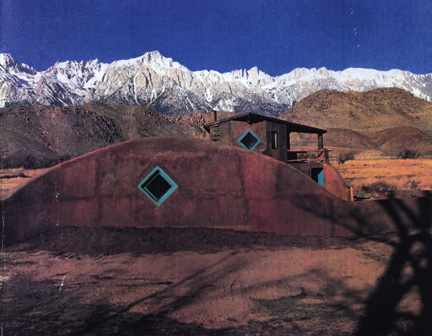
[earth-bermed home]

[DomeSpace exterior]

[DomeSpace interior]
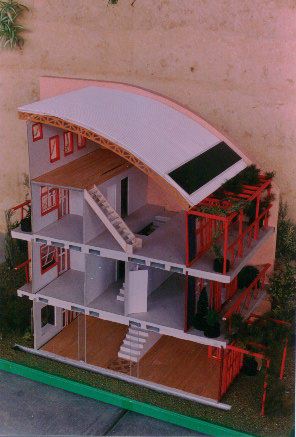
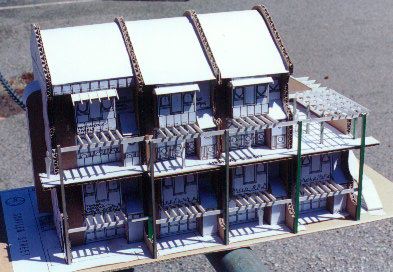
[interior eco-townhouse Ecopolis Adelaide]
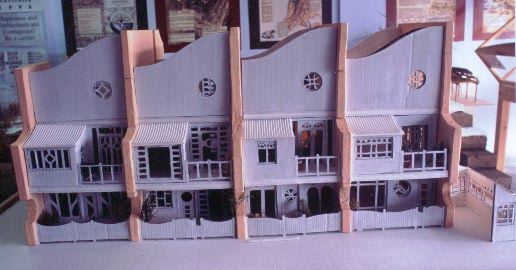
[frontal view eco-townhouse Ecopolis Adelaide]
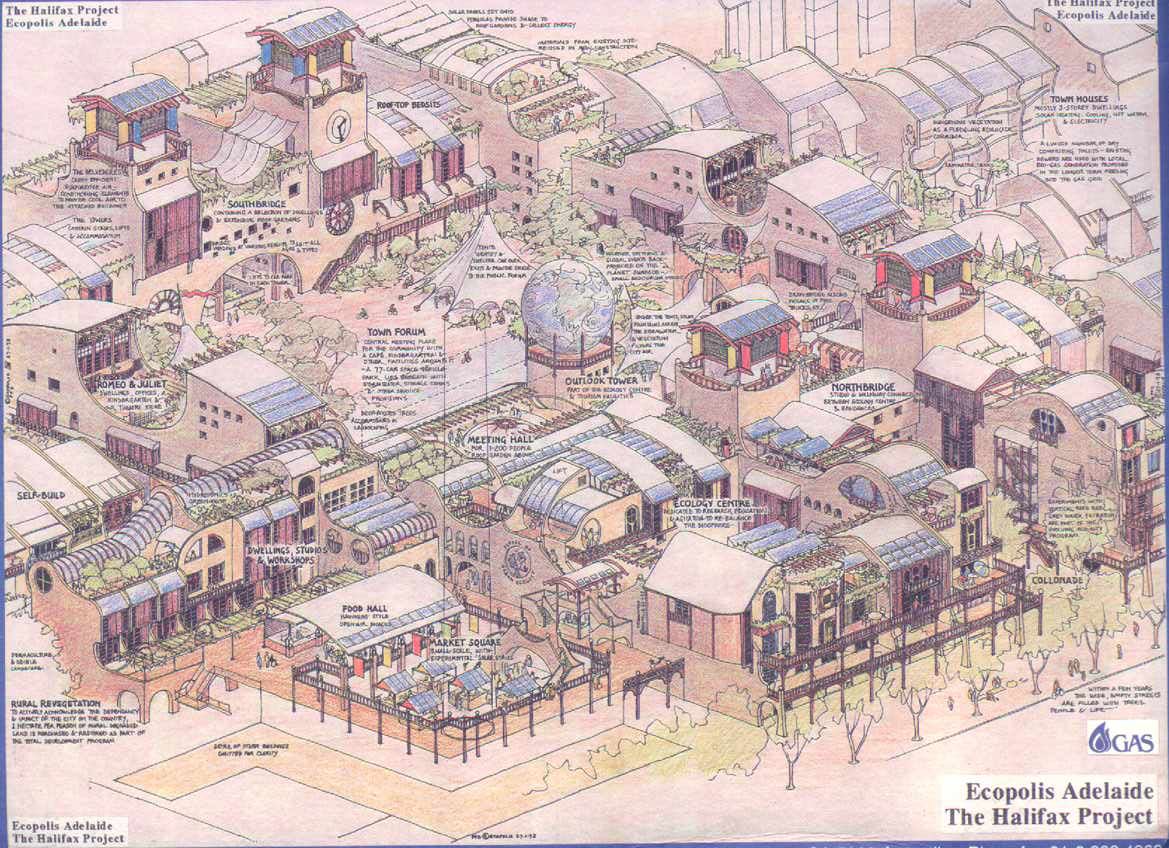
[site sketch Ecopolis Adelaide - click to enlarge]
An interesting side of the Green housing movement is the idea that by choosing the organic approach one can create a living environment which promotes a sense of natural harmony or unity with the natural environment. This is much the same ideal Frank Lloyd Wright was reaching for. (interestingly, some of the Prairie School architects also specialize in Green architecture) In most cases, this is something the owners of these kinds of homes bring with them when they move in, the majority of Green home owners being ecologically conscious from the start, but there is a deliberate attempt to employ architecture which reinforces this impression. For example, one of the most unusual eco-houses is a kind of kit-built dome house known as DomeSpace developed in the Brittony region of France which looks, for all the world, like a flying saucer built by 18th century ship-wrights. Strange as it appears, the house is designed to promote a sense of natural harmony through its round dome shape and exclusive use of wood. (even the insualtion is made of natural cork) In the adobe revival we see a similar attempt to re-establish the natural harmony attributed to the native Americans through the duplication of their architecture.
In seeking this idealized harmony many Green movement architects advocate the use of Feng Shui , the ancient Chinese system of tectonic pharmacology where health and prosperity are promoted through the regulation of the flow of chi energy through a dwelling. Geomancy, pyramidology, and other parascience inspired practices are also frequently advocated. This has tended to negatively impact upon the credibility of this form of organic architecture but one should consider the motivations behind it. For the past 100 years (which is not very long from a historical perspective) western architecture has totally embraced science and technology. It has assumed that technology was an inherently good thing which would always lead to an improvement in quality of life. Now, at the end of the 20th century, we find that this assumption was horribly wrong. Quality of life is steadily declining in the western world, even if potential standards of living are high. Outdoor pollution has ruined the environment while indoor pollution has destroyed the health of millions. We now have more homeless people than ever in the history of civilization. So how much more credibility can science and technology really have compared to the esoteric practices of centuries past? Architecture has always been an art first and a science second and what these Green architects are saying is that, considering its track record, they can no longer take the claims of science any more or less seriously than the claims of parascience, folklore, and superstition. And so they are hedging their bets by offering the housing consumer alternatives to science and technology through which to guarantee the safety and security of the home. After all, the traditions of the ancient past have served many societies well for infinitely longer than science has and often have very rational motivations behind them which science ultimately uncovers-once the academics get beyond the sniggering.
This reflects an attitude increasingly common in society in general and which is responsible for the rise in alternative medicine, spiritualism, parascience, and the like. Whether one agrees with this condemnation of science or not, one is forced to take this disillusion seriously-especially when it's influencing whole movements in popular culture and architecture-and must recognize that, as far as the average man is concerned, science has not yet delivered on much of its promises.
The typical organic home is typified by the materials it's made with. The most popular materials today are earth, clay, untreated wood, masonry materials such as machine compacted earth brick, fly-ash concrete block, and straw bale. Concrete is also used but is not considered ideal because of its impermeability and because of the environmental impact of its manufacture. High performance construction systems, those based on the geodesic dome most commonly, are also used where they can be fashioned with recycled, renewable, and non-toxic materials. Earth sheltered and earth 'bermed' homes, that is structures covered by earth and sod or built into the sides of hills, are also popular. No single design style predominates. Rather, a wide variety of styles ranging from primtivist to ultra-modern is used. Often the design style is dictated by traditional styles associated with particular construction methods, as in the case of adobe and Cob. The use of passive solar supplemental heating is almost universal for Green homes but other heating and air conditioning technologies vary widely. Some home owners prefer the use of natural wood stoves and rely on the thermal mass of their building materials to moderate temperatures through the seasons. Others will attempt a purely solar heated system. A few home owners attempt total independence through solar heating, photovoltaic electric power, and built-in cisterns for the collection of rain water.
Often these organic homes are designed to fit into the existing landscape much as the organic homes of Frank Lloyd Wright but unlike Wright the motiviation is not simply aesthetic. Conventional lawns and artificial landscaping can often be detrimental to the health of allergy sufferers. Close trees and shrubs also provide seasonal solar exposure control, the leaved trees of summer shading the home in hot weather while the bare branches of winter provide maximum solar exposure in the cold. The most unusual use of this has been done with houses which have whole trees growing out of them or a suitably large tree may actually be the foundation of a treehouse. Some experiments have been done on the concept of actually cultivating living plants such as bushes and trees to form the structure of a house-the ultimate in organic architecture.
The big limitation of the Green movement's version of organic architecture is that its use today is largely limited to the construction of homes for the upper-middle-class even though the potential economy of some building techniques, like traditional earth building techniques, is extremely great. (a small Cob house, for example, can be built by the shrewd and handy individual for as little as $500) Only in Australia and the Netherlands have there been serious efforts to develop this organic architecture for mainstream public housing. This is due to a number of factors. First, this architecture remains 'experimental' in the eyes of the academic architectural orthodoxy and therefore in the eyes of politicians and land developers. Most of the poor who would best be served by the potential economy of some organic building techniques are trapped by economics in inner-city areas where construction codes have been fashioned to completely prohibit the use of any materials and methods not fostered by the corporate/industrial establishment. This establishment has no interest in adopting low cost organic housing because its economy is a serious threat to their profits. Consider what would happen if the general public really understood that they could, with their own hands, build for a few thousand dollars homes vastly superior to the housing industry's two hundred thousand dollar mass produced toxic shacks. Similarly, many architects are opposed to the use of organic techniques because any construction method which precludes skilled labor and allows home owners to be their own designers puts them out of work. Indeed, many have sought to discredit the safety of organic building techniques or have attempted to capitalize on the Green movement with the same old conventional suburban designs made 'organic' by being based on yet another generation of industrial products bearing a new 'green' label. Charity groups involved in building housing for the poor, such as America's Habitat for Humanity, currently refuse to use cheaper and non-toxic organic building methods and materials because they are considered 'non-standard'-which is ironic when you consider than many of these tehcniques have been around for centuries longer than the 'standard' stick-built suburban tract home. They are only interested in treating the symptoms while perpetuating the disease. Sadly, the problems created by the three great blunders of 20th century architecture may have to get much worse before the Green movement's organic architecture is recognized as a real solution.
