|
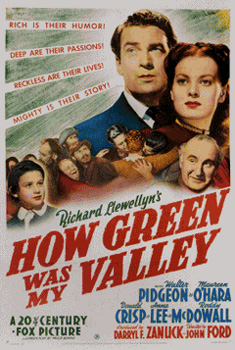
1941 Best Picture:
How Green Was My Valley
|
Competition:
Blossoms In the Dust, Citizen Kane, Here
Comes Mr. Jordan, Hold Back the Dawn, The Little Foxes, The Matlese
Falcon, One Foot in Heaven, Sergeant York, Suspicion
Other
Winners:
Best Actor:
Gary
Cooper, Sergeant York
Best Actress: Joan Fontaine,
Suspicion
Best Supporting Actor:
Donald
Crisp, How Green Was My Valley
Best Supporting Actress: Mary
Astor, The Great Lie
Best Director: John
Ford, How Green Was My Valley
|
Cast:
Walter Pidgeon, Maureen O'Hara, Anna Lee, Donald Crisp, Roddy McDowall,
John Loder, Sara Allgood, Barry Fitzgerald
Storyline:
A
Welch mining town is the backdrop for this film about a large, and very
close, family, during the early union days, as seen through the eyes of
its youngest son.
Did it deserve to
win: Not even close!
How Green Was My Valley was a good film, but it was hardly the best of its
year. This sweet little movie about a coal mining town, unions and
family loyalty was up against some serious competition.
Sergeant
York, the Gary Cooper picture, that won him an Oscar, was far
better. So was Suspicion, the Hitchcock film that won the Best
Actress Oscar for its star, Joan
Fontaine. The Maltese Falcon is
regarded as a classic to this day. It didn't even garner a
nomination for Best Picture.
It's
considered a crime, at least among film critics and serious film lovers, the fact that
Citizen
Kane, considered to be the best film of all
time, didn't win the award. This shouldn't come as such a surprise,
however, for several reasons. Indeed, Orson Welles masterpiece is
groundbreaking. There was no other film like it at the time.
But it wasn't a popular movie. Audiences of the day simply didn't
get it, or didn't want to. To make matters worse, it took shots at
William Randolf Hearst, the newspaper magnet of the day, and didn't have
much good to say about Hollywood either.
Critique:
If
you are looking for a sweet, gentle film, about hardships and family
values, you will find nothing better than How Green Was My Valley.
To say that it was 'lovingly directed' and 'beautifully acted' couldn't be
closer to the truth.
The film moves
slowly, and deals with a lot of issues, but it plays very well. The
subject of unions was a touchy one. It seems apparent that the film
is against organized labor, which is fine, but the voice of Joe McCarthy,
who's team was starting to go to work by 1941, seemed to echo in the
background.
On the other hand,
the film has a small scene where a woman is branded by the church elders
for having a child out of wedlock. It is remarkable that a film
would even show a scene like this in 1941, but it goes further by allowing
the audience to take a sympathetic view of the girl, while villainizing
the church. The young Angharad stands up to the deacons and storms out of the
church, calling them hypocrites. The
message, by today's standards, is a positive one, and notable because at
the time, the view was quite different.
|
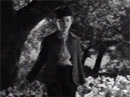
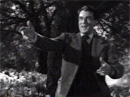
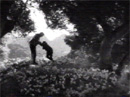
Best Scene:
Walk Huw! Sentimentalists will love the
relationship that develops between the boy and the Preacher, particularly
when Pidgeon urges McDowell to try and walk. McDowell offers up a
great performance, considering he was only a child at the time. His
character truly evolves from a lame wimp to a scrappy punk.
|
|
|
Behind the Scenes:
How Green Was My Valley was
the last of the films to be released in its year, leading Variety to
suggest that the voters 'have a short memory.' This claim would be
made in other years when most of the nominated films would be released at
Christmas. John
Ford won his second Oscar in a row. He won the previous year for The
Grapes of Wrath, and would win a third for The Quiet Man in 1952.
Among those that
Orson Welles blamed for the loss of the Best Picture Oscar was Louella
Parsons, a Hearst employee, who openly campaigned against his
film. Joan
Fontaine beat out her own sister, Olivia de Havilland, in the Best
Actress category. de Havilland was nominated for To Each His
Own. The win was especially interesting considering the fact that
the sisters were carrying on a highly publicized
feud. Many years
later, Fontaine denied that there was any animosity between the two.
 |
|
Joan Fontaine
accepts her award for Best Actress in Suspicion. |
|
|
 |
| The
movie that beat out Citizen Kane!
|
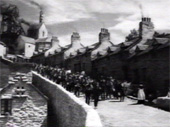 |
| Quitting
time at the mine sees all the men return home. |
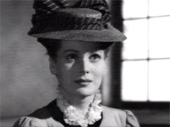 |
| Maureen
O'Hara as Angharad, has a bit of a crush on the new Preacher.
|
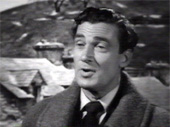 |
| Walter
Pidgeon plays the new Preacher, Mr. Gruffydd, who stands with the
townsfolk during the long strike.
|
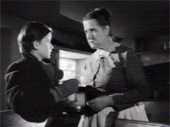 |
| Sara
Allgood is Mrs. Morgan, seen here with her son, Huw, played by young Roddy
McDowall.
|
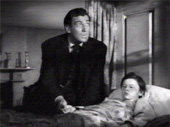 |
| Mr.
Gruffydd gives words of encouragement to young Huw, who is suffering a
crippling ailment.
|
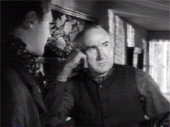 |
| Head
of the household, Mr. Morgan (Oscar winner for Supporting Actor, Donald
Crisp) faces the fact that his sons are leaving to find work elsewhere.
|
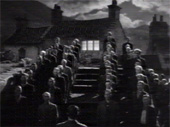 |
| The
town choir gets set to play for the Queen!
|
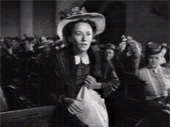 |
| A
young woman is called into question for having a child out of wedlock.
|
 |
|
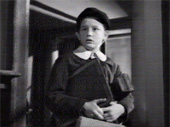
Roddy's first day of
school is not a memorable one.
|
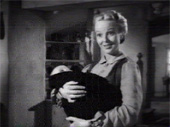 |
| Anna
Lee as Bronwyn, marries into the Morgan family. In her later years
she was Ana Quartermaine on General Hospital.
|
 |
|
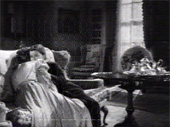
Angharad's feelings
for the preacher get her into trouble with the townsfolk. |
 |
|
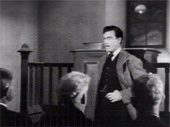
Pidgeon challenges those in the parish
that dare criticize him behind his back. |
 |
|
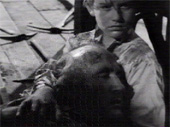
Disaster in the mine takes the
patriarch!
|
Also in 1941:
May 11:
London is hit by the worst ever raid.
Dec 5: German's
face losses in attack on Moscow.
December 7:
Japan pulls a sneak attack on the US, hitting Pearl Harbor.
|
|