
|
Best
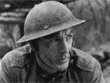
Actor Gary Cooper: Sergeant York  |
|
Best
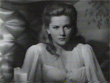
Actress Joan Fontaine: Suspicion |
|
| Many claim that Cooper was the beneficiary of the Orson Welles backlash, but they must remember that Cooper was one of the most respected actors in Hollywood by 1941, and that this award was long overdue. This was his first win, and his second nomination. | "Damn it! I incurred her wrath again!" Fontaine cringed when her name was called, knowing how it would infuriate her estranged sister, Olivia, who was also nominated, and sitting right beside her that evening. | |||
 |
Nominee Cary Grant: Penny Serenade |
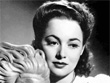 |
Nominee Olivia de Havilland: To Each His Own |
|
| Grant was a popular star by 1941, but the Academy never quite thought so. This would be his first of two nominations, but sadly he would never win. | de Havilland's second Oscar nomination, her first in the Best Actress category, would turn up a loser for her. This time she would lose it to her sister, Joan, who she continually feuded with. The event further set them apart. | |||
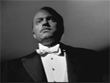 |
Nominee Orson Welles: Citizen Kane |
 |
Nominee Bette Davis: The Little Foxes |
|
| It is said that one could hear boos and hisses whenever a nominee from Citizen Kane was mentioned. Considered the greatest film of all time, the film suffered from a backlash by William Randolf Hearst, and his henchman, Louella Parson's. | After a controversial resignation as President of the Academy, Davis was told by Darryl Zanuck that she would never work in Hollywood again. He was proven wrong, as she received her fourth nomination in as many years. | |||
 |
Nominee Robert Montgomery: Here Comes Mr. Jordan |
 |
Nominee Barbara Stanwyck: Ball of Fire |
|
| And there goes Robert Montgomery. The star was on top of his game before he, as well as many other big named actors, would head off to war. This was one of his last films before enlisting. | Stanwyck's career was on fire in the early forties, with a string of film noir pictures that would ensure her a permanent place in cinema history. Alas, Oscar never agreed. | |||
 |
Nominee Walter Huston: All That Money Can Buy |
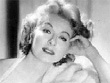 |
Nominee Greer Garson: Blossoms in the Dust
|
|
| Huston scores his second Oscar nomination, for a film that would later be re-titled, The Devil and Daniel Webster. | Garson's classy presence is a hit with audiences, and she suddenly finds herself on a winning streak. | |||
 |
Best
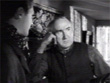
Supporting Actor Donald Crisp: How Green Was My Valley |
 |
Best
Supporting Actress Mary Astor: The Great Lie
|
|
| As the patriarch of a Welsh family, Crisp rides the wave of the Oscar winning film. | While she would win for The Great Lie, Astor would be better remembered for another film from that year, The Maltese Falcon. | |||
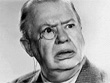 |
Nominee Charles Coburn: The
Devil and Miss Jones |
 |
Nominee Teresa Wright: The
Little Foxes |
|
| Coburn was a well known stage actor up until 1937, when his wife, and acting partner died. At that time, at the age of 60, he signed a contract with MGM, to appear in movies. | Wright earned an Oscar nomination for her first performance, playing the coming of age daughter to Bette Davis. | |||
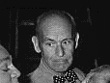 |
Nominee James Gleason: Here Comes Mr. Jordan |
 |
Nominee Margaret Wycherly: Sergeant York |
|
| Acting was a sideline for Gleason, who is also credited for writing film scripts, including the Best Picture winner, The Broadway Melody. | Wycherly was a contract player in films since 1915, when she was 34 years old. Her glory days would come later in life, with performances like this, where she played Gary Cooper's mother. | |||
 |
Nominee Sydney Greenstreet: The Maltese Falcon |
 |
Nominee Patricia Collinge: The Little Foxes |
|
| Greenstreet made his film debut with The Maltese Falcon. The 62 year old actor, who had already made a name for himself on the stage, was ailing from diabetes and Bright's disease. He would make twenty four films before his illness would finally claim him in 1954. | The middle aged actress made her film debut as the flighty, alcoholic Birdie. She would continue to act in supporting roles on screen and on television, right through the fifties. | |||
 |
Nominee Walter Brennan: Sergeant York |
 |
Nominee Sara Allgood: How Green Was My Valley |
|
| His fourth nomination would prove to be Brennan's first loss. | As the no nonsense mother, Allgood was the favorite in this Best Picture winning film. | |||
