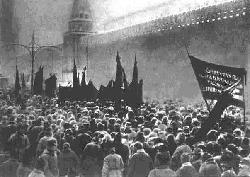
The death of Lenin when it was announced was a great shock. The strict censoring of his condition ensured that the people were unaware of his health problems. Lenin had symbolised the revolution, he had defended Russia from foreign attack and was seen as a God by his people. His unexpected death brought great outpourings of grief. Lenin's body was to be placed in a specially constructed Mausoleum to which it remains even today.
Lenin's death began a power struggle between the members of the Politburo, the most senior of these being Josef Stalin, Leon Trotsky and Nikolai Bukharin. It became evident to those in the party that it was becoming a direct fight for leadership between the General Secretary, Stalin and the Commander of the Red Army, Trotsky. Stalin however had been well prepared for the inevitable fight. The little known Georgian had accepted many posts inside the party and was able to make key political allies that would support him. He had held the posts of General Secretary, Commissar of Nationalities, Head of Workers and Peasant’s inspectorate,and the liaison officer between Politburo and Orgburo (secret police).
Russian History [Back]
Russian History [Continue]
|
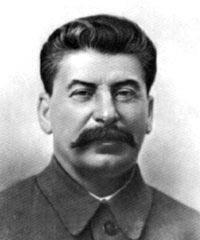 Stalin had formed political foundations that allowed him to have built up considerable support inside the party but also with the people. Stalin increased his popularity by being the chief mourner, this was in direct contrast to Trotsky's complete absense. This was just one event that swung popular support towards Stalin.
Leon Trotsky was born into a rich Jewish family. Russia at this time still had a strong anti-semitic feeling. And as a result lost support for both Trotsky and fellow Zionist, Bukharin.
Stalin had formed political foundations that allowed him to have built up considerable support inside the party but also with the people. Stalin increased his popularity by being the chief mourner, this was in direct contrast to Trotsky's complete absense. This was just one event that swung popular support towards Stalin.
Leon Trotsky was born into a rich Jewish family. Russia at this time still had a strong anti-semitic feeling. And as a result lost support for both Trotsky and fellow Zionist, Bukharin.
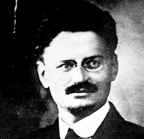 Trotsky also found little support in his criticism of both Lenin and the party for abandoning its Marixt prinicples. He was seen as too idealistic and his rich up-bringing did not appeal to the 82% lower classes, Stalin was seen as the friend of the common man. Trotsky's own poor health in 1924 had prevented him from attending Lenin's funeral. His absense was conspicuous and was was not well regarded by either the Russian people or by Communist party members. Stalin had forwarded himself as successor even before Lenin's death and despite the wishes of Lenin. Stalin's official succession to power in 1929 would come at a great price for the Russian people. The Great Terror of Stalin would eventual murder an estimated 10 million people including the remaining six members of the Politburo.
|

