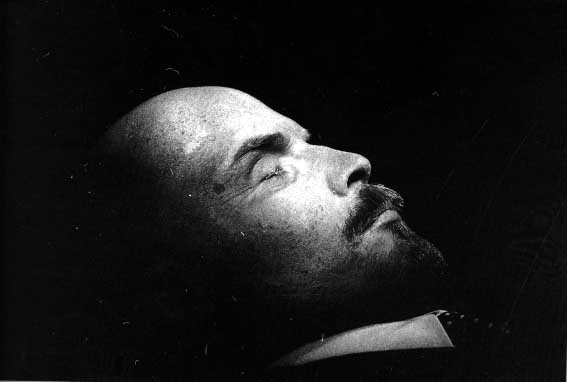
On the 21st of January 1924, Vladimir Ilyich Lenin died. He was 53. Lenin's death had ended years of ill-health for the Russian leader having suffered four strokes in three years. Some historians have pointed at the failed assassinationa attempt by Fanny Kaplan in 1918 as triggering the strokes, the bullet having struck Lenin's neck.
In May 1922, Lenin suffered his first stroke, this severely limited his public duties and hampered his ability to lead the country. In November of the same year, Lenin made his final public speech, within a month he had suffered his second stroke. His growing ill-health meant any public appearance was impossible, for the public must be shielded from the leader's poor physical state. The Politburo that included both Trotsky and Stalin would take over much of the political control of the USSR.
Russian History [Continue]
|
Now in isolation, Lenin wrote what would become his political will known as his "Last Testament". In this collection of letters, Lenin wrote on the future direction for the country and party. He also used them to criticise noted Communist members including a blistering attack on Stalin.
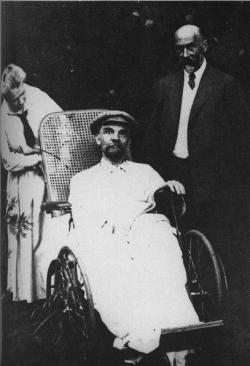 Any criticism by Lenin, the iconic leader, would prevent a member from being a possible candidate for successor. The Politburo that included Stalin therefore would not allow the publishing of such letters. Lenin's health deteriorated and the following year on the 9th March, Lenin suffered his third stroke, a stroke that robbed the leader of his ability to speak. Lenin lived the final year of his life, as a shell of his former self. He died on the 21st January 1924 and Russia went into hysterical mourning.
|

