

 |
 |
 |
This page deals mainly with the second half of our second day in Rome. The morning was as exciting as the afternoon, because it was our visit to the Sistine Chapel, but unfortunately photographs were not allowed, so you'll have to be content with my photos from the Colosseum.
If you want to know more about the Sistine Chapel, you can take a virtual tour or read more.
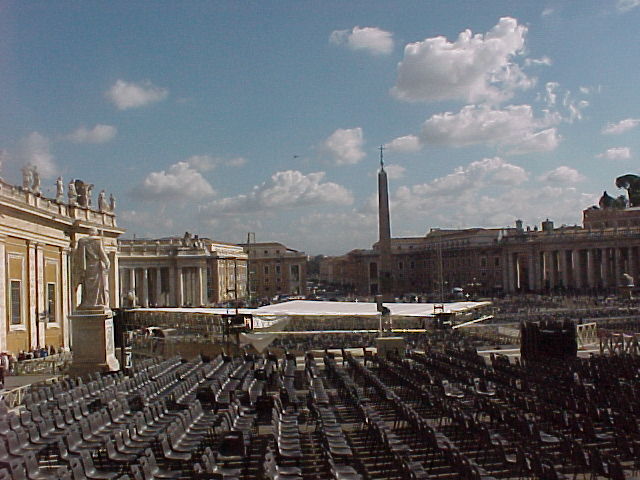
Here are two views of St. Peter's Square seen as we exited the Sistine Chapel.

This is the Colosseum as seen from the front, where a bronze statue of Nero (later a statue of Apollo) used to stand. By the way, Nero did not live to see the completion of the amphitheater, despite his portrayal by Hollywood, our guides told us repeatedly.

Here we are, proudly standing outside the Colosseum.


We entered the Colosseum, formerly known as the Flavian Amphitheater, and joined a tour, conducted by a pony-tailed archaeology grad student.

The capacity of the Colosseum in its heyday was 70,000 people.

Archaeological work is still going on at the site, and you can look down and see some of the narrow channels where the animals were kept. The site included elevators, operated with winches by slaves, to bring lions and other animals to the wooden floor of the arena. Sailors were employed to hoist a giant sail over the colosseum to offer protection from the sun.

Seats were arranged in four tiers. Though admission was free, the senatorial class were given the best seats, while the gentry (small landholders) occupied the next level up. The top levels were for the common folk, who sometimes had to stand.

Needless to say the emperor got the best seat of all, on the zero yard line as it were (center of this photo, far side).


This view faces the victors' arch. The gladiators entered the stage from this side and exited the same way if they survived. The dead were carried off through the opposite gate, from which this photo was taken.


Mom gets a taste of what it was like to be a Roman spectator.

This view faces toward the center of ancient Rome. It would have faced the Temple of Venus in the old days.

| |
|
|
