 |
CICHLIDS By: Gatekeeper |
|
|
The
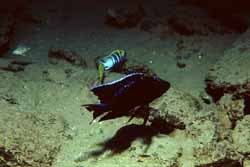
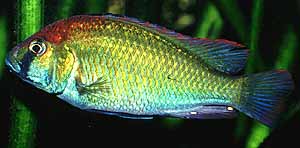
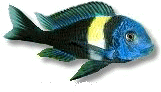
second large group of cichlids is known as the Non-Mbunas. Up until
1989, this group was referred to as "Haplochromis" even though
at that time other genera (e.g. Aulonocara, Aristochromis)
belonged to this group. The Lake Malawi îHaplochromis” were
investigated taxonomically by Eccles and Trewavas in 1989. These
scientists then set up a number of new genera. The term "Haplochromis"
was rejected in favour of the term "Non-Mbunas". Nowadays, 38
genera are included in the group of the Non-Mbunas. The Non-Mbunas are
generally not so strongly rock-orientated and live in almost every
habitat available in Lake Malawi, including the wide sandy zones and the
poorly lit depths. The total length of the Non-Mbunas varies from
between 10 to 40 cm. The majority of these species are only ca. 15 cm
long. In conjunction with their wide distribution in the various
biotopes, the Non-Mbunas have taken over almost every food source. The
Non-Mbunas include the relatively non-specialised omnivores or feeders
on small organisms (Protomelas, Mylochromis, Otopharynx),
plankton specialists (Copadichromis), predators (Stigmatochromis,
Rhamphochromis) and extreme specialists such as fin or scale feeders
(Corematodus, Docimodus) and naturally numerous transitional
forms with respect to their nutritional requirements. Finally, it should be noted that along with Mbunas and Non-Mbunas, there are a few other cichlids that live in Lake Malawi. These include Tilapia rendalli, the only substrate brooding cichlid found in the lake, Astatotilapia calliptera, Serranochromis robustus and a few Oreochromiss spp.. These species cannot be included in either the Mbunas or Non-Mbunas as they exhibit close relationships to the river-living cichlids from the region around Lake Malawi. Site designed by Gatekeeper. Best viewed under Internet Explorer 5.0 or above. All
text files provided here are copyrighted by their respective author. |