Topic 10: Acids and Bases
What are acids and bases?
Acids are compounds whose water solutions taste sour, turn blue litmus red, and react with bases to form salts. Bases are compounds whose water solution tastes bitter and feels slippery, turn red litmus blue, and react with acids to form salts. Acids have the ion H+, while bases have the anion OH-.
Acids that can supply more than one hydrogen ion per molecule are polyprotic acid. Acids that can supply only one hydrogen ion per molecule are monoprotic acids, such as the hydrochloric acid. Binary acids, such as HBr, are composed of only two elements, one which is hydrogen. Ternary acids contain hydrogen and two or more other elements. a Bronsted acid is a hydrogen ion donor, and a Bronsted base accepts hydrogen ions.
How are weak acids and bases compared?
Acids have a pH of either 0-6, bases have a pH of either 8-14, and those with a pH of 7 are neutral. Pure water is neutral. Water may react with itself, but rarely, and that would make a Bronsted acid-base reaction. Two water ions may form a hydroxide ion and a hydronium ion, as a hydrogen ion from each water molecule would transfer from the water molecule to another water molecule. There is also a thing called a neutralization reaction, where an acid which holds a Hydrogen ion and a hydroxide base react to form H2O, water.
What are the biochemical roles of some acids and bases?
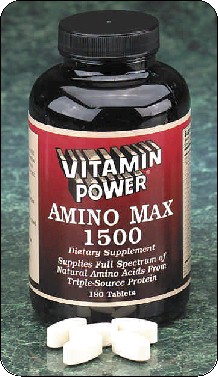
The proteins in your body consist of amino acids. Hydrochloric acids in your stomach helps you digest food. DNA and products from digesting protein are examples of bases in your body. A buffer is a system that is able to withstand small additions of acid or base without a significant change in pH and is composed of a conjugate acid-base pair. Acids and bases need buffers to keep up with the thousands of reactions taking place in your body.
Main menu
Topic 9: Solutions
Topic 11: Electrochemistry
Credits and Links

