
|
|






Hardware: Dial-up Modems |
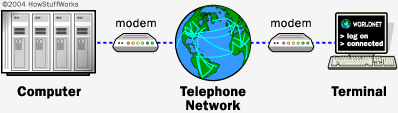
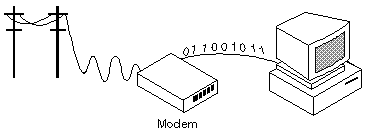
Equipment: As shown earlier, the first commercial modem made by Bell used a receiver that a standard phone handheld receiver/sender would physically lay on top in order to send the analog tones needed to work a dial-up modem at that point in time. Since the invention of the first Bell model, dial-up modems today only require a RJ-45 phone jack to be connected directly to the modem which are commonly internal located within the computer's case and the basic user probably never see what a moderm dial-up modem looks like unless they happen to come across a picture of one. How a dial-up modem works: The first step in the process of a dial-up modem connecting to the Internet, an ISP, or another computer is to clear the phone line by disconnecting any usage of the phone line that the modem is hooked up to. Second is for the modem to dial a number using a normal dial tone and normal tone representing the phone number just as anyone would do making a regular phone call. Once the modem receives feedback from the number that it dialed and the feedback comes in the form of blips and bleeps that lets the modem know that it is in fact in touch with another modem, the modem then begins the process of modulation/demodulation which in fact is how the modem got it's name for the combining of the two terms. After the two modems exchange greetings and tell each other that each is a modem, one modem will send a series of analog tones comprised of highs and lows that represent binary 1's and 0's to a digital processor. The digital processor then throws along the message in digital form until it finally reaches the other modem which then turns the digital signal back into an analog signal of highs and lows, shocks and no shocks, which it then can translate into 1's and 0's and therefore using binary code receive the message that was sent. This process continues back and forth until one side ends the relationship with the other modem. Below are two very simple diagrams of this process by following the dots the series goes along like this: the terminal gives the digital signal to the modem that then modulates the signal into an analog signal that can be sent across the phones lines(the telephone world in this case). Once the analog signal reaches the other modem, that modem then demodulates the analog signal back into a series of 1's and 0's represented by shocks and no shocks and thus the one sided data cycle is completed ending up at the end side computer. |

Click me to move onto cable modem hardware. |
