Site hosted by Angelfire.com: Build your free website today!
Home IPC Partners Publications Projects
News/Announcements
Nigerian Publications
Conflict Management Resource Centre
Resources for Journalists
Press Freedom
Ethics and Regulations

Giving the media in Nigeria a new lease of life

G

The International Press Centre, Lagos provides capacity training for journalists, offers technical support for media houses, provides IT training facilities for media organisations, journalists and civil society organisations.

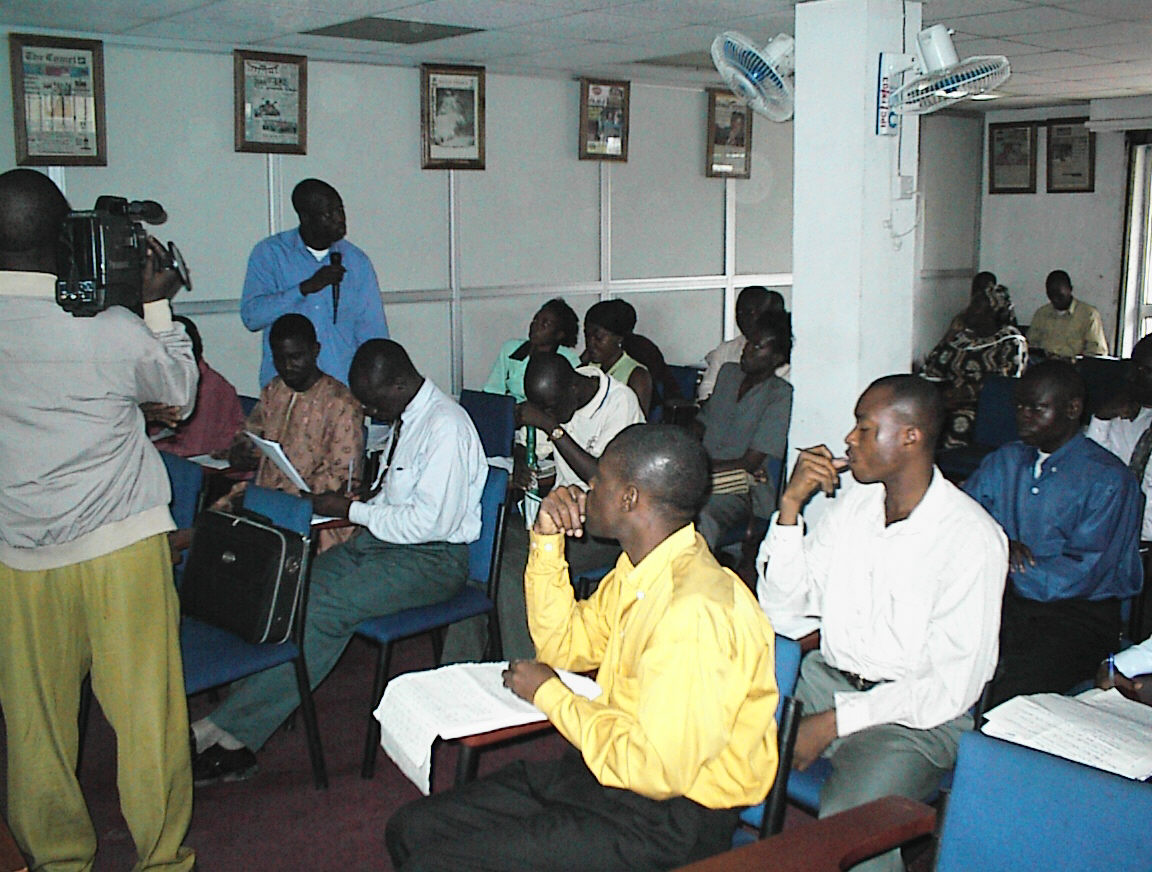
IPC holds roundtables, seminars and conferences where professional matters and media coverage of social issues are discussed


The International Press Centre - IPC is a not-for-profit, non-governmental, independent media resource center.

It provides capacity building for journalists, render professional services to media groups and organisations and support advocacy for freedom of expression, freedom of opinion, freedom of the press, access to information, self regulation, media independence and pluralism in Nigeria and the West African sub-region.

IPCs mission derives from the need to strengthen the media and the journalists in fulfilling their traditional and constitutional obligation of monitoring governance, serving as the society’s watchdog and promoting democratic values.

Commissioned on October 9, 1999, it is a component of the Media-for-Democracy In Nigeria Project (MFD), established through the initiative of the International Federation of Journalists (IFJ), Belgium, Article 19 (International Freedom of Expression Group), U.K, Reporters Sans Frontiers (RSF), France and the West African Journalists Association (WAJA) with the support of the European Commission,

The Nigerian MFD partners - Media Rights Agenda (MRA), Independent Journalism Centre (IJC) and the Journalists for Democratic Rights (JODER) constitute the Board of Directors.


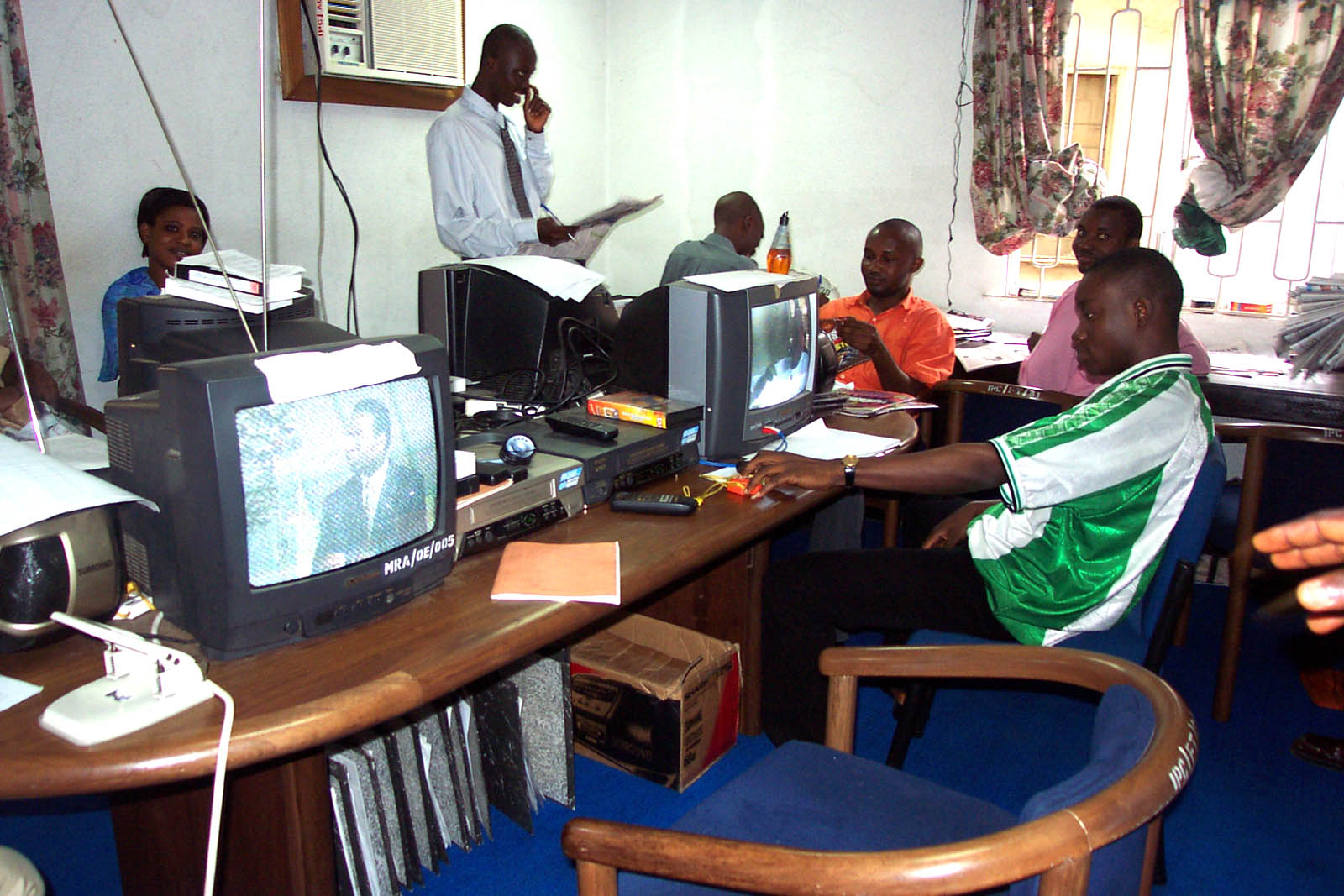
A one-year media-monitoring project held at the premises of the International 
Press Centre, Lagos by one of the MFD partners, MRA


GOALS/OBJECTIVES:

·        To partake in activities aimed at strengthening capacity and professionalism of the media and journalists.

·        To partake and support all necessary activities to promote freedom of expression and preserve media independence.

·        To facilitate the reform and upgrading of media Laws to bring them into conformity with international rights charters and conventions.

·        To provide fora for discourse on the role and responsibilities of the media in democratic dispensations.

·        To offer research and library services to the media, journalists and the public.

·        To improve the knowledge of journalists in information technology and Internet use.

·        To encourage the involvement of the media in conflict management and resolution.

·        To facilitate the participation of journalists in international media events, seminars and fellowships.

·        To address issues of ethics in the practice of journalism.

TOOLS/METHODOLOGY 

·        Roundtable discussions, dialogues, workshops, seminars, conferences and lectures.

·        Training on Internet use, computer assisted reporting and newsroom management.

·        Networking, Internet chat and email discussion groups.

·        Publication of books, journals and reports.

·        Press releases, bulletins, dispatches and alerts.

MAJOR ACTIVITIES 

·        Seminars

·        Workshops

·        Internet Training Programmes for journalists

·        Lectures

FACILITIES 

·        Conference hall - meetings, training, seminars, conferences

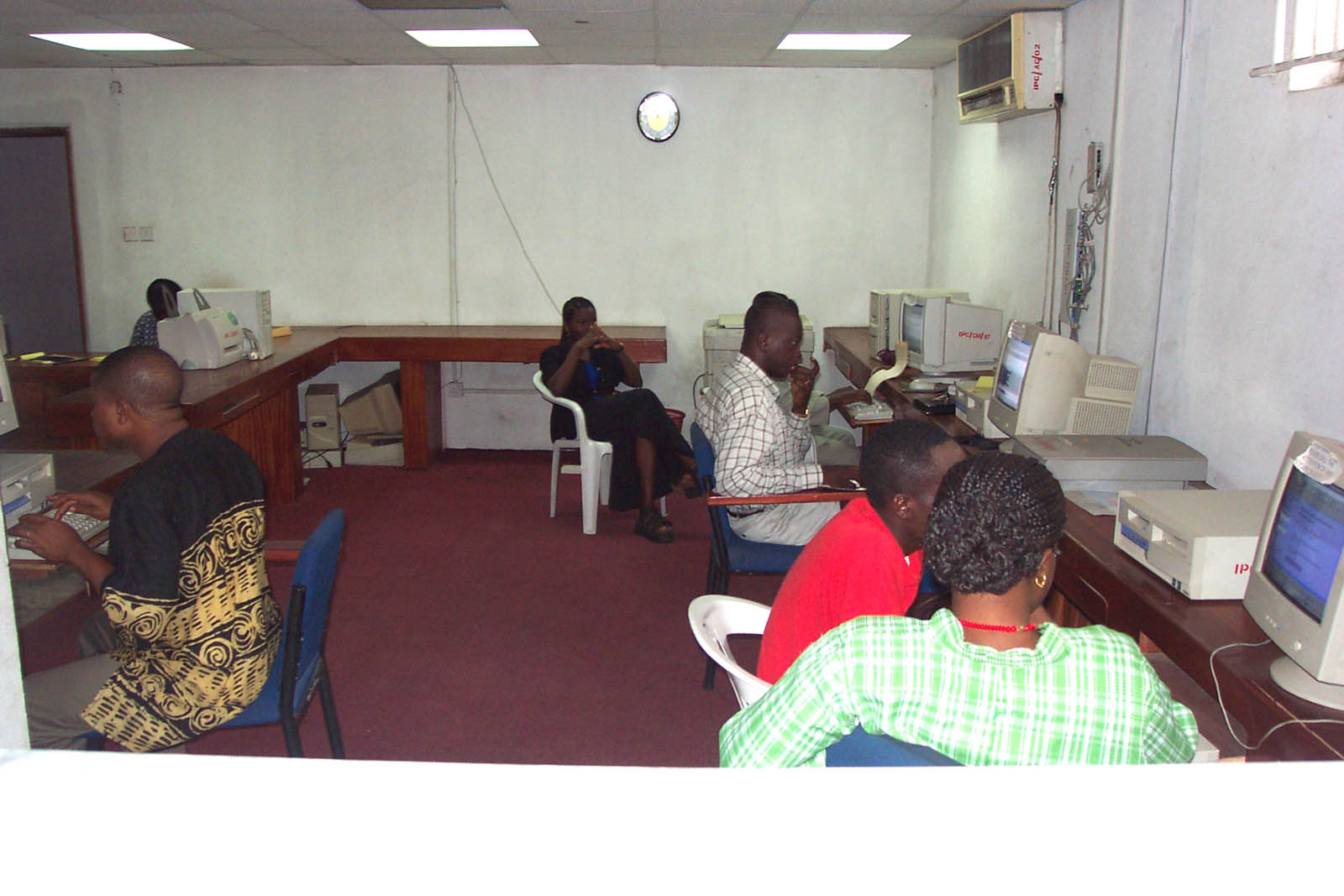
·        Cyber café – Internet training, email services, browsing, networking

·        Boardroom – Monitoring, roundtable, meetings

·        Library – journals, newspapers, magazines, periodicals

·        PCs, Tel/fax machines, audio/visual equipment


IPC's Cyber café though established for the use of journalists and researchers is also open to other users as part of the Centre's effort at encouraging people to embrace ICT 

PATRONAGE

IPC enjoys the enthusiastic patronage of practising journalists, journalism students, mass communication teachers, media organisations and even members of the public who have been making use of the facilities especially the internet access and the conference hall.  Journalists are particularly eager to learn more about the role of the Internet in modern day journalism practice.

IPC has therefore been able to continuously create interactive fora between the press and the society; the media and the government; and the local and international media towards enhancing professionalism and strengthening the democratic institutions.

ROLE

Overall, IPC offers a wide spectrum of opportunity for the strengthening of professionalism in the Nigerian Press while promoting discourse on the media, democracy and good governance.

ACCESSIBILITY

A unique advantage of IPC is its central location in Ogba area of Ikeja, Capital of Lagos State where over half of media houses and journalism training schools in Lagos are sited.  This guarantees easy accessibility for its principal users – media managers, editors, practising journalists and students – as well as other corporate bodies and the public.


Street Address: 42, Ijaye Road, Caterpillar Bus Stop, Ogba, Lagos State Telephone: 234-1-8112422, 4921292, 4925568 Fax: 234-1-4921292, 4925568 Mailing Address: P.O.Box 15916, Ikeja, Lagos State e-mail: ipc@ipcng.org Url: www.ipcng.org          ©2003 IPC, Lagos, Nigeria