|
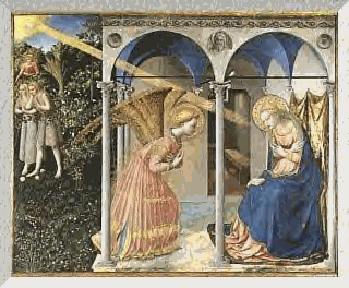
The Liturgy of Advent speaks not only of the Coming of the Lord for the first time as a newborn infant but also of his Second Coming at the end of the world.
Between these two comings of Christ, we can evoke many others: Christ comes in the sacraments, in each day's joys and sorrows, in the heart of a friend, in the need of a neighbour. We recite the Lord's Prayer every day of our lives. Besides the mood of the Present (a filial awareness that God is our Father as of now), the Lord's Prayer also has a mood of expectancy: Thy kingdom come! What is proper to the Season of Advent therefore is not the Advent mood itself but the intensifying of it so that it will inspire our daily lives throughout the whole year.
The term "advent" comes from the Latin adventus which simply means "coming." But in the vocabulary of the Liturgy, it means the Lord's coming. The Aramaic term Maranatha! means "The Lord cometh!" or "Come, Lord, come!" It is a prayerful wish found in the closing lines of the Apocalypse of John and also of the First Epistle of Paul to the Corinthians. A Greek term Parousia is customarily used by Biblical scholars to refer to the Second Coming of Christ in glory at the end of the world.
The Advent mood makes us look forward joyfully to what the future has in store. Before the first coming of Christ, the mood of mankind was not forward-looking. The worship of idols was fundamentally joyless and fatalistic because it could not take away the feeling that man was a being made to suffer and die. So he was unable to look forward to future fulfilment and happiness. His inclination was to look back with nostalgia to a Golden Age that was gone.
Source: Word of God Hour
|
|



 What do you think?
