Featured Poet
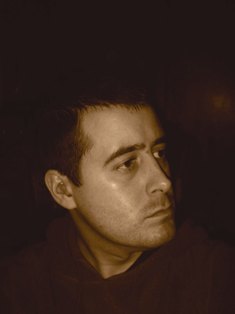
( Seattle, Washington )
Mizban Khadr Hadi (9 ♥)
To catch a spoon
buzzing through the air

with the flair
of a lovesick ninja

          to face
certain damage

with an annoyed president’s
resignation

a toucan’s fanatic jaw
          the pain of a child

bereft of an action figure
glum before this incompletion
Izzat Ibrahim Al-Duri (K ♣)
Those years we danced
     sired rice from weeds

clenched in sleep
          forced couplets

against our teeth
lips drier than one would think

bathed in the breath of youth
Muhsin Khadr Al-Khafaji (3 ♦)
No words speak
the terror of your teeth

          overgrown apparatus
tracing my skin

          articulation of error

guilt
a sack I heft at the end of a stick

     holding all that’s left to me:

an obscured ancestry
          a sinister purpose
          vertigo prattle

ebb and flow of action
against the shore of will
__________________________________
Encke's Comments... [from his website Most Wanted: A Gamble in Verse]
Prior to the invasion of Iraq in 2003, to help troops identify key members of the Saddam Hussein regime, the US Defense Intelligence Agency and Central Command created a deck of playing cards featuring photographs (when available) and brief descriptions of 52 of the top-55 individuals the United States government sought to detain.
According to Pentagon spokeswoman Megan Fox, only 200 of the so-called Personality Identification Playing Card decks were printed and none distributed as originally planned. Nevertheless, the popularity of Iraq’s Most Wanted reproductions and satires targeting the Bush Administration has been remarkable. For the public and media alike, playing cards have become not only a trendy wartime artifact, but a site for debate over the ethical status of government actions.
Struck as many have been by the potent symbolism of playing cards in the context of a controversial war, in the summer of 2003, I began composing a book-length series of epistolary poems addressed, in my imagination, to anonymous figures, yet in a private, idiosyncratic language characteristic of intimate friendship. At times, I even imagined these figures as distant, long-lost lovers. Each poem I named after one of the individuals in the Department of Defense deck. The intent of my method was not to humanize and thereby excuse their crimes, but to stimulate, through play on the expression “most wanted,” thought about the psychosocial underpinnings of love and war and the rhetorical strategies that attend them.
By early 2004, having completed a first draft of my Most Wanted series, I decided that a powerful, if not fitting, presentation of the verse would be in the form of a deck of playing cards. Quickly realizing the difficulty I would face persuading an independent publisher to print the poems in this manner, I decided to publish the deck through my own imprint, Last Tangos. The end-result, Most Wanted: A Gamble in Verse, features brief but representative excerpts from the original poems, as I have found it impossible to fit a poem of more than a couple lines into a 2.5-by-3.5-inch format.
Later this year, I will begin to look for a publisher to print the full-length versions in a standard volume. In the meantime, I offer you this: a palm-sized book you can read, play, and collect.
Next - Hiroshi Watanabe
Contents
Contributors
Current Issue - Spring Supplement 2006
Home