The Metropolitan Museum of Art, New York
The Metropolitan Museum of Art, New York
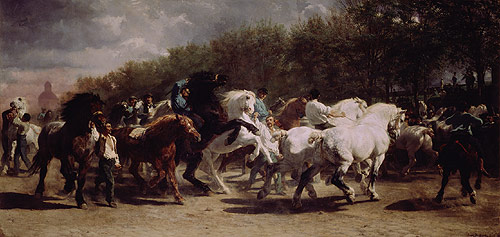
The Horse Fair is a French painting made in the 19th century by Rosa Bonheur. Made with oil on canvas, the painting depicts the horse market in Paris. Bonheur made sketches for her painting while visiting the market. For two weeks, Bonheur dressed as a man to avoid attention to gather information and visual research. The feeling of chaos and noise bring the realism of the horses into a brand new light. It is obvious that Bonheur came to know her subjects very well in those two weeks of disguise.
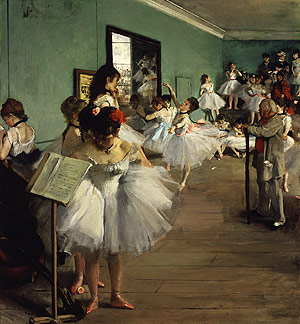
An oil on canvas painting, The Dance Class is a French work from 1874 by Hilaire-Germain-Edgar Degas. Degas made this painting while another was still in progress. It is perhaps his most ambitious work with a dance theme. In the painting, twenty-one dancers and four of their mothers wait anxiously to be examined by ballet master Jules Perrot. Since Degas had no knowledge of such examinations, he spent endless hours in his studio sketching dancers who posed for him. When commenting on this painting, Mary Cassatt claimed that Degas surpassed Vermeer.
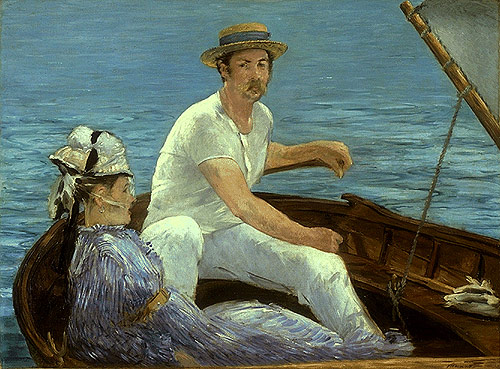
Another oil on canvas, Boating was painted in the summer of 1874 while artist Edouard Manet was working with Renoir and Monet. The Impressionist style is evident in the bright colors, high viewpoint, and depiction of modern life in an outdoor setting. Though the subjects of the painting are not known, it is possible that the man in the boat is Manet’s brother-in-law Randolphe Leenhoff. Interestingly enough, x-rays indicate that man originally held the rope in his right hand. The change appears to be a good choice.
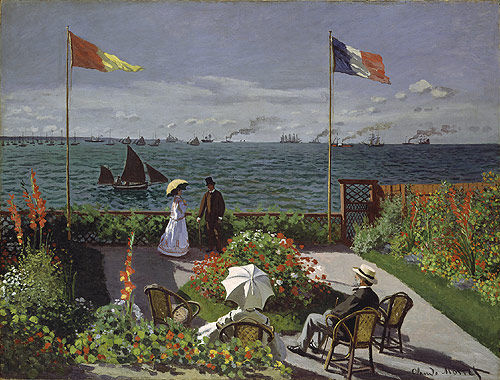
Garden at Sainte-Adresse, a 19th century, oil on canvas, French painting, was done while artist Claude Monet spent the summer at Sainte-Adresse, a small town on the Channel coast of Normandy. Only one of the subjects is unknown. Monet’s aunt, Madame Lecadre, and father, Adolphe, are seated in the foreground, while his cousin Jeanne-Marguerite Lecadre stands with the unidentified man in the center. The three horizontal lines are relatively even in rising parallel to the picture plane, and are emphasized by the flagpoles. Monet, in the 1920’s, claimed that the flagpoles in the composition were very daring for the time.
Next Museum
Email:
trprice@bluefield.edu

