The Louvre, Paris, France
The Louvre, Paris, France
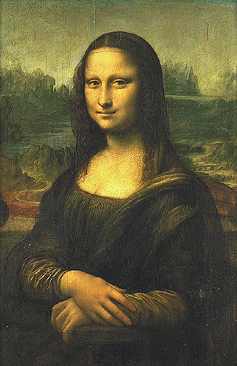
The Mona Lisa, also known as “La Gioconda,” is perhaps the most famous painting known to man. Most people have a general idea of what the painting looks like, but they may not know the details. The painting was done by Leonardo da Vinci with oils on a wood panel between 1503-1506. It is possibly the portrait of the wife of Francesco de Bartolomeo di Zanoli del Giocondo, accounting for the title “La Gioconda.” However, “gioconda” can also mean a light-hearted woman, leaving the debate open. The painting is an Italian ideal, and the smile that makes her so mysterious is typical of da Vinci. The painting promises to remain a lasting image, speaking to generations to come.
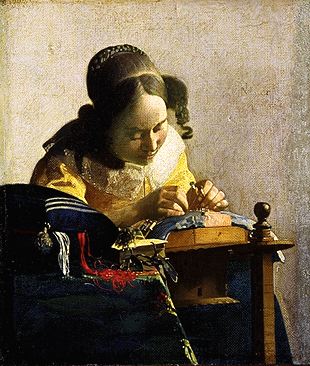
The Lacemaker is a 16th century work from the Dutch artist Jan Vermeer. Vermeer was interested in painting scenes of daily life, and is known for his precise pictures and pleasant colors. The tightness of the picture focuses attention on the lacemaker’s actions. The detail of her neatly arranged hair is a main focal point. The viewer focuses also on the nimble fingers that work under the girl’s careful attention. The simplicity of Vermeer makes him a well known and revered artist, for quality rather than quantity seems to have been his main concern.
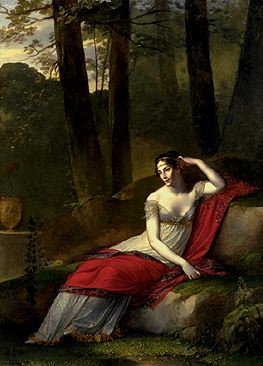
Painted in the 19th century on canvas by Pierre-Paul Prud’hon, The Empress Josephine is a portrait of the famous wife of Napoleon Bonaparte. The subject is shrouded in mist, adding to the melancholic effect of the painting. It depicts Josephine at her chateau in Malmaison, a year after Napoleon’s consecration. She married Napoleon in 1796, but failed to produce an heir and was abandoned in 1809. Prud’hon liked to play with visual effects, as with the tapestry and red and white threads being less precise, acting to exaggerate the size or shape.
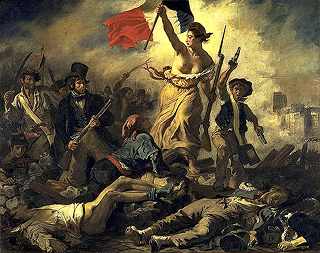
Liberty Leading the People by Eugene Delacroix commemorates July 28, 1830, when the Parisian people took up arms in futile attempt at restoring the Republic. Three days in July 1830, known as Trois Glorieuses, saw the downfall of autocracy and the rise of parliamentarian monarchy. This painting combines realism and grand ideals with the allegorical figure of Liberty waving the flag and leading the people across the corpse-ridden barricade. The gun in her hand and the young fighter beside her stand to show that she will be hard to stop. Incidentally, the painting was purchased by the ruling monarch and soon hidden for fear of bringing a fresh wave of public unrest.
Next Museum
Email:
trprice@bluefield.edu

