

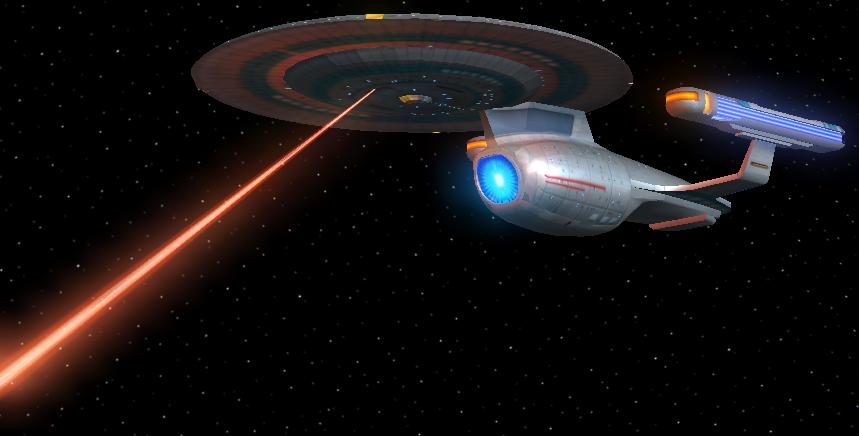
Weapons
Shield Ratings
Hull Rating
The Ambassador Class heavy cruiser is the most dated starship in the game. While the design of the Klingon Bird of Prey has been around nearly 50 years longer than the Ambassador, the B’Rel Class Bird of Prey featured in Bridge Commander is an updated design released in the 2350’s. That means as far as capital starships go, the Ambassador has the oldest and weakest weaponry. However, it handles like most of the larger Federation ships, and when used with the right techniques, the Ambassador can be just as dependable in combat as the newer and more powerful Starfleet designs.
The Ambassador Class’s weapons are sub-par for Federation ships. Type IX phasers are slightly weaker and less effective than the Type X, and they are definitely outmatched by the Sovereign’s Type XII arrays. Furthermore, the Ambassador has only 2 forward firing torpedo tubes. While the other alien races in Bridge Commander don’t have the ability to fire the spread of torpedoes that most Federation vessels do, Starfleet ships aren’t armed with disruptors, so their torpedo armament is what is necessary to batter down an enemy’s shields. Breaking through an opponent’s shields will take more time and skill using the Ambassador. However, it is the only Federation ship that can lay down 360 degrees of phaser fire when maneuvered correctly. This can be extremely helpful is getting another ship off of your back.
The Ambassador’s shields are not impressive. Save for the forward grid, the shields surrounding it have an evenly distributed rating of 7. A volley of torpedoes or a spray of disruptor fire can rip through the Ambassador’s shields in seconds, and the hull becomes an instant target. Thankfully, the Ambassador’s hull has a rating of 13 due to its large size. If you protect your systems, the ship can survive combat for an extended period even with shields down. The Ambassador is slightly more maneuverable than the Galaxy Class, though it has a slower top speed – even at 125%, it can only reach 4300 kph. This means that it is better prey for an eager hunter, but its tighter turning ability coupled with its rear phasers can shake off followers more easily than other Federation ships.
My final analysis – The Ambassador Class is a favorite whipping boy in multiplayer games. While not weak enough to be unplayable online, newbies will target it because of its slower speed and weaker shields. But if an experienced player takes the helm of an Ambassador, they can be serious contenders against almost any opponent. While it probably won’t rack up the kills, it will get a lot of points for damage it inflicts on those who get in its way. The Ambassador is very similar to the Nebula. Although slower, older, and slightly weaker than the other three Federation starships, their ruggedness and dependability in battle can be quite surprising.
When an enemy has you in his sights, the first thing he will probably do is attempt to get into your blind spots. Unfortunately for your opponent, the Ambassador’s only blind spot is the aft-ventral area - too close to the aft torpedo tubes for many players’ comfort. However, if they fly above the aft torpedo tubes, you can open fire with your two rear phaser strips. Though a couple of phaser blasts aren’t always enough to do any damage, it will give you a second or two of strategy time while your opponent rethinks his own attack plan. That’s usually when you can begin a dive and hit them with your two aft torpedoes. Most of the time that is enough to get them to momentarily break their attack. That’s when the Ambassador’s slower speed comes in handy. You can turn a bit sharper than larger ships, and spin around to face your attacker, all the while firing your phasers. A direct hit with your two forward torpedoes will often turn the tables on the situation and put you squarely on the offensive side. It is absolutely necessary that all power be diverted to the Ambassador’s shields and weapons. Engine power can be up to you – while it makes you 800 kph faster to run your engines at 125%, it isn’t absolutely necessary unless you are chasing down an enemy. The Ambassador’s shields are the biggest weak spot. They will fail quite quickly under disruptor or torpedo fire, and even beam weapons have a larger effect on them than they do on other Federation capital starships. Use the rolling technique to equalize damage to all grids, and once a certain grid is down, maneuver your ship so as to protect your most vital systems – your bridge, warp core, and impulse engines.
Even though its overall weapons and shield ratings are rather weak, the Ambassador Class is more than capable of making a good show of itself in multiplayer games. Any overconfidence on your part only plays into the Ambassador’s advantages.
It may be difficult to fly your ship underneath a Federation ship’s drive section, but this is the safest area to be in when you fight the Ambassador. Because of its rear phasers, this is the only chance at a blind spot you will get. From the outset, I target the Ambassador’s warp core. It’s shields should give way with very little effort, and you can begin a direct assault on the drive section. The Ambassador may have a hull rating of 13, but hull rating makes no difference if there is a warp core breach. If you do happen to be facing an Ambassador Class ship, fly underneath it as soon as possible. Making strafing runs over the dorsal side of the ship will only allow it to keep a constant stream of phaser fire on you. Try to match the Ambassador’s speed as well as possible, and be prepared for tight turns and rolling maneuvers. Because it is the oldest ship in the game, the Ambassador Class is all too often underestimated. While it may be an old ship, it still has a vicious bite if you let your guard down.
The Ambassador Class heavy cruiser first entered service in 2325 as a replacement for the decades old Excelsior Class. Its primary mission was exploration, and for its time, it was the largest and most heavily armed vessel in Starfleet. More than 50 years have passed since the Ambassador was introduced, and both it and the Excelsior remain in service, taking on light duty roles within the Federation. The larger Galaxy Class is an almost direct descendant of the Ambassador, and the USS Enterprise NCC 1701-C was a distinguished Ambassador Class vessel. Under the command of Captain Rachael Garrett, the Enterprise-C was destroyed defending a Klingon outpost from a Romulan attack at Narendra III in 2344. While Starfleet lost their flagship, they gained a new respect from the Klingon Empire. The two galactic powers have enjoyed friendly relations ever since.
Ship Specifications
- 8 Type IX Phaser Arrays
- 4 Torpedo Tubes Photon (2 fore & 2 aft)
- 9 Fore, 7 Aft, 7 Dorsal, 7 Ventral, 7 Starboard, 7 Port
- 13
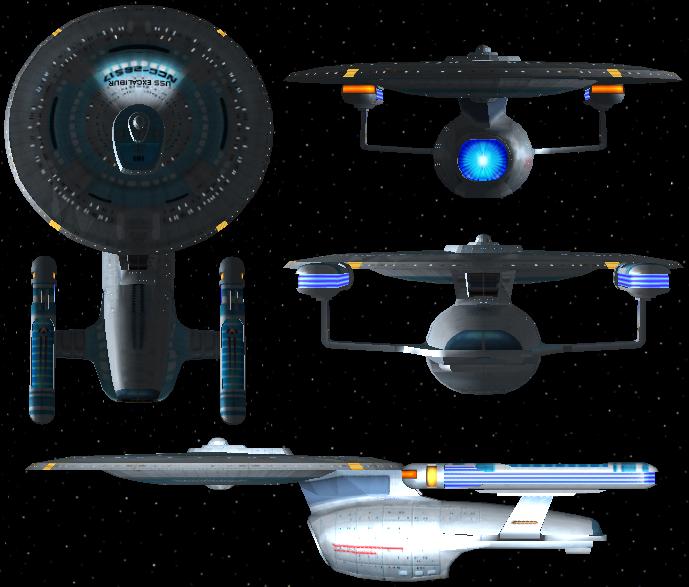
Analysis of the Ambassador Class

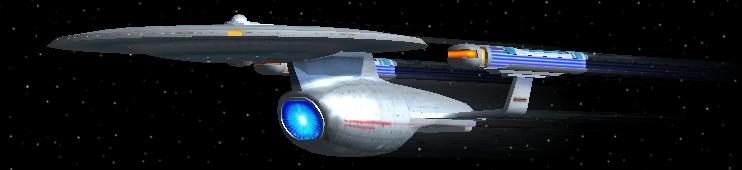 Strategies for the Ambassador Class
*When playing as the Ambassador*
I usually would advise that a player fighting online be offensive in his tactics, but it may actually be better to be on the defensive in the Ambassador Class, at least for a while. Pretending to be weak and defenseless, as the Ambassador usually appears to be, is often an ingenious ploy to lure in unsuspecting prey.*When playing against the Ambassador*
Strategies for the Ambassador Class
*When playing as the Ambassador*
I usually would advise that a player fighting online be offensive in his tactics, but it may actually be better to be on the defensive in the Ambassador Class, at least for a while. Pretending to be weak and defenseless, as the Ambassador usually appears to be, is often an ingenious ploy to lure in unsuspecting prey.*When playing against the Ambassador*
 All original material, including ship descriptions and analyses on "The House of Martok" copyright Jesse Manning 2002.
All ships, pictures, and Bridge Commander information copyright and courtesy of Paramount Pictures, Activision, and Totally Games.
