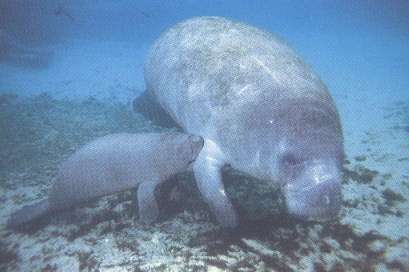
The name manatee comes from the Haitian word "manati". The scientific genus name Trichechus is Latin for hair.
The average adult manatee is about 10 feet long and weighs about 1,000
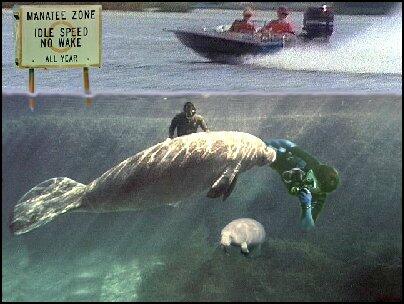
pounds. Manatees are gentle and slow-moving. They swim at a speed of 2mph and in flight they can reach 15mph. This lack of speed is why we need to be more careful with our boats in the areas they habitate. There are more manatee deaths by boating accidents than anything else.
Manatees are herbivorous. They eat aquatic plants and can consume 10-15% of their body weight daily. They come up for air every three to five minutes. They may surface to breathe as often as every 30 seconds depending on their activity. This is why they stay in shallow areas like marinas where they are most likely to be caught in the wake of a speeder.
Manatees have no natural enemies, and can live 60 years or more if we give them enough danger-free space.
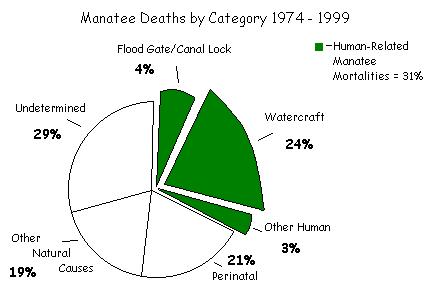
Most human-related manatee mortalities occur from collisions with watercraft. Other causes include: being crushed and/or drowned in canal locks and flood control structures; ingestion of fish hooks, litter and monofilament line; entanglement in crab trap lines; and vandalism. Cold weather is a problem for them, too. They cannot survive in water below 68°. There are few areas in the United States that keep a temperature in
that range during the cold months, so Florida is most likely where you will find them.
Do you know how to help?
If you live in a manatee populated area and if you see a manatee in distress or any kind of foul play, always report the incident by calling 800-DIAL-FMP. If you have a boat or know someone that does, be sure they know how to observe the signs:
Idle Speed Zone: a minimum speed that will maintain the steerageway of the motorboat. Slow Speed Zone: the boat is fully off plane, completely settled into the water, and not creating an excessive wake or other hazardous conditions which endanger other vessels. Caution Area: an area frequently inhabited by manatees, requiring caution on the part of boaters to avoid disturbing or injuring the animals. Resume Normal Safe Operation: a sign indicating that you may resume safe boating speed; visible as you leave a protected area. No Entry Zone: a protected zone that prohibits boating swimming and diving for the protection of manatees.
Another misconception is that we should interact with manatees. While my first thought was to get close to them since the are so friendly, unfortunately our kindness can kill them. Literally! If manatees learn to trust human kindness then they will assume all humans will be friendly. Sadly that's not the case and they can unknowingly put themselves in danger. Feeding them is another bad idea. If they rely on human food, they may "forget" how to find and identify their own which can also put them in a dangerous situation if and when the people stop. Manatees need all the help they can get! If you can help teach someone how, they'll have a better fighting chance as well! Do you want to help manatees, but don't think you can because you live in a place they don't? Visit the Save the Manatee(c) Action Page for more information.
The graphs below show the statistics from 1986 through 1999 as noted by the Florida Fish and Wildlife Conservation Commission. The hike in numbers in 96 was due to the red tide that sadly wiped out about 12% of the population. In January of 1996, a bloom of Gymnodinium, a toxic dinoflagellate, moved into the Florida Gulf coast, from the deeper Gulf waters, creating a "red tide". It usually blooms several miles offshore in the Gulf of Mexico, and causes problems only when it drifts ashore creating the reddish hue in the water. When this happens, dead fish begin appearing on beaches and beach goers often experience respiratory irritation, a symptom caused when toxins are released into the air by crashing waves. In 1996, however, fish were not the only animals affected. The manatee population suffered as well due to the cold weather pushing them more south than usual. The pie graph below shows the break-down of reasons of death.
Although manatees look fat, they actually have very little body fat. They
are tropical and have no need for body fat to keep them warm. A large
percentage of the manatee's body is taken up by the gut tract which contains the stomach and intestines etc. Researchers believe that the manatee's large size probably evolved as a result of being aquatic and having a herbivorous (plant-eating) diet. The plants manatees eat have a low nutritional value, so they make up for that by eating large quantities of them.
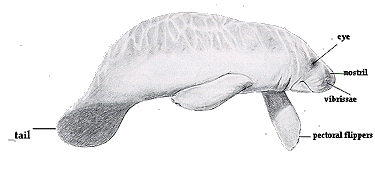
A manatee's paddle-like tail allows them to move their large bodies around with ease and the front flippers are used for navigating and digging up plants. They have very small eyes and can't see very far in muddy water. They have large noses that are used to help them grab plants just like an elephant would with it's trunk. Their sense of sound and smell is very strong and communicate by making high-pitched sounds. They can also leave their scent for other manatees to find.
Breeding between manatees takes place when one or more males are attracted to a female to form a mating herd. Although the males in mating herds compete intensely for access to the female, a permanent bond between male and female does not form.
March through November is the usual mating season although some manatees
have been conceived from December through February. The length of the
gestation period is not certain but is thought to be between 12 and 14 months. The normal litter size is one, with twins being very rare.
Calves usually stay with the mother for one to two years after
birth.
Manatee calves are about three to four feet long and weigh between 60 and 70 pounds at birth. Mother manatees nurse their young for a long period and a calf may remain dependent on its mother for up to two years. The calf nurses from nipples located behind the mother's flippers and will begin to eat plants a few weeks after birth.
Manatees have a higher gray matter to white matter ratio than any other mammal known, including humans! Since gray matter is the area of the brain where thinking occurs, it could be that manatees are a lot smarter even than us! More research needs to be done to understand the manatee brain and how it relates to their intelligence.