
 |
 |
 |
 |
 |
 |
 |
 |
 |
 |
 |

 One
good thing about most restaurants here, if you order a soft drink, you get free
refills even at fast food outlets. Everything of course is a huge proportion.
Salads come before the main meals not with them, not something I can get used
to yet. Don't always expect to be given a knife with your meal either, I sometimes
have to ask for one. It amazes me to see Americans cut with their fork rather
than pick up or ask for a knife. The technique of eating off the back of the
fork which is something we just were brought up to do just doesn't happen here.
There is a lot of stabbing and shovelling of food. Licking the knife when it
is used, astounded me. A difference in cultural upbringing and in acceptable
table manners with ours being based on 'proper' British etiquette I presume.
I was amazed when I went to look at replacing my cutlery set here. All I could
find available were settings that comprised 2 sizes of fork, 1 sized knife, 1
dessert spoon and a teaspoon. So where was the entre' knife and the soup spoon...
nowhere to be seen thats for sure. I'm still looking. Actually it has stunned
me to realise that everything I was used to, and have witnessed in some other
western countries, is just the reverse here. Be prepared for over-airconditioned
restaurants in summer and take a jacket/cardie. The one good thing while living
here is that a No Smoking law was introduced to restaurants and public places.
One
good thing about most restaurants here, if you order a soft drink, you get free
refills even at fast food outlets. Everything of course is a huge proportion.
Salads come before the main meals not with them, not something I can get used
to yet. Don't always expect to be given a knife with your meal either, I sometimes
have to ask for one. It amazes me to see Americans cut with their fork rather
than pick up or ask for a knife. The technique of eating off the back of the
fork which is something we just were brought up to do just doesn't happen here.
There is a lot of stabbing and shovelling of food. Licking the knife when it
is used, astounded me. A difference in cultural upbringing and in acceptable
table manners with ours being based on 'proper' British etiquette I presume.
I was amazed when I went to look at replacing my cutlery set here. All I could
find available were settings that comprised 2 sizes of fork, 1 sized knife, 1
dessert spoon and a teaspoon. So where was the entre' knife and the soup spoon...
nowhere to be seen thats for sure. I'm still looking. Actually it has stunned
me to realise that everything I was used to, and have witnessed in some other
western countries, is just the reverse here. Be prepared for over-airconditioned
restaurants in summer and take a jacket/cardie. The one good thing while living
here is that a No Smoking law was introduced to restaurants and public places.
If you are out and would kill for a cup of tea be wary. American's haven't really grasped the concept of 'proper tea'. Even if they serve English Breakfast or other pure varieties always ask if the water is boiling when they make your favourite cuppa - most likely they will tell you 'no' but its pretty hot. Pass, and go for something else otherwise you will be disappointed.
Tipping always trips me up - coming from a country, and even having lived in other countries where tipping is not expected, nor did the staff have to rely on tips to boost their wage, I just can't get use to remembering to leave a tip or trying to work out what I am supposed to be adding as a tip to the bill. I've heard other expats also comment on how they found compulsory tipping in the U.S. a very much calculated (usually 15%) nuisance - as if patrons should be the ones to make up the difference on the meagre salary given by the employer. You have to be a non-American to understand its not being mean (as most will add some kind of tip to a meal's cost anyway) but its irks us to be made to feel you HAVE to, even if you weren't happy with the service.
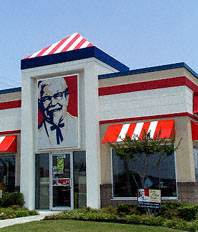 At
fast food outlets of course, you do not need to tip but we rarely visit them
anyway. In our area there are the normal chain restaurants and individual Chinese
and Mexican places but to find anything different you have to travel a fair
distance to other areas. When we do however, we are not let down with our choice
of meal. The wine list menu sometimes adds the odd bottle or two of Australian
wines although it seems these are the less chosen ones and so despite being
on the list, are not always in stock. The 'Soupa Salad' and the 'Fresh Choice'
chains are a great alternative for their salad bars - but generally, it is
hard to find healthy food in the South. At one time a news report advised that
a man in another part of the country was suing a fast food chain or chains
for their unhealthy food. He had been frequenting them for years and it took
2 heart attacks for him to realise that the food was unhealthy. So he then
decided to sue them... oh please.. give me a break!
At
fast food outlets of course, you do not need to tip but we rarely visit them
anyway. In our area there are the normal chain restaurants and individual Chinese
and Mexican places but to find anything different you have to travel a fair
distance to other areas. When we do however, we are not let down with our choice
of meal. The wine list menu sometimes adds the odd bottle or two of Australian
wines although it seems these are the less chosen ones and so despite being
on the list, are not always in stock. The 'Soupa Salad' and the 'Fresh Choice'
chains are a great alternative for their salad bars - but generally, it is
hard to find healthy food in the South. At one time a news report advised that
a man in another part of the country was suing a fast food chain or chains
for their unhealthy food. He had been frequenting them for years and it took
2 heart attacks for him to realise that the food was unhealthy. So he then
decided to sue them... oh please.. give me a break!
BYOB (bring your own booze) restaurants are rare here in Texas. In Australia/NZ/UK, these types of restaurants help keep down the cost of dining out because of the option of bringing your own wine or beer. A meal out, while saying it using American dollars can seem inexpensive, if you convert what you paid to A$ for a comparable meal, its fairly expensive (probably double the cost of a meal in Australia), then of course there is the obligatory 15% (usually) tip on top of that.
 Now
here is a little bit of useless information. When I first arrived I was fascinated
by the different coloured tops of the fire hydrants around us so I asked the
question. The tops of the hydrants are colour-coded according to the size water
main supplying them, red (very unusual) for a 4" main, aluminium for a 6" main,
blue for an 8" main, and yellow for 10" and larger main. Aren't you glad you
now know that.
Now
here is a little bit of useless information. When I first arrived I was fascinated
by the different coloured tops of the fire hydrants around us so I asked the
question. The tops of the hydrants are colour-coded according to the size water
main supplying them, red (very unusual) for a 4" main, aluminium for a 6" main,
blue for an 8" main, and yellow for 10" and larger main. Aren't you glad you
now know that.
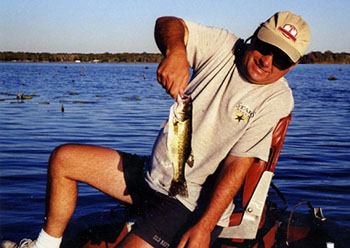 You
need a fishing license to do any kind of fishing here, even just on a days fishing
trip. You also need to carry a drivers license or a personal identification certificate
issued by the Texas Department of Public Safety. Licenses are usually issued
for a specific number of days and the cost in 2001 was $19. You can apply for
them by phone with a credit card, at an official location, or you can purchase
them from a Walmart store. You cannot fish in public waters in Texas without
a license. The exceptions are, if you are under 17 years of age, were born before
Sept. 1, 1930 or are a mentally disabled person fishing as part of medically
approved therapy. Some lakes you can catch the fish but you have to throw them
back ? I guess the thrill is in the catching.
You
need a fishing license to do any kind of fishing here, even just on a days fishing
trip. You also need to carry a drivers license or a personal identification certificate
issued by the Texas Department of Public Safety. Licenses are usually issued
for a specific number of days and the cost in 2001 was $19. You can apply for
them by phone with a credit card, at an official location, or you can purchase
them from a Walmart store. You cannot fish in public waters in Texas without
a license. The exceptions are, if you are under 17 years of age, were born before
Sept. 1, 1930 or are a mentally disabled person fishing as part of medically
approved therapy. Some lakes you can catch the fish but you have to throw them
back ? I guess the thrill is in the catching.
 This
is the BIG state and most Texans eat big too. Mexican food is in every corner
of Texas and its influences have permeated the traditional Texan food which
has brought about the name Tex-Mex which is really the best of both cultures.
Rice and Beans are the staple sides in Tex-Mex because their taste and textures
blend perfectly with the beef, cheeses and sauces. Watch those beans though..
they WILL come back to haunt you. Corn or flour tortillas are used in almost
every recipe.
This
is the BIG state and most Texans eat big too. Mexican food is in every corner
of Texas and its influences have permeated the traditional Texan food which
has brought about the name Tex-Mex which is really the best of both cultures.
Rice and Beans are the staple sides in Tex-Mex because their taste and textures
blend perfectly with the beef, cheeses and sauces. Watch those beans though..
they WILL come back to haunt you. Corn or flour tortillas are used in almost
every recipe.
Chicken-fried steak is served everywhere and is considered by some as the national dish of Texas. Don't let the name throw you, it is actually beef cutlets, breaded and fried like chicken, then smothered in thick white gravy flecked with pepper and was thought to have been invented back in the chuck-wagon days of early Texas. I am not too keen on the white gravy myself. Fried food, known as Texas Grease, is very popular. You can't go to the State Fair without having a big ol' Turkey Leg (and they are a handful) and corny dogs (hot dogs dipped in corn batter, deep fried and served on a stick). Don't forget the spicy Buffalo Wings either - all very much part of the Texas culture.
The self-invented Texas Barbecue is as sacred as religion in Texas. It began
in the back rooms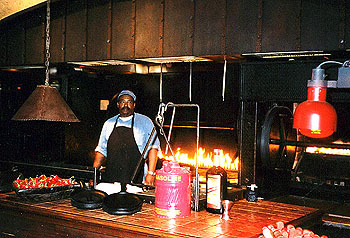 of
meat markets in Central Texas at the turn of the century and pretty much limited
to pit-smoked beef brisket, "sliced thick, tender as butter, stacked on a bun
and covered in onions". With ribs though, the meat is usually pork and smothered
with sauce. BBQ places are everywhere all with their own sauces, spices and
secrets. Frankly I find it hard to taste the meat with all that sauce but fortunately
I'm not a big meat eater. Texans love their Steak and Steak Houses are everywhere
as are the catfish restaurants.
of
meat markets in Central Texas at the turn of the century and pretty much limited
to pit-smoked beef brisket, "sliced thick, tender as butter, stacked on a bun
and covered in onions". With ribs though, the meat is usually pork and smothered
with sauce. BBQ places are everywhere all with their own sauces, spices and
secrets. Frankly I find it hard to taste the meat with all that sauce but fortunately
I'm not a big meat eater. Texans love their Steak and Steak Houses are everywhere
as are the catfish restaurants.
Chili IS Texas and it varies from mild, hot or three-alarm. In fact, chili is the official state dish but the variations are many. To some, adding beans to chili is almost sacrilegious - the main ingredient (after the meat) is chili peppers (whether chopped, diced, powdered, or liquefied. Personally I prefer Chili without beans - but good and hot. All around the country during the year there are chilli cook-offs and people sure are serious about their chilli. Venison Chili is quite different to try also.
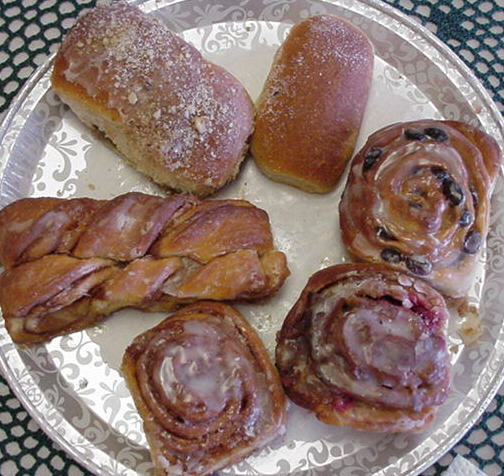 Actually
in Texas you get even broader choices with Cajun (from Louisiana) and Native
American, plus German, Czech and other European cultures from the early immigrants
who settled in this State which have blended in with the Texas taste buds.
All around the State you will find little pockets of these communities all
with their traditional fare bakeries and restaurants. Whenever we travelled
through West (south of Dallas) we always stopped at one of the Czech bakeries
there. Wonderful Kolaches (fruit and sausage)and sweet breads as well as focaccia
breads. Creole cooking is based upon French stews and soups, and is influenced
by Spanish, African, Native American, and other Anglo Southern groups. Cajun
food tends to be spicier and more robust than Creole and include pork based
sausages such as andouille and boudin; various jambalayas and gumbos; coush-coush
(a creamed corn dish) and etoufeé. The symbol of Cajun cooking is perhaps the
crawfish. Lets not get into the grits and gizzards.
Actually
in Texas you get even broader choices with Cajun (from Louisiana) and Native
American, plus German, Czech and other European cultures from the early immigrants
who settled in this State which have blended in with the Texas taste buds.
All around the State you will find little pockets of these communities all
with their traditional fare bakeries and restaurants. Whenever we travelled
through West (south of Dallas) we always stopped at one of the Czech bakeries
there. Wonderful Kolaches (fruit and sausage)and sweet breads as well as focaccia
breads. Creole cooking is based upon French stews and soups, and is influenced
by Spanish, African, Native American, and other Anglo Southern groups. Cajun
food tends to be spicier and more robust than Creole and include pork based
sausages such as andouille and boudin; various jambalayas and gumbos; coush-coush
(a creamed corn dish) and etoufeé. The symbol of Cajun cooking is perhaps the
crawfish. Lets not get into the grits and gizzards.
Don't forget the Donut Shops either - little stores are everywhere but only
seem to be open in the mornings. Donuts come in all shapes and sizes with all
kinds of toppings. Krogers supermarket always had a 'help yourself' bowl of
mini donuts for their shoppers. Connoisseurs of the fattening sweet
delights will tell you that Krispy Kreme donuts are the best, they almost have
a cult following. You can find cabinets of these in Truck Stops as well as
in some supermarkets. Not being a big fan these days of any kind of donuts,
I just wish Walmart would stock something else in the bakery cabinets other
than dammed donuts! Give me a good 'Kiwi' bakery any day. A new thing with
the donut shops is to advertise 'sausage rolls'. This is not the sausage rolls
that we know - they are more a bread roll with a sausage in the middle. Some
come with cheese as well.
sweet
delights will tell you that Krispy Kreme donuts are the best, they almost have
a cult following. You can find cabinets of these in Truck Stops as well as
in some supermarkets. Not being a big fan these days of any kind of donuts,
I just wish Walmart would stock something else in the bakery cabinets other
than dammed donuts! Give me a good 'Kiwi' bakery any day. A new thing with
the donut shops is to advertise 'sausage rolls'. This is not the sausage rolls
that we know - they are more a bread roll with a sausage in the middle. Some
come with cheese as well.
None of the above is anything like Diet Food however there are some great places like 'Soupa Salad' and "Fresh Choice" which offer wonderful salad bars (big selections accompanied by several selections of great soup, breads/muffins/pizza slices and choice of desserts) and Schlotzkys and Jasons Deli which come close in their choice of healthy sandwiches etc. Generally, Texans are far from healthy eaters, in fact the word healthy is relatively new here and still being contemplated and digested along with the buffalo wings and chicken fried steaks. Everything is sweet and way too much sauce (be it mayonnaise or whatever). Portions are huge. Doggy bags are a regular souvenir for me after dining out. The food, with its spice and variety here in Texas though is great but if you are used to a more healthy diet, take it easy otherwise you could have some tummy upsets.
Biscuits in Texas are a variation of our scones (in OZ/NZ/UK) but they are not served as afternoon tea with cream and jam - they are served with breakfast which is usually a mixture of sweet and savoury. The Scones in Texas are, to us… a rock hard/overdone version of our fluffy light scone. Biscuits to 'us' are 'cookies' to the Americans.. this usually comprises a soft chewy version which would suggest to us 'stale' while we find our fresh 'cookies' (biscuits) crisp and crunchy. To the American.. this would be stale and dried out. Confused? ... no kidding.
 Sandwiches
and chips… now this doesn't mean a sandwich and 'fries' (or chips as 'we' call
it), it means potato chips and it seems that you can't eat a sandwich here
without a packet of 'chips' going along with it. Soup also goes with having
a salad in a lot of places.. I would never have put the two together, however.
Forget about finding Pumpkin soup in a restaurant or even the canned variety.
Forget sausage rolls and savouries also, they just don't exist unless you order
them through Aussie Products or some such company in the States that cater
for the deprived Aussie/Kiwi - in fact the word savoury is not used. There
are some meat pies that are not too bad - tasty enough, but the pastry shell
doesn't hold together too well when it is cooked. Still if you need a fix of
meat pie, tomato sauce and mashed tatties, it does the trick.
Sandwiches
and chips… now this doesn't mean a sandwich and 'fries' (or chips as 'we' call
it), it means potato chips and it seems that you can't eat a sandwich here
without a packet of 'chips' going along with it. Soup also goes with having
a salad in a lot of places.. I would never have put the two together, however.
Forget about finding Pumpkin soup in a restaurant or even the canned variety.
Forget sausage rolls and savouries also, they just don't exist unless you order
them through Aussie Products or some such company in the States that cater
for the deprived Aussie/Kiwi - in fact the word savoury is not used. There
are some meat pies that are not too bad - tasty enough, but the pastry shell
doesn't hold together too well when it is cooked. Still if you need a fix of
meat pie, tomato sauce and mashed tatties, it does the trick.
Iced Tea is extremely popular in Texas. Most Texans grew up on iced tea with almost every meal and not just during the hot summers. It is consumed in large quantities. For home use you can make your own, buy it in packets or in jugs in Supermarkets. Not my 'cup of tea'. Hot traditional tea is more my morning fix but its not that common - this is the land of coffee drinkers. I was fooled a few times by people telling me they were more tea drinkers now than coffee drinkers. This didn't necessarily mean hot tea but iced tea. One good thing about Texas.. if you're not a big brecky (breakfast) eater in the morning but don't like to miss out, you can usually find somewhere to serve you a breakfast menu at any time of the day.
 These
are a big event on Fridays, Saturdays and Sundays. To hear some women talk, they
make a regular thing of touring all the neighbourhood sales every week in search
of 'little must have treasures'. Why they start on Fridays is beyond me but they
did. They are also called Yard Sales. They don't necessarily seem to be a once-a-year
'clean out' event for some households either - I often see the same house having
them very frequently even though in our area the code states that you are 'limited
to two sales per calendar y ear and these may last no longer than three consecutive
days in any residential neighbourhood.'
These
are a big event on Fridays, Saturdays and Sundays. To hear some women talk, they
make a regular thing of touring all the neighbourhood sales every week in search
of 'little must have treasures'. Why they start on Fridays is beyond me but they
did. They are also called Yard Sales. They don't necessarily seem to be a once-a-year
'clean out' event for some households either - I often see the same house having
them very frequently even though in our area the code states that you are 'limited
to two sales per calendar y ear and these may last no longer than three consecutive
days in any residential neighbourhood.'
On the corner of streets you will see a whole stack of signs posted with various addresses of sales in that immediate area. Estate sales are next level up and from what I hear, where the more upmarket goods were being offered. According to Michael's Mum, who was a regular partaker of these Estate Sales in Louisiana, you can get some great buys even if you didn't need them.
 |
 |  |
 |
 |

