
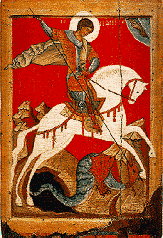
 Dragon
Webster's Dictionary: drag.on \'drag-en\
n dracon-,draco serpent,dragon,
[fr.GK drakon;akin to OE torht bright,Gk
derkesthai to see,look at] 1 archaic:
a huge serpent 2:a fabulous animal usually
represented as a monstrous
winged and scaly serpent or saurian with
a crested head and enormous claws.
Tormont Illustrated Encyclopedia: drag'en
n. 1. a. A fabulous monster,
represented usually as a gigantic reptile
breathing fire and having a lion's
claws, the tail of a serpent, wings and scaly
skin. b. A figure or other
representation of this creature. 2. Archaic.
A large snake or serpent [Middle
English drago(u)n, from Old French dragon,
from Latin draco (stem dracon-),
dragon, serpent, from Greek drakon, serpent]
Dragon
Webster's Dictionary: drag.on \'drag-en\
n dracon-,draco serpent,dragon,
[fr.GK drakon;akin to OE torht bright,Gk
derkesthai to see,look at] 1 archaic:
a huge serpent 2:a fabulous animal usually
represented as a monstrous
winged and scaly serpent or saurian with
a crested head and enormous claws.
Tormont Illustrated Encyclopedia: drag'en
n. 1. a. A fabulous monster,
represented usually as a gigantic reptile
breathing fire and having a lion's
claws, the tail of a serpent, wings and scaly
skin. b. A figure or other
representation of this creature. 2. Archaic.
A large snake or serpent [Middle
English drago(u)n, from Old French dragon,
from Latin draco (stem dracon-),
dragon, serpent, from Greek drakon, serpent]
Members
Of The Dagon Kind
Western Dragon : whes-turn drag-en
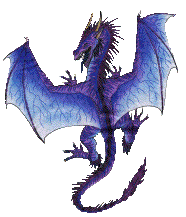 PHYSIOLOGY: Thick, long bodied, scaly skin, four
strong legs, two
bat-like wings, wedge-shaped heads, and long necks. They usually
are
portrayed as breathing fire. Some breeds of these dragons have
been known
to be shape changers, and others have the chameleon power to change
color
of their background. They are sometimes displayed as having a spade
or
spiked tail. They eat but once a month on a sheep or ox, or even
a human
(myth says they prefer virgin maidens). They can be any color,
or many
colors, depending on the breed of the dragon.
HISTORY: When most people think "dragon" they most
likely think of the
Western dragon. Western dragons are usually portrayed as evil,
mean, and
bloodthirsty. They were also known to have huge hoards of gold
and jewels
hidden in their lairs. The most famous dragons are portrayed as
Western-type
dragons. Some
stories have the western dragon as the Devil in Christianity. Other
stories in
legend say that eating a dragons' heart will give the consumer
the power of
understanding birds, eating the dragons' tongue enables the person
to win any
argument, and rubbing the dragons' blood on skin will protect against
stab
wounds. Another myth references Vlad Drakul to mean Son of the
Dragon, or
Devil. The end of the dragon came with Christianity, and knights
that were
eager to prove their faith. The knights quickly discovered that
dragon-hunting
was very profitable, and soon most the dragons in the world were
destroyed
in a very short time. Vikings had dragon figureheads on the prow
of their
ships. The dragons on the ships were believed to endow keen site
and
cunning to the Viking warriors. Today the Welsh flag still has
a red dragon on
a green/white background, and the red dragon is their national
symbol.
Eastern Dragon : ees-turn drag-en
PHYSIOLOGY: Thick, long bodied, scaly skin, four
strong legs, two
bat-like wings, wedge-shaped heads, and long necks. They usually
are
portrayed as breathing fire. Some breeds of these dragons have
been known
to be shape changers, and others have the chameleon power to change
color
of their background. They are sometimes displayed as having a spade
or
spiked tail. They eat but once a month on a sheep or ox, or even
a human
(myth says they prefer virgin maidens). They can be any color,
or many
colors, depending on the breed of the dragon.
HISTORY: When most people think "dragon" they most
likely think of the
Western dragon. Western dragons are usually portrayed as evil,
mean, and
bloodthirsty. They were also known to have huge hoards of gold
and jewels
hidden in their lairs. The most famous dragons are portrayed as
Western-type
dragons. Some
stories have the western dragon as the Devil in Christianity. Other
stories in
legend say that eating a dragons' heart will give the consumer
the power of
understanding birds, eating the dragons' tongue enables the person
to win any
argument, and rubbing the dragons' blood on skin will protect against
stab
wounds. Another myth references Vlad Drakul to mean Son of the
Dragon, or
Devil. The end of the dragon came with Christianity, and knights
that were
eager to prove their faith. The knights quickly discovered that
dragon-hunting
was very profitable, and soon most the dragons in the world were
destroyed
in a very short time. Vikings had dragon figureheads on the prow
of their
ships. The dragons on the ships were believed to endow keen site
and
cunning to the Viking warriors. Today the Welsh flag still has
a red dragon on
a green/white background, and the red dragon is their national
symbol.
Eastern Dragon : ees-turn drag-en
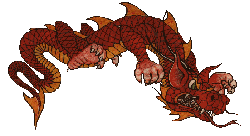 PHYSIOLOGY: These three species of dragons look very
similar, but come
from different parts of the world. They all have sinuous serpentine
bodies,
have four legs, they do not usually breath fire, usually shown
not to have
wings, but are illustrated to have them which is the Adult Imperial
Dragon.
The dragons are said to be made up of many different types of animals
of the
Earth: the body of a snake, scales of a carp (fish), head of a
camel, horns of a
giant stag (deer), the eyes of a hare (rabbit), ears like a bull,
a neck like an
inguana, belly of a frog, paws like a tigers, and claws like an
eagle. Most of
the time they are shown to have a lion-type mane around its neck,
on its chin,
and on each elbow. They have two antler-type horns decorating their
wide-mouthed head, and two long "feeler" whiskers spreading out
from their
snout. Eastern dragons have 117 scales, 81 infused with yang, the
good, and
36 infused with yin, the bad. This evens out the dragons temper
and
personality.
There are three families of Eastern dragons: 3 toed, 4 toed, and
5 toed. Three
toed dragons are Japanese. Four toed dragons are Indonesian or
Korean. Five
toed dragons are Chinese. They are shown in the colors blue, black,
white,
red, or yellow. Oriental dragons are usually shown with a pearl
in their
mouth, under their chin, or in their claws. This is apparently
where the dragon
gets its power, and how it ascends to heaven. Roasted swallows
are the
Chinese dragon's favorite food.
HISTORY: In China dragons are known as Lung. There
are four main kinds
of Lung: Tien-lung , The Celestial Dragon: who protect the places
of the
Gods, Shen-Lung, The Spiritual Dragon: who control the wind and
the rain,
Ti-Lung , The Earth Dragon which control rivers, and water on the
Earth,
and Fut's-Lung , The Underworld Dragon which guards precious metals
and
gems. Separate dragons control the rivers of the North, South,
East and West.
The commander of all the River Dragons is Great Chien-Tang who
is blood
red, has a firey mane, and is 900 feet long.
Eastern dragons are portrayed as good, kind, and intelligent. Oriental
Dragons have the most recorded history in the world, especially
in China
going back thousands of years. In history they have a very close
link to the
weather. It is said that some of the worst flooding in Asia's History
were
caused when a mortal has upset a dragon. In Chinese history, the
5 toed
dragon is the symbol of power, and are considered "Imperial Dragons".
Long
ago, it became law in China that only the Emperor could have a
five-clawed
dragon displayed on his robes or illustrated on anything the Emperor
owned.
It was usually a Yellow dragon, thought to be the most superior
of all the
colored dragons. If someone other than the Emperor was caught wearing
the
symbol of the 5-toed dragon, he was put to death.
Eastern dragons are still shown in parades around the world celebrating
the
Chinese New Year with the Dragon Dance.
Faerie Dragon : fair-ee drag-en
PHYSIOLOGY: These three species of dragons look very
similar, but come
from different parts of the world. They all have sinuous serpentine
bodies,
have four legs, they do not usually breath fire, usually shown
not to have
wings, but are illustrated to have them which is the Adult Imperial
Dragon.
The dragons are said to be made up of many different types of animals
of the
Earth: the body of a snake, scales of a carp (fish), head of a
camel, horns of a
giant stag (deer), the eyes of a hare (rabbit), ears like a bull,
a neck like an
inguana, belly of a frog, paws like a tigers, and claws like an
eagle. Most of
the time they are shown to have a lion-type mane around its neck,
on its chin,
and on each elbow. They have two antler-type horns decorating their
wide-mouthed head, and two long "feeler" whiskers spreading out
from their
snout. Eastern dragons have 117 scales, 81 infused with yang, the
good, and
36 infused with yin, the bad. This evens out the dragons temper
and
personality.
There are three families of Eastern dragons: 3 toed, 4 toed, and
5 toed. Three
toed dragons are Japanese. Four toed dragons are Indonesian or
Korean. Five
toed dragons are Chinese. They are shown in the colors blue, black,
white,
red, or yellow. Oriental dragons are usually shown with a pearl
in their
mouth, under their chin, or in their claws. This is apparently
where the dragon
gets its power, and how it ascends to heaven. Roasted swallows
are the
Chinese dragon's favorite food.
HISTORY: In China dragons are known as Lung. There
are four main kinds
of Lung: Tien-lung , The Celestial Dragon: who protect the places
of the
Gods, Shen-Lung, The Spiritual Dragon: who control the wind and
the rain,
Ti-Lung , The Earth Dragon which control rivers, and water on the
Earth,
and Fut's-Lung , The Underworld Dragon which guards precious metals
and
gems. Separate dragons control the rivers of the North, South,
East and West.
The commander of all the River Dragons is Great Chien-Tang who
is blood
red, has a firey mane, and is 900 feet long.
Eastern dragons are portrayed as good, kind, and intelligent. Oriental
Dragons have the most recorded history in the world, especially
in China
going back thousands of years. In history they have a very close
link to the
weather. It is said that some of the worst flooding in Asia's History
were
caused when a mortal has upset a dragon. In Chinese history, the
5 toed
dragon is the symbol of power, and are considered "Imperial Dragons".
Long
ago, it became law in China that only the Emperor could have a
five-clawed
dragon displayed on his robes or illustrated on anything the Emperor
owned.
It was usually a Yellow dragon, thought to be the most superior
of all the
colored dragons. If someone other than the Emperor was caught wearing
the
symbol of the 5-toed dragon, he was put to death.
Eastern dragons are still shown in parades around the world celebrating
the
Chinese New Year with the Dragon Dance.
Faerie Dragon : fair-ee drag-en
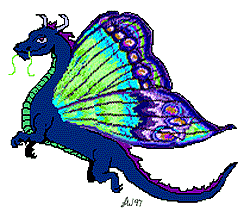 PHYSIOLOGY: Very small dragons, being only 1'-5'
long, any color, with
large eyes, and large butterfly-type wings. These dragons are vegetarian
as
they only eat fruit, vegetables, nuts, and so on.
HISTORY: These are the rarest of all the dragon,
as only a few have ever
been reported. Some myths might come from some large butterflies
that are
around the world. It is said in legend that these dragons sometimes
carry
faeries from city to city. Since only a few have ever been seen,
the history of
these types of dragons are next to none.
Wyvern
: wi-vurn
PHYSIOLOGY: Very small dragons, being only 1'-5'
long, any color, with
large eyes, and large butterfly-type wings. These dragons are vegetarian
as
they only eat fruit, vegetables, nuts, and so on.
HISTORY: These are the rarest of all the dragon,
as only a few have ever
been reported. Some myths might come from some large butterflies
that are
around the world. It is said in legend that these dragons sometimes
carry
faeries from city to city. Since only a few have ever been seen,
the history of
these types of dragons are next to none.
Wyvern
: wi-vurn
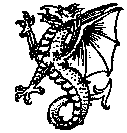 PHYSIOLOGY: These are dragons which have two wings,
but only two
legs. Sometimes shown as having claws on the wings, acting like
another pair
of "hands". The Wyvern is sometimes depicted as having a razor
sharp
stinger filled with poison on the end of its tail.
HISTORY: The history of the wyvern seems to come
from Europe. The
history of this dragon is not so clear, it seems to be mixed in
with the history
of the 4-legged dragon. Wyvern's have been depicted in heraldry
on shields
and banners for hundreds of years, and is considered a sign of
strength to
those who bear the symbol. One of the more famous wyverns is Vermithrax
in
the movie DragonSlayer.
Hydra :
hi-drah
PHYSIOLOGY: These are dragons which have two wings,
but only two
legs. Sometimes shown as having claws on the wings, acting like
another pair
of "hands". The Wyvern is sometimes depicted as having a razor
sharp
stinger filled with poison on the end of its tail.
HISTORY: The history of the wyvern seems to come
from Europe. The
history of this dragon is not so clear, it seems to be mixed in
with the history
of the 4-legged dragon. Wyvern's have been depicted in heraldry
on shields
and banners for hundreds of years, and is considered a sign of
strength to
those who bear the symbol. One of the more famous wyverns is Vermithrax
in
the movie DragonSlayer.
Hydra :
hi-drah
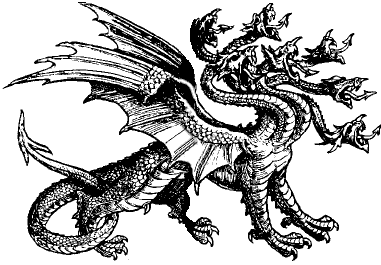 PHYSIOLOGY: These are dragons which have multiple
necks and heads.
They may or may not have wings or legs.
HISTORY: In Greek mythology Hercules fought a grand
hydra with 8 heads
(history tells us 6 to 9 heads for this particular hydra). Every
time he
managed to slash one off with sword, two would come in its place.
He finally
figured out by burning the stump with a torch, it could not grow
another head.
That is how Hercules rid the world of the mighty hydra. Also in
Greek
mythology, Jason killed a hydra to get the Golden Fleece.
PHYSIOLOGY: These are dragons which have multiple
necks and heads.
They may or may not have wings or legs.
HISTORY: In Greek mythology Hercules fought a grand
hydra with 8 heads
(history tells us 6 to 9 heads for this particular hydra). Every
time he
managed to slash one off with sword, two would come in its place.
He finally
figured out by burning the stump with a torch, it could not grow
another head.
That is how Hercules rid the world of the mighty hydra. Also in
Greek
mythology, Jason killed a hydra to get the Golden Fleece.
Neo-Dragons
Pernese Dragon
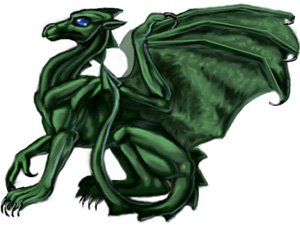 PHYSIOLOGY: These dragons have four legs, and two
wings. They have
smooth, leathery skin without scales. The dragons eyes are compound
and
faceted like a fly's that can change color depending on the mood
of the
dragon. They have a telepathic abilities with other dragons, and
their rider.
Pernese dragons can also teleport into "between", which is a void,
to escape
danger. Gold and green dragons are Female. Bronze, brown and blue
are
Male. They can breath fire by first swallowing a certain type of
flammable
rock known as Firestone. Learn more about Pernese Dragons Here
HISTORY: The colonists of Pern (A world created from
the stories by Anne
McCaffrey) genetically engineered these huge dragons from their
small
cousins, Firelizards. Pernese dragons and their riders have a life-long
relationship, this is started at the Impression. This is when the
dragons hatch
and choose their human partner. If the human partner dies without
the dragon,
the dragon will go between permanently. If the dragon dies, the
human usually
wastes away until they pass on.
Drake : Drayk
PHYSIOLOGY: These dragons have four legs, and two
wings. They have
smooth, leathery skin without scales. The dragons eyes are compound
and
faceted like a fly's that can change color depending on the mood
of the
dragon. They have a telepathic abilities with other dragons, and
their rider.
Pernese dragons can also teleport into "between", which is a void,
to escape
danger. Gold and green dragons are Female. Bronze, brown and blue
are
Male. They can breath fire by first swallowing a certain type of
flammable
rock known as Firestone. Learn more about Pernese Dragons Here
HISTORY: The colonists of Pern (A world created from
the stories by Anne
McCaffrey) genetically engineered these huge dragons from their
small
cousins, Firelizards. Pernese dragons and their riders have a life-long
relationship, this is started at the Impression. This is when the
dragons hatch
and choose their human partner. If the human partner dies without
the dragon,
the dragon will go between permanently. If the dragon dies, the
human usually
wastes away until they pass on.
Drake : Drayk
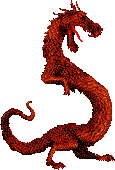
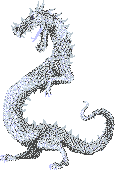 PHYSIOLOGY: This is a Western-type dragon with only
legs and no wings.
There are two types of drakes, Fire and Cold. FireDrakes have the
breath of
flame, and are usually reddish in color. ColdDrakes have the breath
of snow
and hail, and are usually white or light bluish in color. These
types of
dragons do not fly, they look like large lizards being about 4'
- 40' long.
HISTORY: This dragon has links to the Western dragon
in history, but no
solid history has been produced. Sometimes young western dragons
are
mistaken for drakes because of the lack of wings until they reach
maturity. In
Europe there are many cities named after this dragon: Drakeford,
Drakeshill,
etc.
Amphiptere : Am-fih-teer
PHYSIOLOGY: This is a Western-type dragon with only
legs and no wings.
There are two types of drakes, Fire and Cold. FireDrakes have the
breath of
flame, and are usually reddish in color. ColdDrakes have the breath
of snow
and hail, and are usually white or light bluish in color. These
types of
dragons do not fly, they look like large lizards being about 4'
- 40' long.
HISTORY: This dragon has links to the Western dragon
in history, but no
solid history has been produced. Sometimes young western dragons
are
mistaken for drakes because of the lack of wings until they reach
maturity. In
Europe there are many cities named after this dragon: Drakeford,
Drakeshill,
etc.
Amphiptere : Am-fih-teer
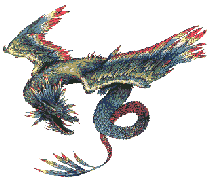 PHYSIOLOGY: These are dragons with only wings.
HISTORY: The most famous amphiptere is Quetzalcoatl
(kwet-zah-coat-al),
the winged and feathered serpent god from Mexican history. Scientists
think
that the myth of Quetzalcoatl started with a bird, the Quetzal.
This bright
green bird has tail feathers of over two feet long, and when it
flies, the bird
looks like a shimmering serpent.
Wyrm/Worm: Wurm
PHYSIOLOGY: These are dragons with only wings.
HISTORY: The most famous amphiptere is Quetzalcoatl
(kwet-zah-coat-al),
the winged and feathered serpent god from Mexican history. Scientists
think
that the myth of Quetzalcoatl started with a bird, the Quetzal.
This bright
green bird has tail feathers of over two feet long, and when it
flies, the bird
looks like a shimmering serpent.
Wyrm/Worm: Wurm
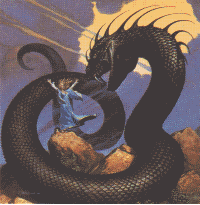 PHYSIOLOGY: These are dragons which have no legs
or wings; Or
sometimes referred to as a very ancient dragon. Also known as The
Guivre
(Gy-veer).
HISTORY: These dragons seem to have originated in
England, and are said
to live in forests and wells. They love any place near water.There
are many
famous worms in England's history, the most famous perhaps is the
Lambton
Worm. This is about an Heir to
Lambton Hall in England who caught the
small worm, but thought it too ugly to eat, so he thew it in the
local well.
Over the years the worm grew to enormous proportions and left the
well to
harass the locals. When Lambton came back from a war to see the
horror he
had created, and was told by witch he must slay the worm, but also
must kill
the next creature he saw. He slayed the worm, but unfortunately,
the next
living creature he saw was his own father, of whom he could not
kill. It was
said that the Lambton family was cursed for the next nine generations,
and
doomed to die abroad, and never at home.
Lindworm/Lindorm: Lind-wurm/Lind-oarm
PHYSIOLOGY: These are dragons which have no legs
or wings; Or
sometimes referred to as a very ancient dragon. Also known as The
Guivre
(Gy-veer).
HISTORY: These dragons seem to have originated in
England, and are said
to live in forests and wells. They love any place near water.There
are many
famous worms in England's history, the most famous perhaps is the
Lambton
Worm. This is about an Heir to
Lambton Hall in England who caught the
small worm, but thought it too ugly to eat, so he thew it in the
local well.
Over the years the worm grew to enormous proportions and left the
well to
harass the locals. When Lambton came back from a war to see the
horror he
had created, and was told by witch he must slay the worm, but also
must kill
the next creature he saw. He slayed the worm, but unfortunately,
the next
living creature he saw was his own father, of whom he could not
kill. It was
said that the Lambton family was cursed for the next nine generations,
and
doomed to die abroad, and never at home.
Lindworm/Lindorm: Lind-wurm/Lind-oarm
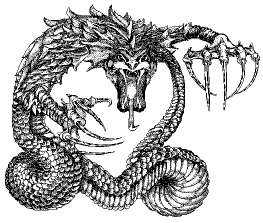 PHYSIOLOGY: These are dragons which have two legs,
and no wings.
They usually have very long tails, and short legs.
HISTORY: Lindworms were apparently discovered by
Marco Polo while
crossing Central Asia. He described them as, "Swifter than it looks.
Easily
able to take down a man on a galloping horse." These types of dragons
(along
with the Oroboros) are frequently represented as "prima materia"
in the first
stage of the Alchelmy process.
Sea Serpent : See-Sur-pent
PHYSIOLOGY: These are dragons which have two legs,
and no wings.
They usually have very long tails, and short legs.
HISTORY: Lindworms were apparently discovered by
Marco Polo while
crossing Central Asia. He described them as, "Swifter than it looks.
Easily
able to take down a man on a galloping horse." These types of dragons
(along
with the Oroboros) are frequently represented as "prima materia"
in the first
stage of the Alchelmy process.
Sea Serpent : See-Sur-pent
 PHYSIOLOGY: These are dragons that live in water,
fresh or salt.
HISTORY: Since man has been sailing on boats, sea
serpents have been in
history. These creatures were shown on maps early in European history,
where unknown territory was marked "HERE BE DRAGONS". Some
scientists believe that these sea serpents sailers were actually
gigantic squid,
large masses of sea kelp, or even seafaring dinosaurs.. The Basilosaurus
had
a very long body, and short neck, its mouth filled with long sharp
teeth. If it
came out of the water near a boat, it could very much be thought
of as a sea
serpent. "Nessie" the Loch Ness Monster in Scotland, is one famous
"sea
serpent".
Ouroboros : or-oh-bor-us
PHYSIOLOGY: These are dragons that live in water,
fresh or salt.
HISTORY: Since man has been sailing on boats, sea
serpents have been in
history. These creatures were shown on maps early in European history,
where unknown territory was marked "HERE BE DRAGONS". Some
scientists believe that these sea serpents sailers were actually
gigantic squid,
large masses of sea kelp, or even seafaring dinosaurs.. The Basilosaurus
had
a very long body, and short neck, its mouth filled with long sharp
teeth. If it
came out of the water near a boat, it could very much be thought
of as a sea
serpent. "Nessie" the Loch Ness Monster in Scotland, is one famous
"sea
serpent".
Ouroboros : or-oh-bor-us
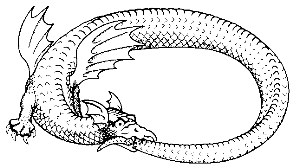 PHYSIOLOGY: This is a dragon who holds its tail it
its mouth.
HISTORY: First discovered in Egypt, and later in
Greece,it is the symbol of
the universe. It also is sometimes referred to being the symbol
of "eternity" or
"never ending". The name Ouroboros means "tail eater".
A similar dragon is his Norse cousin the Midgard Serpent whose
huge body
circles the entire world. He was also known for biting his tail,
when he was
not trying to bite the Norse god Thor, whom was eventually killed
by the
gigantic dragon.
Amphisbaena : Am-fiz-bee-nah
PHYSIOLOGY: This is a dragon who holds its tail it
its mouth.
HISTORY: First discovered in Egypt, and later in
Greece,it is the symbol of
the universe. It also is sometimes referred to being the symbol
of "eternity" or
"never ending". The name Ouroboros means "tail eater".
A similar dragon is his Norse cousin the Midgard Serpent whose
huge body
circles the entire world. He was also known for biting his tail,
when he was
not trying to bite the Norse god Thor, whom was eventually killed
by the
gigantic dragon.
Amphisbaena : Am-fiz-bee-nah
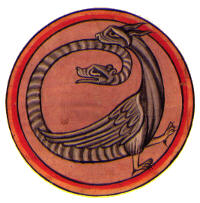 PHYSIOLOGY: This is a dragon that has two heads,
one in the front of the
body, and one at the tip of its tail. With one head holding the
"tail-neck" it can
roll around in any direction in a hoop. It is usually portrayed
as having a
scaly body, feathered wings, and feet of a rooster. It's name means
"one that
goes in both directions".
HISTORY: This dragon originates from Africa. Stories
say when the female
amphisbaena was looking over her eggs, she could keep one head
awake at
all times. Today, there is a lizard named after this dragon which
has markings
on its tail that look like a head. When threatened, it lifts its
tail and scatters
back and forth to confuse its attacker.
Naga : nah-gah
PHYSIOLOGY: This is a dragon that has two heads,
one in the front of the
body, and one at the tip of its tail. With one head holding the
"tail-neck" it can
roll around in any direction in a hoop. It is usually portrayed
as having a
scaly body, feathered wings, and feet of a rooster. It's name means
"one that
goes in both directions".
HISTORY: This dragon originates from Africa. Stories
say when the female
amphisbaena was looking over her eggs, she could keep one head
awake at
all times. Today, there is a lizard named after this dragon which
has markings
on its tail that look like a head. When threatened, it lifts its
tail and scatters
back and forth to confuse its attacker.
Naga : nah-gah
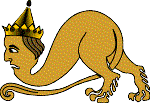 PHYSIOLOGY: These are pseudo-dragons who are usually
portrayed as
having a human head and serpentine body, and no wings.
HISTORY: The history of these creatures seem to come
from India, which
the Nagas worked with the gods. Nagas were patrons of water and
clouds,
but could cause flooding or drought if disturbed. In some stories,
the naga can
shape-change at will from human to snake form. It's been told that
their race
was very magical, and were scholars to those who met their interest.
PHYSIOLOGY: These are pseudo-dragons who are usually
portrayed as
having a human head and serpentine body, and no wings.
HISTORY: The history of these creatures seem to come
from India, which
the Nagas worked with the gods. Nagas were patrons of water and
clouds,
but could cause flooding or drought if disturbed. In some stories,
the naga can
shape-change at will from human to snake form. It's been told that
their race
was very magical, and were scholars to those who met their interest.
CONCLUSION
So, why dragons? Is it their powerful presence?
Are they watching us without
us watching them? Some people think so. But until a dragon wants
themself to
be known, they only show themselves to those who TRUELY believe.
Dragon
stories and myth have been around for thousands of years, so it
isn't going
anywhere anytime soon. It is almost certain that more myths and
legends of
these fascinating creatures will fill the heads of children and
adults alike and
artists will continue drawing, painting, and creating dragons of
all sorts, as
long at their imaginations takes them to the realm of the dragon.
Here Be Dragons! hopes that this study has opened your eyes to
what dragons
are, or what they could be. We also hope that this encourages you
to write a
dragon story, draw a dragon picture, or create your own dragon
web site.
All of this is what a dragon is.
Back To Top
Return To Main Page Here
Go To Dragons Page Here
Learn About Castles Here
Learn about Knights In Shining
Armour Here
More Dragon History
Here
More Dragon Physiology

