
 |
 |
 |
 |
 |
 |
 |
 |
 |
 |
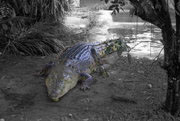
Meet Rufus the Crocodile!
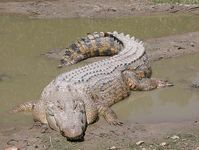
Aye there Mate! Nice to Meet cha!
Name: Rufus
Age: 8
Place of Origin: Australia
Likes to Eat: Live Poultry! Mmmmm
The saltwater or estuarine crocodile (Crocodylus porosus) is the largest of all living reptiles, and is often said to be the most dangerous to humans. It is found in suitable habitat throughout Southeast Asia and northern Australasia.
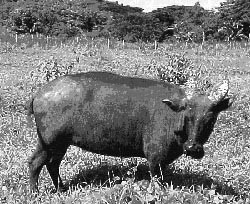
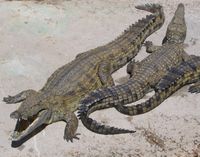 This crocodile is an opportunistic predator capable of taking any animal up to the size of a water buffalo, in the water or on dry land. Juveniles are restricted to smaller items such as insects, amphibians, crustaceans, small reptiles and fish. The larger the animal grows, the greater the variety of items that it includes in the diet, although relatively small prey still make up the majority of the diet even in adults. Saltwater crocodiles can take monkeys, wild boar, dingos, domestic livestock, big cats and sharks. Generally very lethargic – a trait which helps it survive months at a time without food – it typically loiters in the water or basks in the sun through much of the day, usually preferring to hunt at night. It is, however, capable of moving with great speed when required, striking without warning and having the strength to break a large animal's legs with its tail, or crush a full-grown bovid's skull between its jaws.
Adult male saltwater crocodiles are typically 5 metres (17 ft) long, although larger individuals may surpass 6 metres (20 ft) or 7 metres (23 ft) in length and weigh more than 1000 kg (2200 lb). Average sized males weigh around 450 kg (1000 lb). Females are much smaller than males, with typical female body lengths in the range of 2.5–3 metres. The largest crocodile ever recorded was 9 metres (30 ft) on the Norman River in northern Queensland, Australia.
Saltwater crocodiles generally spend the tropical wet season in freshwater swamps and rivers (making the name something of a misnomer), moving downstream to estuaries in the dry season, and sometimes travelling far out to sea. Crocodiles compete fiercely with each other for territory, with dominant males in particular occupying the most eligible stretches of freshwater creeks and streams. Junior crocodiles are thus forced into the more marginal river systems and sometimes into the ocean. This explains the large distribution of the animal (ranging from the east coast of India to northern Australia) as well as it being found in odd places on occasion (such as the Sea of Japan, for instance).
Saltwater crocodiles are known in the Northern Territory of Australia as 'salties', and also as 'alligators', despite not being alligators. The Alligator Rivers are misnamed after the saltie's resemblance to alligators as compared to freshwater crocodiles, which also inhabit the Northern Territory.
