|
If you could turn off your hunger, you could lose weight without needing military discipline. Mike Adams |
|
Hoodia - new way for weight loss
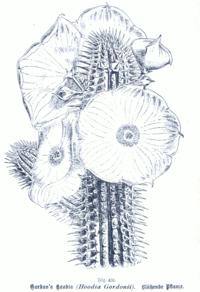
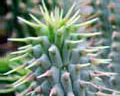
What is Hoodia gordonii?Hoodia gordonii, "Whoo De AH", is the botanical name for a leafless, spiky succulent plant that grows throughout the semi-arid areas of Southern Africa primarily the Kalahari desert. The San (local inhabitants) have rationally used Hoodia stems to stave off hunger and thirst when on long journeys, as it acts as an appetite suppressant. Hoodia is a Succulent botanical and is part of the Genus: Trichocaulon and belongs to the Family Name: Asclepiadaceae. There are approximately twenty plants within the Hoodia genus family, however, Hoodia Gordonii is the unique plant that South African San bushmen have used for generations to endure long hunting expeditions. Hoodia (or Hoodia Gordonii) is a South African dwelling plant that the San bushman have used to help endure long hunting expeditiions for generations. Hoodia Gordonii is actually a succulent not to be confused with a cactus. It belongs in the succulent family of Asclepiadaceae along with stapelia, stephanotis and vinca. There are approximately 20 species in the genus of Asclepiadaceae. As it grows it forms stemmed clumps approximately one foot high and bears, pale purple saucer-shaped flowers in shades of red or purple brown. Hoodia scientifics researchScientists at the South African Center for Scientific and Industrial Research were the first to successfully prove that Hoodia contains a miracle molecule that suppresses the appetite. Later, a human clinical trial was conducted by scientists in Leicester England. A group of morbidly obese men and women participated. Half the group were given Hoodia and half were given a placebo. At the end of 15 days, the group on Hoodia had reduced their food intake by 1000 calories a day. Given the average daily diet is around 2200 calories, this was a stunning success. Laboratory experiments show animals automatically restrict their food intake when taking hoodia orally. Rats, a species that will eat anything from meat and plants to indigestible fiber, lowered their dietary calorie intake to a degree that made them get thin when fed comparative amounts of hoodia. Hoodia gordonii todayIn the wild Hoodia takes 5-6 years to mature but is now being cultivated in as little as 2 years commercially in sustainable quantities and has become widely known for its effects as an appetite suppressant. The Hoodia Gordonii plant originated in the southwestern part of Africa and grows best in the semi-arid areas of South Africa primarily the Kalahari. In its native habitat it is extremely difficulty to identify because it looks similar to succulents of the same family of which there are many. Only an experienced botanist or as the case in South Africa with Hoodia Gordonii a San people can identify the plant prior to it's blooming. How Hoodia help youIt basically tricks the brain into thinking that you're full. The chemical constituents in Hoodia work within the satiety center by releasing a chemical compound similar to glucose but much stronger. The hypothalamus in the brain receives this signal as an indication that enough food has been consumed and this in turn stunts the appetite. The hypothalamus receives signal as an indication that enough food has been consumed and this in turn stunts the appetite. This pure organic Hoodia, contains a miracle molecule that, in effect, fools the brain into believing you are full, and even stops you from thinking about food. Hoodia enhances your mood therefore you will not become irritable or weak while you are on the program. The San Tribe could go without food for 24 hours after eating Hoodia, and in the same process hunt for food in the harsh Kalahari desert. It is therefore also known to maintain a high energy level. Hoodia helps to curb your appetite, some has reported, suppressing appetite within 20-30 minutes after taking Hoodia, results may vary. Some may need a little more time than this before they begin to notice the effects like: A reduced interest in food and A delay in time after eating before hunger sets in. For most people, the real weight loss challenge has relatively to do with dieting, exercise, supplements, or how many calories you burn in the gym. The real challenge is controlling their hunger drive. People who are trying to lose weight seem to share the exact same problem. They have trouble getting their appetite under control. Hoodia gordonii, it seems, could make that much easier. Because overcoming your own hunger drive seems almost impossible unless you get some help. When you eat hoodia, the saying goes, your hunger will simply be gone -- gone -- for around six hours. During those six hours, you won't crave anything. You really won't want to eat at all. The food still smells good, as usual, and they taste the same if you eat them, but you don't want to eat them! At least that's what the hoodia advocates claim will happen. To understand how all this works, you have to understand what "hunger" really is in the first place. Hunger is just an illusion. It's a signal in your brain, a chemical message that causes you to feel certain feelings and, ultimately, act on them. The hunger signal is only turned off when your hypothalamus thinks you've eaten enough food. Your hypothalamus -- part of your body's endocrine system -- decides this by sensing the rise of sugar (glucose) in your blood. Eat enough carbohydrates, and your blood sugar rises, which convinces your hypothalamus to tell your brain that you're no longer hungry. Normally, to get your hypothalamus to turn off the hunger switch, you'd have to eat a moderate amount of food. And your hypothalamus isn't very quick on the draw either: it takes around 20 minutes to figure out what you've eaten, and by that time, you've probably eaten another 800 calories. So by the time your hunger signal gets turned off, you've already overeaten yet again.
Czech plastic surgery - get new look at heart of Europe!
|
|