|
AP:
Myanmar democrats mark election anniversary in absence of
leaders
YANGON, Myanmar (AP) _ Nobel Peace laureate Aung
San Suu Kyi and other leaders of Myanmar's democratic movement
were absent from a celebration Sunday marking the 11th
anniversary of their election victory, which was voided by the
military government.
Members of the National League for Democracy,
which captured more than 80 percent of the seats in the 1990
general election, renewed their call for the military to honor
the election results and convene Parliament.
Suu Kyi and the military government began
negotiations last year in an effort to ease the political
deadlock, but the talks have made little progress. Suu Kyi,
party chairman Aung Shwe and vice chairman Tin Oo were absent
from the low-key gathering of about 400 party members at NLD
headquarters.
The democracy leaders were detained in September
for violating a travel ban imposed by the military regime. They
have since been confined to their homes.
Unlike previous years, diplomats and journalists
were not invited to the gathering, which was held without any
obstruction or harassment by the authorities. Last year, police
erected road blocks around party headquarters and screened
everyone trying to get to the anniversary ceremony.
Suu Kyi, although under restriction, regularly
meets party secretary and central executive committee member U
Lwin at her residence. U Lwin, speaking at Sunday's ceremony,
said that ``Only when the results of the elections were honored,
will it be in line with the democratic practices.''
``The government, political parties and the
people are currently suffering a myriad of political, economic,
social and ethnic woes simply because a parliament is not
convened,'' he said. The NLD won 392 seats out of 485 seats in
the 1990 election, the first freely-contested poll in nearly
three decades. However, after the results were known, the
military insisted that a new constitution was needed before it
could hand over power. A constitution drafting process was begun
in 1993 but has made no progress since 1996.
Only about 166 elected representatives remain on
the official list of members of Parliament. Several others have
died, many have resigned or been forced to resign and some were
in exile or detention. Last week, the New York-based group Human
Rights Watch called for the release of 85 people who were
elected to Parliament but later detained.
Some of the detainees have been tried and
convicted under national security statutes, while others are
being held without charges in government ``guest houses'' at
military bases.
Besides the 85 members of Parliament, at least
1,000 other political prisoners are in detention, Human Rights
Watch said.
Source:
Burmanet, May 24, 2001
TOP
The
Dawn: 10 die in Myanmar communal clashes
YANGON, May 23: Fighting between Muslim and
Buddhist residents broke out in Taungdwingyi town in upper
Myanmar, the latest in a spate of religious clashes that have
reportedly left at least 10 people dead, eyewitnesses and
diplomatic sources said on Wednesday.
Clashes between the predominantly Buddhist
population of Taungdwingyi, 450 kilometres north of Yangon, and
a Muslim group were reported by eyewitnesses on Tuesday night.
It was unclear whether anyone was killed in the latest clash,
but similar attacks on Muslims in the townships of Taungoo,
Yadashe and Nyaunglebin, all in upper Myanmar, have left at
least 10 people dead, according to diplomatic sources.
"We've heard reports of 10 to 30 people
killed and up to 40 homes destroyed," said a Western
diplomat in Yangon. "It was a pretty big rampage by the
Young Buddhist Monks."
The clash in Taungoo was sparked on May 16, when
Muslim youths allegedly taunted Buddhist nuns who were making
their rounds in the city with begging bowls, according to
sources in Yangon.
Enraged Buddhists attacked the Muslims, who fled
into a mosque with the Buddhists in hot pursuit. Sources said
that the city was wracked by religious clashes for two days,
leaving at least 20 people dead, including two Buddhist monks
and a Muslim religious leader.
Myanmar's military junta has placed Taungoo
under a night curfew, and deployed troops to other towns to
prevent similar clashes. Myanmar's state religion is Buddhism,
but the ruling junta claims to allow religious freedom and
allows its many minority groups to practise their religion of
choice, including Islam, Christianity, Brahmanism, ancestor
worship and animism.
Rumors abounded in Yangon about who was behind
the clashes. "The rumor behind the rumor is that regional
military commanders have been organizing the attacks on Muslims
to get people's minds off their economic hardships," said a
diplomat.
The ruling State Peace and Development Council
had yet to issue an official statement on the clashes. Similar
clashes, pitting Buddhists against Muslims, occurred in Sittwe,
on Myanmar's western coast near the border with Bangladesh, in
February.
Source:
Burmanet, May 24, 2001
TOP
Bangkok
Post: Four Muslim Leaders Die in Clashes
Wednesday, May 23, 2001
Supamart Kasem
At least four Islamic spiritual leaders were
killed in Burma and hundreds of Muslims forced to flee after
clashes last week between Buddhist and Islamic residents.
One Muslim, who managed to escape, said a curfew
was imposed in Pegu division after riots in Toungoo district on
Friday and in Swa and Pyu districts on Sunday.
The fighting erupted after Buddhist monks and
their followers raided 14 mosques in Toungoo district while
Muslims were praying, a source said.
Four spiritual leaders died when the raiders cut
their throats and the owner of a nearby restaurant was beaten to
death. Four mosques and more than 100 houses and shops in the
town were burnt down, forcing all Muslims to flee to nearby
Kyauktaga, Zeyyawaddy, Yeni and Myohla districts.
Buddhists also attacked Muslim passengers on
Rangoon-Mandalay buses arriving in Toungoo and set fire to more
than 100 houses owned by Muslims outside the town.
A curfew was imposed on Toungoo and security
forces were sent to control the situation.
The source said nearly 1,000 Muslims became
homeless after their houses were burnt down in similar riots in
Thagaya and Pyu districts on Sunday.
A curfew was then enforced all over Pegu
division. On Monday, a Muslim spiritual leader in Rangoon told
BBC Radio the situation had returned to normal and riots
followed the destruction of an ancient mosque in the town.
Source:
Burmanet, May 24, 2001
TOP
Rumors Drive up Prices in Burma
By Maung Maung Oo
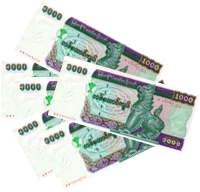
May 23, 2001— Recent rumors in Rangoon that
the government is planning to introduce a new 10,000-kyat note
have fuelled rampant inflation inside Burma, according to
sources in the capital. Observers noted that the introduction of
new 500 and 1,000 kyat notes in recent years has caused
commodity prices to double almost overnight in the past.
 People have
also been speculating that plans are afoot to start paying civil
servants in Foreign Exchange Certificates (FECs), a
dollar-denominated unit that is used only inside Burma.
According to the sources, government employees are expected to
soon start receiving salaries in FEC at the official exchange
rate of 6.50 kyat to the FEC, which is officially equivalent to
one US dollar. On the black market, the dollar currently fetches
around 800 kyat. People have
also been speculating that plans are afoot to start paying civil
servants in Foreign Exchange Certificates (FECs), a
dollar-denominated unit that is used only inside Burma.
According to the sources, government employees are expected to
soon start receiving salaries in FEC at the official exchange
rate of 6.50 kyat to the FEC, which is officially equivalent to
one US dollar. On the black market, the dollar currently fetches
around 800 kyat.
In a recent article in the state-run New Light
of Myanmar, Burmese authorities warned merchants not to drive up
prices by hoarding essential commodities such as rice, petroleum
and cooking oils. The military junta routinely blames rising
prices on "greedy" businessmen, and frequently
conducts mass arrests of moneychangers to control sudden drops
in the value of the kyat.
However, most sources inside Burma note that
much of the hoarding is being done by consumers fearful of a
further plunge in the value of the kyat, which would hasten the
rate of inflation. Wealthier Burmese have also been buying up
real estate and luxury items in a bid to offset the plummeting
value of their cash assets.
Last year, when civil servants were given a
five-fold pay raise, most staple goods quickly doubled in value.
Businessmen in Burma say they believe the
country’s foreign exchange reserves are far lower than the
regime clams, adding to doubts about the viability of an already
fragile economy.[Top]
Source: Irrawaddy May 23, 2001
TOP
Fresh
Ethnic Cleansing In Burma
On 15th May 2001, Burmese Buddhist monks, in large groups of hundreds came upon Muslims living in the
Muslim quarters of district town of Taung Ngoo
resulting communal riot in which 5 mosques of Muslims were burnt down and destroyed. At the same time Muslim
villages of Kywe Kaw, Auk Nyein and others of locality were also included in the arson. The Imam ( who leads
prayers in the mosques) Moulvi Anwer of Taung Ngoo Jam-e-Masjid was butchered and separated into 3 pieces
and kept on Rangoon-Mandalay highway to make it known to the Buddhist public as an act of timely needed one.
In this riot 200 Muslim houses of Taung Ngoo town were burnt down to ashes and 20 Muslims were killed.
It is necessary to mention here that whenever the military junta of Burma are facing critical situation
either of economical or political, they use to divert
the situation into a riot between Buddhist Burman and Muslims in which Muslims are always made target under
the patronage of ruling junta.
Recently a Lt. Col. From junta’s stratagical office in Rangoon namely Hla Min has written and published a
pamphlet on “ Political Situation of Burma and Its
Role in the Region” in which he has shown that the percentage of Christians,
Hindus, Muslims and Animists are only 1.8% . Contrarily the same junta,
clandestinely through a fanatic Buddhist Burman without mentioning his name has written and published
a booklet secretly distributed hand to hand throughout
Burma freely among Buddhist Burman in which stated “ today the Muslims in Burma are comprising 20% of the
total population indicating turning of Burma into a Muslim country in a short time if Muslims were let
free”. Once in a speech of Lt. Gen. Khin Nyunt, he stated that he shall not let Burma turn into a Muslim
country like Indonesia and Malaysia. Actually these are nothing but a tactic in the name of
Buddhiist-Burmanisation to appease his country’s Buddhist people’s anti-junta-sentiment, at the same
time the policy of Burmese successive governments’ ethnic cleansing is also implemented.
In Arakan another situation of mass killing of Muslims is looming high centering Akyab, the state city of
Arakan. Now traveling of Muslims from any part of
Arakan to Akyab are totally banned by the authority.
The fanning of anti-Muslim sentiment among Buddhist Maghs of Arakan is reaching very high now.
On the whole it is calculated that what are happening in the form of riot in Burma, are not accidental, but
an act of preplanned arrangement systematically being carried out throughout the time.
Source: Muslim community of Myanmar, May 19, 2001
TOP
Curfews
Declared after Religious Riots Break Out in Two Big Cities
By Min Zin
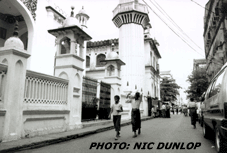
May 18, 2001—Burma’s ruling junta has
ordered a curfew in two major cities after anti-Muslim riots
that broke out on May 15th spread from Taungoo to Taunggyi,
according to inside sources.
 On
May 15, a group of Burmese Buddhists went to downtown Taungoo
and destroyed shops and restaurants owned by Muslims. So far,
the reason for the destruction is not clear. “The Muslim
owners responded with furious anger and caused several injuries.
At least four or five monks were hospitalized,” says a
Buddhist resident of Taungoo. Later on people joined with the
monks to assault other Muslims in the city. According to one
report, one Buddhist monk died on the first day of the clash. On
May 15, a group of Burmese Buddhists went to downtown Taungoo
and destroyed shops and restaurants owned by Muslims. So far,
the reason for the destruction is not clear. “The Muslim
owners responded with furious anger and caused several injuries.
At least four or five monks were hospitalized,” says a
Buddhist resident of Taungoo. Later on people joined with the
monks to assault other Muslims in the city. According to one
report, one Buddhist monk died on the first day of the clash.
Trains that regularly stop in Taungoo have been
instructed to pass through the town since the riots began.
Motorized traffic into the town has been diverted, including
transport trucks, passenger cars and other vehicles. “We had
to go around the outside of the city, instead passing through
downtown as usual,” said one traveler from Mandalay.
The riot later spread to the Shan State capital
of Taunggyi, which has a history of anti-Muslims riots.
Another religiously motivated anti-Christian
clash has broken out in the Wekama Township and spread to the
neighboring township of Kyonmonge in the Irrawaddy Division.
According to a Buddhist Rangoon-based source, the dispute
originated over the construction of a Christian church on the
property of a Buddhist monastery.
Approximately eighty nine percent of Burma’s
population is Buddhist, while Muslims and Christians each make
up four percent of the population.
The state-controlled media has not released any
news or explanation about these incidents. “The blackout of
news by the junta makes people feel more worried and caused more
rumors,” said one Rangoon-based journalist.
Several political analysts in Rangoon suggested
that the religious riots were instigated by military
intelligence agents in a bid to divert attention from the
current economic crisis of Burma. In the last week, the value of
the kyat has dropped to its lowest ever and now rests at about
885 kyat to the US$1 on the black market. With the drop of the
kyat, the price of other basic commodities has skyrocketed.
Additionally, the recent rationing of electricity has driven up
the price of petrol, which is used to power small, privately
owned generators.
In early February 2001, several anti-Muslim
riots took place in the Arakan State, claiming at least 20
deaths.
Source: Irrawaddy May 18, 2001
TOP
Comment: I wonder why
the reporter did not mention the casualties of the Muslims?
According to our source 1 religious leader (Imam) were brutally
butchered and cut into 3 pieces, 5 Mosque were blazed to ashes,
200 house were set fire and destroyed and 20 Muslim resident
were killed.
Call
for sanctions against Myanmar
BANGKOK, May 18: A Myanmar opposition group
called on government Friday to stop giving help to Myanmar's
military junta, and praised the United States for focusing
attention on human rights violations in that country, reports
AP.
The appeal by the National Council of the Union
of Burma was in response to a recent announcement that Japan was
considering giving a dlrs 24 million aid package to Myanmar to
help repair a hydroelectric dam and power project. The
Washington-based council is a coalition of exiled political and
ethnic minority groups opposed to the military government of
Myanmar, also known as Burma. It claims to be Myanmar’s
government-in-exile.
Source: The Independent, May 20, 2001
TOP
Editor's
Note: concerning Money Burning
Dear
readers we have being recently hearing of money burning specifically
500 notes everywhere within the communities. But such news could not
be confirmed by any of the sources who are eyeing on Burma daily
activities. We would let you know if would get any solid report of it.
However burning notes used to be Burma tradition, when ever it goes
through any kind of financial difficulties. So it would be not surprising
if such happens.
rohingya.com
do not alter any news it receives and collects for the sole reason of letting
our people know what people think about us and how they position us.
So we preferred to give our readers as it is. Finally
Khawa Laung magazine is available now in almost all the place
where majority of Rohingyas resides. Khawa Laung is a monthly
magazine addressing the Rohingya issues- political, cultural,
historical etc. and updating the Rohingyas of the current news
and views of Arakan and Burma. Please let us know if you need a
copy of it at info@rohingya.com We
welcome all your comments, constructive suggestions, true
articles and research works.
Source:
editor, Press & Publication Department,
ARNO,4 April 2001
TOP
Troops
from Burma withdraw after sonic boom
By Aung Zaw
May 11--Thai troops took over Hua Lone hill after an F-16 jet
fighter scared Wa and Burmese troops into retreating, according
to Thai army sources.
Lt Gen Wattanachai Chaimuenwong confirmed that
Thai soldiers and sniffer dogs were clearing the hill today
after Wa and Burmese soldiers withdrew.
Wa and Burmese troops, who took over the hill a
week ago stayed on, despite heavy shelling by Thai troops. But
finally, the Thai Army asked for help from the Air Force.
According to Prapas Jiamchawee, the Secretary of the Air Force,
the jet fighter was not carrying any weapons but on a routine
reconnaissance mission. He told reporters that it flew along the
border and later over the hill. As it approached the hill, the
plane increased speed and dropped altitude, causing a loud sonic
boom, which scared the invaders, according to the Bangkok Post
newspaper. However, analysts believe that Thai officials are
playing down the use of air power to push Burmese and Wa troops
out of their territory. It is not known yet how Rangoon will
respond to the latest episode.
Rangoon is obviously upset with Thailand and has
accused the Kingdom of assisting Shan rebels. Lt Col San Pwint
of military intelligence told reporters in Rangoon that Hua Lone
was a military base used by the Shan State Army [SSA]. Border
sources reported that SSA soldiers are now regrouping near the
Hua Lon hill in order to strike back at the Burmese and Wa
troops.
Amid growing border conflict, Gen Chavalit
Yongchaiyudh, the Defense Minister, will be inspecting the
northern border and meeting with army officers and soldiers.
Chavalit, who has close ties with Rangoon, recently ordered Thai
troops to halt military operations against intruders. He said
that border conflict could be solved at negotiating table. His
order was greeted with criticism.
Source: Irrawaddy, May 11, 2001
TOP
Myanmar Burns Almost $1 Bln In Drugs To Highlight Efforts
Saturday, May 12 3:37 PM SGT
YANGON, Myanmar (AP)--Close to a billion dollars in opium,
heroin and amphetamines went up in smoke Saturday as Myanmar
authorities sought to impress foreign governments and media with
the seriousness of their efforts to stamp out the illicit drug
trade.
The destruction of seized drugs was staged to coincide with a
regional meeting held to coordinate the anti-drug efforts of
Cambodia, China, Laos, Myanmar, Thailand and Vietnam.
The three-day meeting, held under the auspices of the U.N.
International Drug Control Program, ended Friday, but many
delegates stayed on to see Myanmar's real efforts in the field.
Drug burnings have become a ritual in Southeast Asian
countries, making a public relations virtue out of the necessity
to dispose of the dangerous drugs. Myanmar has conducted 15 such
events.
On Saturday, the seized drugs were laid out along tables set
end to end for about 20 meters.
The drugs -including 1,301 kilograms of opium, 116 kilograms
of heroin, 440 kilograms of marijuana and 2.7 million
amphetamine tablets - were mostly in their original packing:
brown paper wrap, plastic bags, jute sacks. Below the tables was
gasoline-soaked wood for kindling.
The total street value of the drugs in the U.S. would be $920
million, officials said. Afghanistan, Myanmar Top Opium And
Heroin Producers.
At each of these drug burning events, foreign
drug experts are invited to test random samples.
A typical program includes slicing open a bag and dropping a
sample into a test solution: amphetamine turned it orange and
heroin a shade of purple.
Observers are then motioned back for the big moment. A button
detonates a fire that engulfs the table, burning the packets and
sending white powder spilling to the ground.
The opium burns slowly, like peat. Heroin, its derivative,
burns slightly faster. The marijuana burns like the dry leaves
it is. Amphetamines send flames high into the air, burning
fiercely with huge heat and billowing black smoke.
Afghanistan and Myanmar are the top two producers of opium
and heroin. Hoping to shake off its unsavory reputation, Myanmar
is anxious to show off its drug-fighting efforts.
While Myanmar's military government has curbed opium
production considerably, the country has in recent years become
a major source of methamphetamine, the cheap and popular
stimulant that is wreaking social havoc in several Asian
nations.
Police Maj. Gen. Soe Win, secretary of the Central Committee
for Drug Abuse Control, said Myanmar can't be blamed entirely
for methamphetamine production because other countries supplying
the raw materials have an obligation to tighten their law
enforcement.
He said the world should stop treating Myanmar like a
political pariah and give it aid.
The U.S. and the European Union apply political and economic
sanctions against Myanmar's junta, citing its poor human rights
record and failure to hand over power to a
democratically-elected government.
The U.S. and Myanmar's neighbor Thailand also accuse the
junta of not confronting the Red Wa, a powerful armed ethnic
minority group in eastern Myanmar blamed for most of the
methamphetamine production.
Source: AP May 12, 2001
TOP
Comment: I wonder what
might be the major motives of such a show before the world by
the SPDC. By the way the 1 Billion dollar worth drugs does not
worth even in the range of 1% in Burma market. One thing for
sure is to bring more foreign aids. Apart from may be, creating
supply gap to increase the drug's street price and showing the
US army stationed in BKK, that they are the good
guys.
Daily
Star (Bangladesh): AB Bank CEO meets Myanmar central bank
governor
C M Koyes Sami, President and CEO of Arab
Bangladesh Bank Limited, along with Arif Quadri, Vice President,
recently visited Myanmar to oversee the operation of the bank's
representative office in Myanmar, says a press release.
They also called on Kyaw Kyaw Maung, Governor of
the central bank of Myanmar, to discuss business development
between the two countries. Sami apprised the governor that LCs
generally opened in Bangladesh to import commodities from
Myanmar are usually advised by the banks in Singapore, resulting
in high cost of merchandise and loss of valuable time for the
Bangladeshi importers and as well as the exporters of Myanmar.
To overcome the situation, he emphasised
allowing the bank's representative office to handle LC advising
and bill discounting facilities with approval of the central
banks of both countries.
U Than Lwin, Deputy Governor and Chief of
Foreign Exchange of the central bank, Myanmar, assisted the
governor Mahmudur Rahman, Representative of ABBL in Myanmar, was
also present during this discussion.
Later in the evening, Sami attended a dinner
party at a local hotel arranged in honour of bankers and leading
businessmen and elites of Myanmar. Sami also placed some
suggestions before Myanmar exporters regarding the difficulties
being faced by the importers of Bangladesh.
Source:
Burmanet, dailystarnews, May 10, 2001
TOP
Massive Myanmar Buddha to Be Ready by End of
May
Thursday May 10 4:38 AM ET
YANGON (Reuters) - A massive white marble Buddha on the
outskirts of Yangon, which Myanmar officials call the biggest of
its kind in the world, will be completed by the end of May,
officials said on Thursday.
Volunteers have been working around the clock to finish the
statue, which weighs more than 400 tons and is 37 feet tall, in
time for a grand opening ceremony planned for next month.
The military government has built an enormous temple to house
the Buddha, carved from a single block of flawless marble, on a
hill overlooking the Maynmar capital.
``The finishing touches to the image will be completed by the
end of this month,'' said one official working on the project.
``Work on the chamber and the decorative gateway to the
temple will take another two months,'' he told Reuters.
The rare chunk of marble was discovered by a Myanmar sculptor
on a mountain north of Mandalay about a year ago and transported
with great difficulty to Yangon where it has been carved into
the Buddha.
``We had to make a specially crafted barge because this image
is very unusual,'' said Myanmar's Director General of Religious
Affairs, Myo Myint.
``It's so heavy...the road couldn't withstand the weight, nor
the bridges. So the only possible way was to carry it on the
river,'' he told Reuters.
Two temporary railroads were also 'custom-made' to carry the
huge slab, he said.
A crowd estimated to number 100,000 turned out to watch the
marble slab being raised from the mountain in Mandalay.
The Buddha, given the name ``Lawka Chantha Abhaya Lanha Muni,''
is now being polished by dozens of craftsmen while others paint
the intricate lattice that adorns the open temple's corners.
``The title of the Buddha image...means happiness, it will
make people happy...it also means there will be no danger, for
us or for anyone. Also it will bring good luck to all the people
of the world,'' Myo Myint said.
One local man, 87-year-old Kyaw Zan, said he has been up to
see the sculpture three times since it was mounted on the hill.
``When I come here I pray that everybody will be free from
war...I pray for peace and prosperity for the entire mankind,''
he told Reuters.
Source: Reuters, May 10, 2001
TOP
Comment:
`When I come here I pray that everybody will be free from
war...I pray for peace and prosperity for the entire mankind,';
Amen, we Rohingyas also do pray for peace and prosperities for
the world. But I wonder how one can hope for peace when the
junta gives so much efforts to build a massive Buddha ( We hope
they achieve it) and at the same time systematically turning
Muslim Mosques into garbage throwing places.
Special Announcment: To hold peaceful demonstration on May 5
in front of the India High Commissions around the world for
gross human rights violation of the Indian Authority on 36 AA
and KNLA comrades.
Date: - May 2, 2001
All Arakanese Patriots at home and abroad,
All Human Rights-and-Justice Loving peoples of
India, Burma, Bangladesh and all over the World.
Dear All:
Three years of illegal detention of 36 freedom fighters of
Arakan and Karen by the Indian authority passed on February 12
last. No verdict on the CBI charges put before the Port Blair
High Court of Andaman Islands in India has yet been made.
The true story of these 36 detainees (25 Arakanese + 11
Karens) was duly published in the press. Many Indian
publications, such as the SUNDAY, the SUNDAY TIMES and the
FRONTLINE weekly magazines, including such national and local
daily newspapers as the Indian Express, the Hindustan Times, the
Andaman Daily, and such broadcasting stations as BBC, AIR, VOA,
RFA, DVB, etc., have been running the story repeatedly as it is
a glaring instance of gross human rights violations.
Those Arakanese and Karen freedom fighters belong to the
Arakan Army (AA) of National United Party of Arakan (NUPA) and
to Karen National Liberation Army (KNLA) of Karen National Union
(KNU) respectively. They operated joint expedition to build
transit camp at Landfall Island under agreement with the Indian
Defense Authority through the Military Intelligence Officer, Lt.
Col. Grewal. The relation of AA with the Indian Defense
Authority was begun in mid-1996, and close co-relation and
co-ordination were kept till February 11, 1998.
On that date, the freedom fighters were arrested at Landfall
Island, the Andaman and Nicobar Archipelago of India under very
cowardly and preplanned action of Operation Leech launched by
combined operation of the Indian Armed Forces comprising of
army, navy, air force and Coastguards. Grewal and his colleagues
representing the Indian Defense betrayed their long trusted
friends, the Arakan Army (AA). Lt. Col. Grewal accepted
thousands of dollars,, gold and valuables in exchange for the
permission of the use of the island by AA, but he double-crossed
them and vanished the expedition.
The trial on May 5 is close by. The detention time is now
over 3 years and 3 months. The fate of the 36 charged under the
ordinary criminal code for waging war against India, under the
Arms and Explosive Substances Act, and under Section 3(1)(b) of
the National Security Act, 1980 seems uncertain.
The detention under the National Security Act, 1980 was for
one year and not renewed after the one-year period completed on
May 15, 1999.
After a petition was filed, the Chief Judicial Magistrate,
Port Blair, on October 13, 1999, released them on bail. But
later the local Superintendent of police passed an order and
re-arrested and put them under house arrest in Port Blair Police
Station. Since then they have been held under illegal detention.
After approach to the United Nations High Commissioner for
Refugees for protection, the UNHCR agreed to consider the case
on the ground that, 'all the 36 detenus have a well-founded fear
of persecution if they are deported.
In these circumstances, we as NUPA feel greatly concerned at
the shadowy part the Indian Defense Authority is playing by
'non-cooperation' in the investigation with the CBI as mentioned
in the CBI appeal filed before the court in Port Blair on 17th
May 2000.
In fine, we feel that, a clear decision should be made
immediately by the Indian Law Court and show the world that,
India is still a country of the largest democracy, in words and
deeds.
To the world at large and to all of our well wishers, we
ardently make this appeal to voice support for our stand and
make appeals to the Indian authority to make a fair trial of our
freedom fighters and ensure their immediate release.
On the trial date of coming May 5, we appeal you all to hold
peaceful demonstrations on our behalf in front of the Indian
High Commissions across the world especially in US, Canada,
Australia, Malaysia, Japan, etc. for such gross human rights
violation of Indian Authority on our 36 comrades.
In this way please voice support to our fair cause.
(Khaing Mrat Kyaw)
General Secretary
National United Party of Arakan
Arakan
Source: NUPA ,Press & Publication Department,
ARNO,4 April 2001
TOP
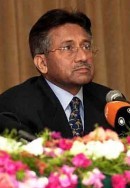
AP: Pakistan Leader Sees Closer Ties With Myanmar Regime
YANGON, Myanmar (AP)--Gen. Pervez Musharraf ended the first
visit in 16 years by a Pakistan leader to Myanmar Thursday,
confident of expanding ties between the two military
governments. Musharraf said there was a special solidarity
between himself and the Myanmar regime leader Senior Gen. Than
Shwe as they were both military men, bonded by the culture of
"uniform."
"It is Pakistan's desire to get closer to Myanmar. The
future looks bright," Musharraf told a press conference at
Yangon airport, at the end of his three-day stay, before
departing for Vietnam.
"We are desirous of proceeding on a faster track with
this mutual relationship in trade, commerce and economy,"
he said.
Myanmar and Pakistan closely cooperate in defense but
bilateral trade currently amounts to less than $20 million a
year. Both countries face diplomatic isolation as they are
governed by unelected military regimes.
Myanmar faces sanctions from the West because of its poor
human rights record and failure to turn over power to a
democratically elected government.
Musharraf's visit is the first by a Pakistani head of
government since that of military ruler Zia-ul Haq in 1985. Only
leaders of Southeast
Asian countries and the prime minister of China, which is
Myanmar's closest ally, have visited in the past 13 years.
Musharraf invited Than Shwe to make a reciprocal visit to
Pakistan.
During this week's visit, the two leaders witnessed the
signing of a memorandum of understanding for cooperation in
science and technology. Close relations with Pakistan are often
seen as the result of uneasy relations between Myanmar and
India, Pakistan's archenemy. Pakistan is believed to supply
small arms to Myanmar.
But a visit by Myanmar's army chief Gen. Maung Aye last year
signaled a thaw in relations with India.
Source: AP, May 3, 2001
TOP
AP:
Philippines VP Says He Was Refused Audience With Suu Kyi
MANILA (AP)--Vice President Teofisto Guingona said Thursday
he sought an audience with democracy leader Aung San Suu Kyi
during a visit to Myanmar early this week but was turned down.
Guingona said many Philippine pro-democracy groups appealed
to him to seek a meeting with Suu Kyi and he relayed their
request to Myanmar Foreign Minister Win Aung, who didn't oblige.
Win Aung replied the Myanmar government has started a dialogue
with Suu Kyi's group in an bid to foster reconciliation,
Guingona said.
"We don't want confrontation with the lady so she
herself has expressed that it is better at this time not to have
outsiders visit," Guingona quoted Win Aung as saying.
He said he was satisfied with the explanation. Guingona, who
also serves as foreign secretary, attended on Monday an informal
retreat at a golf course of 10 foreign ministers of the
Association of Southeast Asian Nations.
Myanmar's military junta has faced intense Western criticism
and private complaints by other Asean members over its handling
of the democracy issue.
It refused to honor the results of the 1990 general elections
that were won by Suu Kyi's National League for Democracy party.
Instead, it has severely restricted the political activities of
the NLD, and kept Suu Kyi under virtual house arrest since Sept.
22.
Hopes have been raised of a change in attitude of the junta
after it started the talks with Suu Kyi's group in October.
Source: AP, Burmanet, May 3, 2001
TOP
Financial
Times: Burma tribe takes over bank
By William Barnes in Bangkok
The ethnic Wa hill tribe in Burma - once dubbed "the
world's biggest gang of armed drug traffickers" - have
taken over a bank and a domestic airline, underlining the
importance of drug money in a troubled economy.
The United Wa State Army has taken control of the ailing
Myanmar Mayflower Bank in Rangoon and its 21 nationwide
branches. The group's other interests include a third of the
country's only GSM phone project, lucrative gem mining
concessions and, reputedly, nightclubs in the capital. The Wa
chief, Pao Yu Chang, has also recently taken direct personal
control of the unprofitable Yangon Airways. "Drug
traffickers have taken over more and more of the legitimate
economy, and are getting more brazen about it, over the last
couple of years," said a drug analyst.
The Wa were the foot soldiers for the Communist party of
Burma until they overthrew their ethnic Chinese Communist
masters in 1989. Fearing that the thousands of tough fighters -
headhunters a couple of generations ago - would link up with
rebel groups on the Thai border, the military government quickly
agreed a dozen ceasefire deals, with the Wa and others, that
allowed them a free hand to do business - which in the Shan
state often means drugs.
The regime also permitted "retired" former drug
warlords, such as Lo Hsing-han and Khun Sa, to, at the very
least, plough their drug profits into a variety of businesses.
The Burmese military claims that alone it does not have the
strength to suppress big traffickers such as the Wa, who will
"voluntarily" stop within a few years anyway.
The US State Department's latest narcotics review says that
"drug profits formed the seed capital for many otherwise
legitimate enterprises" especially in transport, banking,
hotels, real estate and airlines.
The US senators who sent President George W. Bush a strong
letter warning not to ease sanctions said "strong
evidence" linked the regime to trafficking. Some observers
are less sure about whether significant drug money ends up in
generals' pockets, although even spokesmen for the regime admit
that soldiers in the field often "tax" traffickers.
The government claims that militarily its hands are tied yet
it has been able since the mid-1990s to clear more than 300,000
villagers off a great swathe of land in the middle of the state
to try to suppress a small rebellion by "unapproved"
ethnic Shan.
Worryingly for Thailand, it has permitted, perhaps
encouraged, the Wa and their Chinese business associates to move
many thousands of hill tribe families down from their
headquarters base area to the Thai border. This is ostensibly to
make it easier to grow non-opium crops but Thai intelligence
agents claim it supports a build-up of Wa drug factories close
to the Thai border.
Source: AP, Burmanet, May 3, 2001
TOP
Musharraf
to be first Pak leader to visit Myanmar
YANGON: General Pervez Musharraf will make the first official
visit next week by a Pakistani leader to military-run Myanmar in
16 years, Myanmar officials said on Friday.
Myanmar state newspapers announced Musharraf will visit at
the invitation of General Than Shwe, the leader of the ruling
state peace and development council. Diplomats said his
three-day visit would start on Tuesday.
It will be the first visit by a Pakistan leader since the
current Myanmar regime took power after crushing democracy
protests in 1988. The last visit was by the military ruler
Zia-ul Haq in 1985.
Only leaders of Southeast Asian countries and the prime
minister of China, which is Myanmar's closest ally, have visited
in the past 13 years. Myanmar remains diplomatically isolated by
the west, which is critical of its human rights record.
Myanmar deputy foreign minister Khin Maung Win said
Musharraf's visit would "greatly contribute to the
strengthening of traditional ties of friendship and cooperation
between the two countries," he said.
The minister described bilateral relations as
"multifaceted," ranging from trade and commerce to
cooperation in international forum and defense .
Myanmar's regime, which has recently been improving ties with
neighbouring India, retains closer military ties with Pakistan,
which is India's archrival.
On Sunday, a flotilla of Pakistan naval vessels including a
submarine, a destroyer and two support ships will make the first
ever port of call by the Pakistan navy in Myanmar, at a wharf 15
km south of Yangon, a Myanmar official said. (AP)
Source: AP, Times of India, 28 2001
TOP
Burma
Has Done Nothing to Deserve Japan's Aid Reward
David I. Steinberg
WASHINGTON
Japan and Burma have had a special and close relationship
since World War II. Among the young nationalistic, anti-colonial
Burmese leaders whom the Japanese trained just before that war
were U Aung San, leader of the independence struggle and father
of Daw Aung San Suu Kyi, the current opposition leader, and U Ne
Win, who led Burma's military and the country for about four
decades.
The emotional ties between the two countries remain strong
today and good relations between these states have served the
interests of both parties. Starting with war reparations in the
1950s, Burma received about $2.2 billion in assistance from
Japan before the Burmese military coup of 1988, and hundreds of
millions in debt relief and humanitarian assistance since then.
Japan has been the closest industrialized power to the Burmese
leadership since independence.
The recent announcement that Japan would provide more than
$28 million to rehabilitate the Lapida hydroelectric project in
Kayah State that the Japanese had built in the late 1950s was
not unexpected; Japanese sources had indicated some months ago
that this was in the wind. The project is important, as the
original power plant was probably the most effective foreign aid
project in Burma sponsored by any country, and remains critical
to that society, for it supplies a major portion of the
electrical supply for Rangoon and other cities.
The Japanese government has informally justified this measure
as humanitarian assistance, because the people need electricity.
Yet that is a rationalization implying more than is stated.
Electricity is important, but Japan has been looking for
excuses to restart its foreign assistance program in Burma for a
variety of reasons, including the opportunities for business,
contracts to Japanese companies for infrastructure construction,
interest in the exploitation of Burmese natural resources,
strong emotional attachments and the strategic concern to
counter the growing Chinese presence in Burma. The informal
ongoing dialogue between Daw Aung San Suu Kyi and the military
junta and the easing, even if only temporarily, of tensions
between the two groups provide a good excuse.
Japanese officials in Tokyo were asked a couple of years ago
what they would do about foreign aid to Burma if there were only
cosmetic changes - if power still remained in the hands of the
military and human rights abuses were still evident. The
response was a studied silence. Evidently, this opportunity to
resume a foreign assistance program loomed large.
The United States has pressured Japan to withhold aid and
present a united front toward the Burmese military by insisting
that it honor the results of the 1990 election, which the
opposition overwhelmingly won. The Japanese foreign ministry has
tried to support the U.S. position because of the importance of
the overall U.S. relationship, but has been opposed in this by
the business community and other ministries.
Tokyo has formally called for better respect for human rights
and has advocated democratic change in Burma, but that position
has been undermined internally by the liberal use of the
euphemism of humanitarian aid. Japan has never followed the U.S.
position, imposed unilaterally in 1997, on sanctions on new
investments in Burma.
Because of war sensitivities, Japan has been reluctant to
levy conditionality on much of its past assistance. Funds flowed
too easily, and although many of the projects and loans were
important to the survival of the Burmese regime in its
isolationistic period of the later 1960s and early 1970s, much
of the aid was less than fruitful, simply increasing Burmese
debt that multiplied as the exchange rate hardened.
All major powers concerned with the well-being of the Burmese
people should consider how best to encourage liberalization of
the military regime. As part of this process, it would be useful
quietly to establish benchmarks of progress, each rewarded by
foreign aid or other desired actions.
It is also necessary to establish reasonable quid pro quos
along the way. One of the lessons of the 1970s and 1980s, when
foreign aid flowed too generously into Burma, was that changes
were not fostered; the result was little economic and political
progress. The Japanese may be sending too strong a signal, too
early, to the Burmese authorities.
The writer, head of Asian Studies at Georgetown University's
School of Foreign Service, contributed this comment to the
International Herald Tribune.
Source: International Herald Tribune, April 28, 2001
TOP
Pakistan
battle fleet in Burma
Rangoon,
April 27: A Pakistani naval fleet, consisting of three
battleships, one submarine, one tanker and a destroyer, have
docked at a Rangoon port for a courtesy call, the first such
visit allowed by the Burma junta, military sources said on
Friday.
The
fleet was docked at the Thilawa jetty, 20 km southeast of
Rangoon. The fleet, which was scheduled to depart with a
visiting 16-member Pakistani defence delegation on Monday,
precedes the scheduled visit of Pakistani chief executive
General Pervez Musharraf, Burmese military sources said.
Burma
and Pakistan are both deemed pariahs among western democracies
for their poor human rights records and lack of democratic
institutions.
General
Musharraf is scheduled to arrive in Rangoon on Tuesday for a
three-day visit at the invitation of state peace and development
council chairman senior general Than Shwe. (DPA)
Source: The Asian Age (New Delhi) April 28, 2001
TOP
Delhi
wary of Musharraf's visit to Myanmar
By
Atul Aneja
NEW
DELHI, APRIL 27. Concerned about the growing links
between India and Myanmar, the Pakistan Chief Executive, Gen.
Pervez Musharraf, has decided to visit Yangon early next month.
Gen. Musharraf is expected to reach the Myanmarese capital on
May 5. This is a rescheduled visit as the General had earlier
planned to visit Myanmar in early January, prior to the visit
there by the External Affairs Minister, Mr. Jaswant Singh.
Government
sources here say that there could be a strategic slant to the
Musharraf visit as Islamabad is looking for a hold along India's
eastern borders ever since it lost East Pakistan to Bangladesh.
Not surprisingly, India will monitor this visit closely.
Pakistan,
according to sources, is keen on establishing a ``presence'' in
Myanmar. That can come by negotiating ``commercial openings'',
which would allow it to send Pakistani nationals in the country
for long durations, analysts here say. China, suspected of
viewing Myanmar as a gateway for acquiring influence in the Bay
of Bengal area, has mastered the art of exploiting commercial
opportunities for promoting security goals.
For
instance, China positioned its nationals in time- consuming
infrastructure projects for construction of roads, railways,
airfields and ports in Myanmar earlier. Beijing, among others,
has developed Myanmar's Hainggyi base, constructed a rail link
from Kalemyo to Pokakku and developed the airfields of Mandalay,
Pegu and Yangon.
Similar
intent by Pakistan, though obviously on a qualitatively much
smaller scale, is bound to concern India. India realises that
the presence of any forces in Myanmar, which are inimical to its
interests, can have a negative impact on India's national
security. Several areas of Myanmar, such as the Hukwang valley
and the areas west of the Chindwin river, have been used as
bases by Naga insurgents. An assured Pakistani presence in
Yangon, therefore, can result in contacts which can be used for
promoting insurgency along India's northeastern frontiers
further.
Gen.
Musharraf's visit is expected to lead to an expansion of
military contacts between Islamabad and Yangon. Pakistan, is
looking for an opening to sell its arms. In fact, Myanmar is not
a new market for Islamabad as it has sold two consignments of
weapons and ammunition worth $2.5 million in March-April 1999.
Pakistan, which is familiar with Chinese weapons which it
imports in large numbers, is also looking for tying up with
Myanmar for the supply of spare parts. Like Pakistan, Myanmar
also imports large quantities of Chinese military equipment.
Sources
point out that of late Pakistan has been taking greater recourse
to arms sales as levers for drawing diplomatic benefits. For
instance, its military sales to Sri Lanka during the heat of an
LTTE offensive has been a factor in bringing it closer to
Colombo.
Given
Pakistan's proximity to China, India will closely observe the
extent to which the Myanmarese react to Islamabad's overtures
during the Musharraf visit. As of now, the Myanmarese are keen
to ``balance'' their close relations with China by forging
strong ties with India.
The visit of
General Maung Aye to India and the trip by Mr. Jaswant Singh for
the inauguration of the strategic Tamu- Kalewa road link was
interpreted here as a manifestation of this policy. Any
deviation from this stance, during the Musharraf visit, is
expected to activate India's security concerns.
Source:The
Hindu (New Delhi)
,April
28, 2001
TOP
Illegal
gambling widespread in Burma
By
Sein Win
Rangoon:Illegal
gambling business has mushroomed throughout Burma and some
observers say that the ruling regime, by neglecting the growing
illegal business and in fact encouraging it in some ways, is
diverting the people’s interest from politics to day-to-day
struggle. Gambling and betting are at present widely spread both
in major cities such as Rangoon, Mandalay, Prome and the border
areas. The authorities, receiving kickbacks and bribes, are
pleased to stay as a mute spectator to this growing illegal
business, which has been steadily destroying the spirit of the
people.
“Chai-hti”
which is taken from the last three-digits of Thai legal lottery
prize, “Hnna-lone-hti” which is from the last two-digits of
Burma’s legal Fifty-lakh lottery prize, “Lay-kong-gin”
which is a gambling game played with top at the four sides
bearing pictures of four animals and “Soccer betting” are
major illegal gambling widespread in Burma.
“We
get busy on those days when “Chai-hti” and “Hnna-lone hti”
are declared. Gambling agents deposit or withdraw their huge
amount of money, hundred or thousand lakhs on those days,”
said a staff from Asia Wealth Bank, which is the biggest private
bank in Burma.
The
poor, vendors, government staffs, rich people, etc all are
involved in this lottery gambling and betting. A staff from the
Yangon City Development Council (YCDC) told this correspondent
that everybody in her family does lottery gambling. “My whole
family play lottery. We sometimes won and then spent it. When we
lose, we are broke”, she continued. “As the construction
business which was a good business till a few years ago has
fallen now, my income (through bribe) has fallen as well and we
staffs in the Yangon City Development Council (YCDC) now a days
are busy ourselves exchanging lottery numbers”, she said.
In
this gambling business, some Buddhist monks have surfaced to be
able to give “right” lottery numbers and they are famous
with many followers. “Some won and some lost. They won’t
have an interest like that in Dhama”, said a monk from New
Dagon township.
In
Rangoon alone, there are at least ten gambling umpires, which
have several agents who work and in turn get the commission. The
gambling dens get protection from police by bribing (call
“line-kyay” or Hafta money) the authorities.
“It
has been very good in recent months. I always give
“line-kyay” to the authorities such as division, district
and township police and intelligence agencies. I never get
arrested. At least they send me a massage before they come to
raid. It cost me about twenty-five thousand kyats per month as
“line-kyay”, he continued. “You can see the sellers of
Cha-hti and Hnna-lone-Hti everywhere even in the military
compound and police station”.
There
are many people who dislike the situation as the illegal
gambling has become daily business for the people. “I am
really worried that people are everyday involved in this
gambling. It is like in those days of King Thi-Baw age when the
King himself encouraged the people to bet”, said an elderly
citizen who survives on a small shop in Rangoon.
The
cease-fire groups such as Wa and Kokant own the major part of
the gambling business. They transform their black money (heroin
money) into legal “white” money through these gambling
businesses.
Some
say that the military regime is skillfully deceiving the people
by throwing them into the gambling-whirlpool so that the people
are not involved in politics.
Source: MN news April 24, 2001
TOP
Asian Wall Street Journal: Ethnic Conflict Clouds Myanmar
By Barry Wain
MAE HONG SON, Thailand -- Secret talks taking place in
Myanmar offer the prospect of a political breakthrough, as far as the
international community is concerned. The discussions began last October
between the ruling State Peace and Development Council and Aung San Suu
Kyi, who heads the National League for Democracy. While nothing has
been disclosed about the agenda or progress, the world waits to
see if the military and its democratic opponents can overcome their
stalemate and normalize conditions in the country formerly called Burma.
But that isn't the way it appears to many of the nation's
ethnic minorities, most of whom have fought for autonomy or
independence for half a century. They regard the dialogue as a meeting between
two factions of Burmans, the ethnic majority, who account for
about 70% of the population. The minorities not only feel slighted by
their exclusion from the discussions, but also convinced that long-term peace
and stability demand their participation.
"All the ethnic groups are the same," says Doh Say,
an official with the "foreign office" of the Karenni government in
exile on the Thai-Myanmar border. "We don't trust Burmans."
These dissident voices amount to a reality check. While the
democracy movement has dominated the political scene since the military
refused to recognize the results of an election in 1990, won
overwhelmingly by the NLD, the issue that has torn the nation apart since
independence in 1948 is ethnic aspirations. Whether or not Ms. Aung San Suu Kyi
reaches an accommodation with the SPDC, the absence of a comprehensive
settlement between Burman Yangon and the diverse hinterland darkens the
future.
The trouble goes back to the country's original constitution,
which provided for power to be divided between Burma Proper and the
ethnic states. Among other things, it allowed for every state except
Kachin to secede after 10 years. author Martin Smith describes it as
lopsided and riddled with inconsistencies as any treaty drawn up in the
era of British rule. "In short," he says, "it was a
recipe for disaster."
Almost immediately, the new administration was faced with the
possible disintegration of Myanmar. In addition to the hill
people who revolted, the Communists withdrew from the government and
took up arms while Muslims from the Rakhaing area also joined the
insurgency. For the minorities, the final straw was Ne Win's military coup in
1962, followed by the abolition of the constitution.
The military leaders who retook control after troops shot and
killed thousands of pro-democracy demonstrators in 1988 have
attempted to end the decades of civil war. They have negotiated cease-fires
with 17 armed groups, allowing them to administer their own zones and
regions and keep their weapons, in return for the development of
infrastructure. At least five armed outfits continue to battle the Myanmar army.
Although most of the cease-fires have held, allowing the SPDC
to extend its nominal authority over large stretches of the
frontier, some of the groups have become disillusioned with the deal. For
example, the Kachin Independence Organization, which agreed to a
cease-fire in 1993, saw an internal coup earlier this year, with Zau Mai, the
chairman, deposed and arrested. Rivals accused him of gaining
personally from the cease-fire, as well as being dictatorial and unwilling to
listen to younger members.
Nor has the SPDC been able to organize a new constitution
that addresses the ethnic fissures that will otherwise fracture
the country again. A hand-picked National Convention began the drafting
process in 1993, but has effectively stalled since 1996, when the NLD
walked out. While the SPDC has been able to insist on delegates writing
provisions to ensure continued significant military influence, it has
failed to find the language for the crucial political balance between
the center and the periphery.
It's only natural that Mr. Doh Say's Karenni government in
exile, formed around the Karenni National Progressive Party, should
be entirely unmoved by a possible compromise between the SPDC and the NLD.
After all, the party and its armed wing, the Karenni Army, have
been fighting and dying for independence since the 1950s. A cease-fire
arranged in 1995 collapsed within three months.
But anecdotal evidence suggests that other ethnic minorities,
on both sides of the border, are just as wary, including those who
are observing cease-fires. Despite many differences, they seem to share a
visceral distrust of the Burmans that won't easily be overcome. While
they tend to give Ms. Aung San Suu Kyi, daughter of assassinated
national hero Gen. Aung San, the benefit of the doubt, they're good will
hardly extends to the rest of the NLD leadership, or to the military
brass.
The extent of the ethnic divide showed up in a recent survey
by a doctoral candidate who is researching the Kachin community.
She asked 45 college-age students, mostly offspring of Kachin Independence
Organization leaders, to list the characteristics of various
ethnic groups. Burmans ranked lowest -- described as lying,
pretending, cheating, insincere and the like. The Buddhist Shans were as
good as the Christian Kachin. Even Chinese, though often described
negatively, ranked ahead of Burmans, in the eyes of the Kachin students.
Given the depth of these sentiments, it isn't surprising that
the ethnic minorities have reservations about Ms. Aung San Suu
Kyi talking in private with the top generals of the SPDC. They were
disappointed she didn't let them know, at least informally, before the
official announcement. The silence since the dialogue started six
months ago only heightens their anxiety. Still, they are sure that
reconciliation, the declared objective, is out of the question without their
presence.
The minorities worry that Ms. Aung Suu Kyi might be tempted
to join a coalition with the military, as widely speculated, a step
they would regard as mere Burman power sharing. They make the point that
democracy, to have any meaning, must be introduced nationwide. "It
is important that these parties show more sincerity toward the ethnic
groups," says Seng Du, general-secretary of the Pan Kachin Development
Society.
Most minority groups don't doubt that it would be easier to
make their case to a government led by Ms. Aung San Suu Kyi. But
while they have heard that she supports a federal system -- the only
arrangement under which many of them would agree to remain part of
Myanmar -- they don't think it would be endorsed in a democratic referendum.
"The Burmans will not accept federalism," says Hte Bupeh,
chairman of the Karenni National Progressive Party.
Source:
Burmanet, April 24, 2001
TOP
|