



Claude Monet, Impression: Sunrise, 1876, Paris France.
What Does It All Mean?
Sometimes in art we get bogged down with ''isms'', especially when we deal with the art of the twentieth century.
If you look at the history of art from around 1900 to the present, you will see no less than 37 ''isms'' or stylistic changes that reflect the way artists have seen the world around them.
Impressionism and Post Impressionism were two large and influential movements that started the ''ism'' ball rolling in the art world. In order to understand the art produced during this period, we must first understand the terms.
Impressionism
Impressionism began in France as artists around the turn of the century began to paint in a new and radically different way than their predecessors. It occurred to artists of this period that they did not have to follow traditional notions of representation in their painting. Perhaps it was the new social conditions brought on by the industrial revolution, or the political turmoil of the era that sparked this creative experimentation among French painters. Perhaps it was the easy accessibility of images brought about by the development of the camera. Regardless of the source, painters began to look at the world around them in new ways, and to reflect this new and dynamic vision on their canvasses.
How Do I Tell An Impressionist Piece?
Impressionist works of art have many similarities that make them easily identifiable from art of previous eras. Impressionist painters largely painted scenes reflecting the landscape or the outdoors. They tried to capture the effects of light and atmosphere on their subject matter, and did so by painting with short rapid brush strokes leaving dobs or spots of colour. These colours, usually pure or right out of the tube, were not mixed on the canvas or in the palette before application, but were to be blended visually by the eye of the viewer. Impressionist painters also painted informal subject matter, and placed them in equally informal compositions. See how many of these traits you can identify in each of the paintings below.

Claude Monet, Rouen Cathedral, 1894, France.
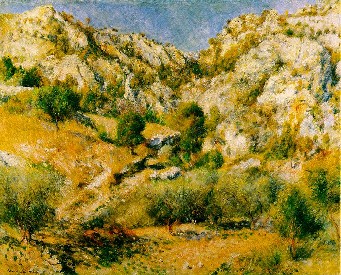
Pierre Auguste Renoir, Crags at L'Estaque, 1882, France.

Pierre Auguste Renoir, Moulin de la Galette, 1876, France.
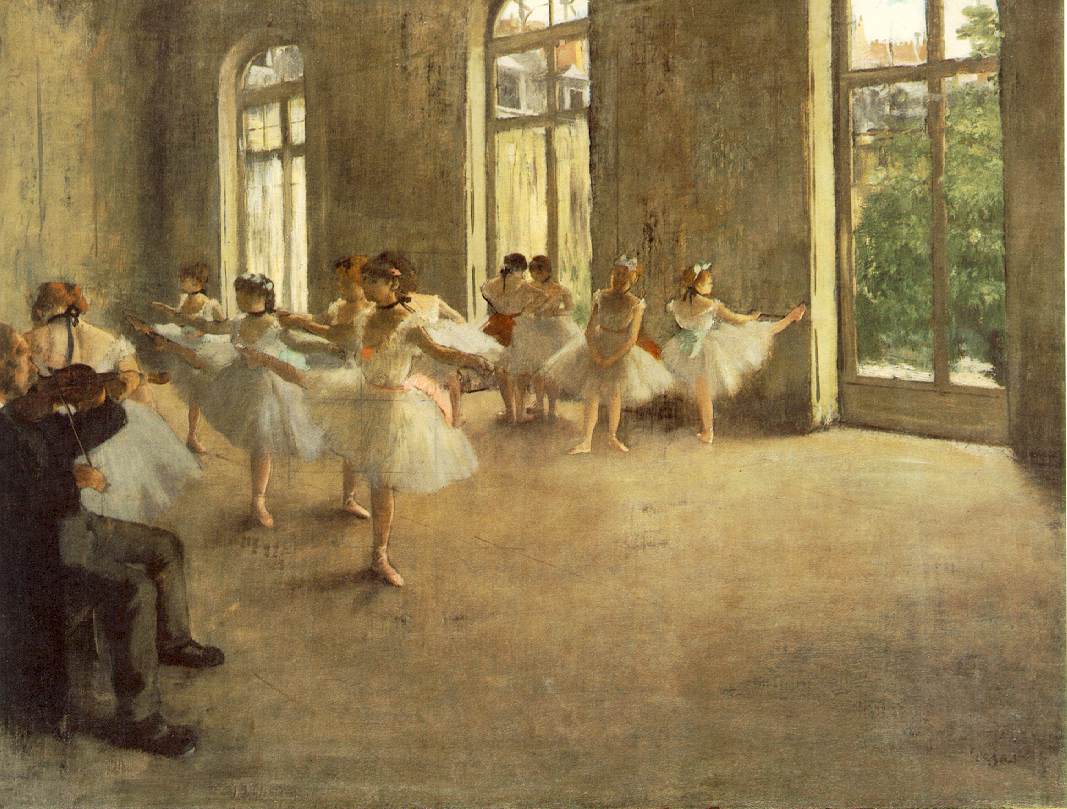
Edgar Degas, Rehearsal on the Stage, 1876, Paris, France.

Edgar Degas, The Glass of Absinthe, 1876, Paris, France.
Post-Impressionism
Post-Impressionist painters took many of the ideas pioneered by the impressionists, and added their own individual touches.
A leader of the Post-impressionist movement, Paul Cezanne believed that Impessionist paintings lacked solidity and form.
By painting his subject matter in a series of planes, and using warm and cool colours, he infused his pieces with a new sense of solidity and form unknown to his predecessors.
How could his pieces below be identified with the impressionist movement. How did he take them one step beyond?
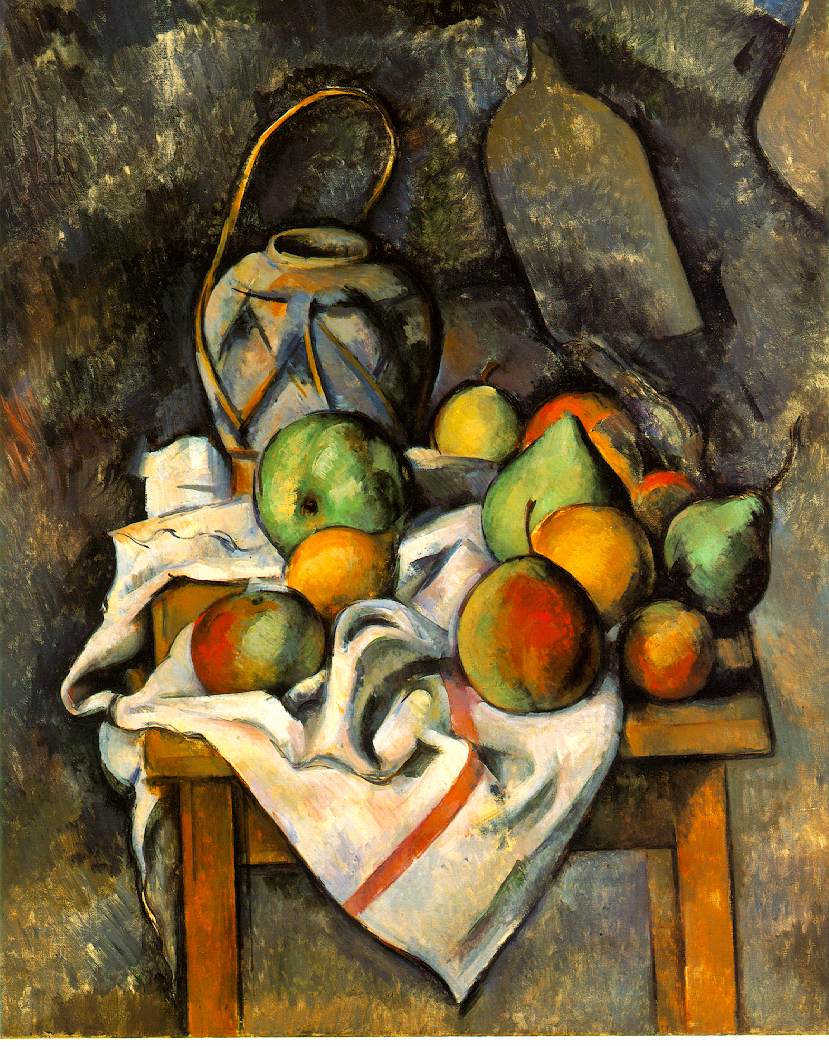
Paul Cezanne, Still Life with Ginger Jar, 1894, France.
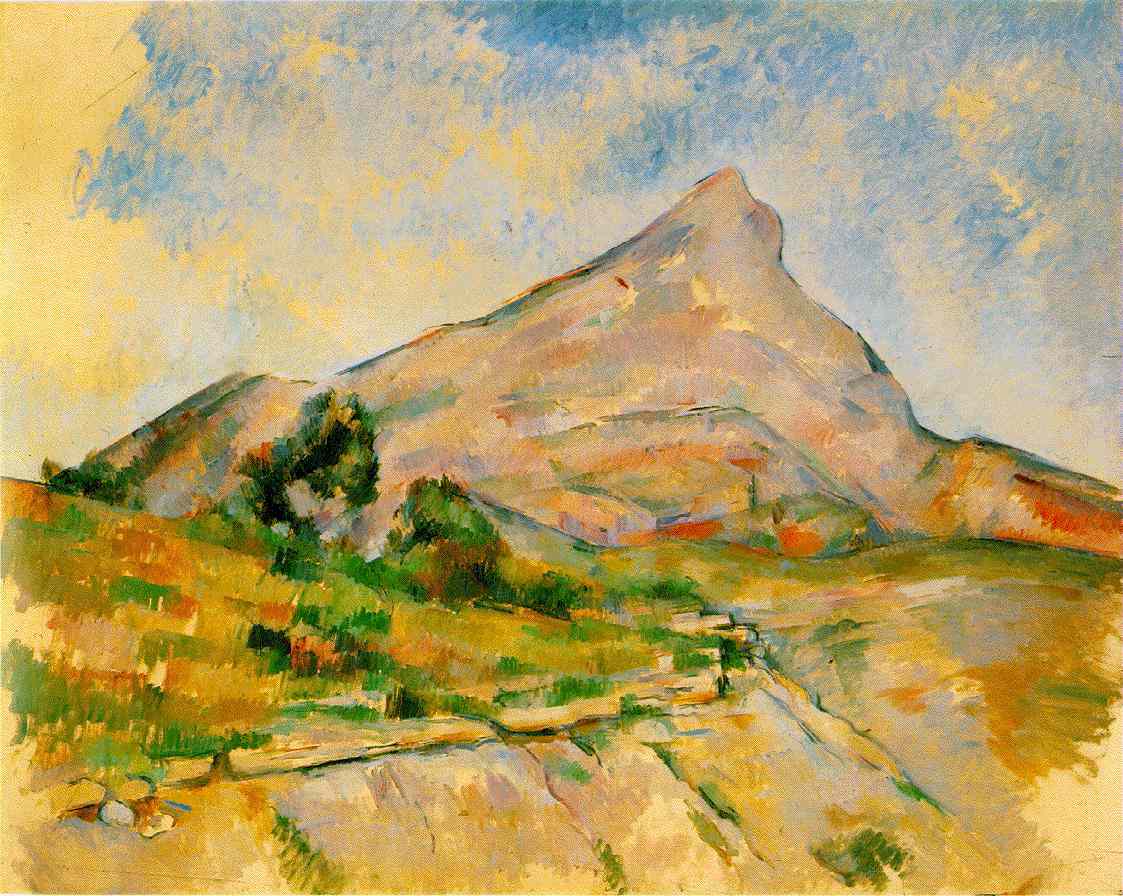
Paul Cezanne, Monte Sainte-Victore, 1905, France.
The most famous of the Post-Impressionists was Vincent Van Gogh. Van Gogh offered his viewers a strange new perspective in his works. Borrowing the Impressionists brush strokes and use of pure colour, Van Gogh often mixed his colour directly on his canvas, and applied his paint using knives and utensils to create a thick impasto on the surface of his works.
Looking at the paintings below, do you think Van Gogh painted what he felt or what he thought? Can we tell what kind of emotions Van Gogh might have been experiencing at the time of the paintings? Which is more important, to paint what you feel, or exactly what you see?
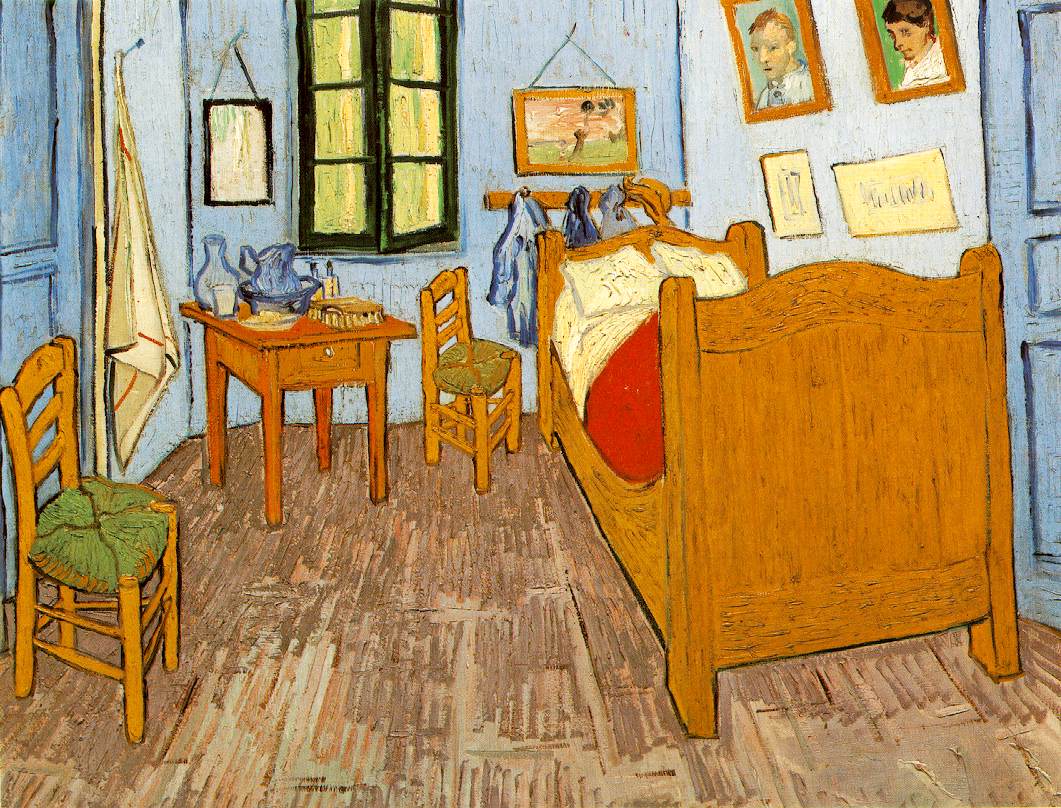
Vincent Van Gogh, Bedroom at Arles, 1888, Arles France.
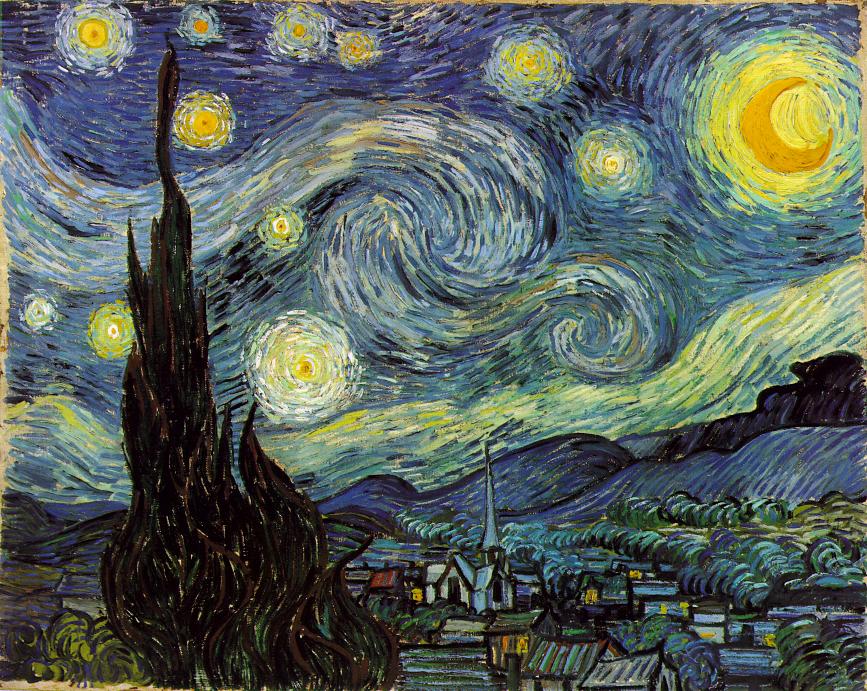
Vincent Van Gogh, Starry Night, 1889, France.
Paul Gauguin used the pure colours and the freedom to distort his subject matter that the Impressionists had brought to painting and took these a step further, simplifying what he saw into decorative patterns on his canvas that appeared flat and unrealistic to the viewer at one point, highly realistic and three dimensional at another. Painting from his retreat in Tahiti, Gauguin lived and observed the Maori people, and used both the techniques he learned from the Impressionists and the techniques he developed as a Post-Impressionist to capture
the spirit and beliefs of these people, in their paradise-like environment. What can you decipher from Gauguin's paintings below? How has the artist added his personal style to make these works more than what could be captured on photographs?
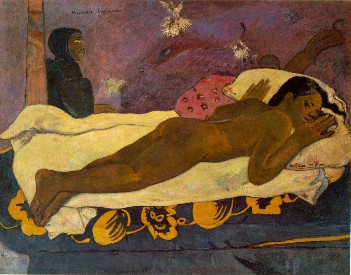
Paul Gauguin, Spirit of the Dead Watching, Tahiti, 1902.
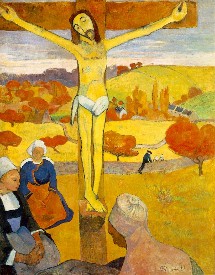
Paul Gauguin, The Yellow Christ, France, c.1902.




