


France during this era was faced with three opposing movements in art: Neoclassicism, Realism and Romanticism. Each style has it's own proponents and followers, but only one style was endorsed under Napoleon. Neoclassicism was the only style recognized in French 'Academies', the officially sanctioned and controlled regulators of art during this era. The French Academies would produce yearly exhibitions of officially sanctioned work called 'Salons'. If you were an artist during this era, you would have little chance of selling your work if it was not endorsed by the government in this manner.
Neoclassical Art
Neoclassical art, since it was produced to please the French state, was often filled with emotive propaganda. It used classical Greek and Roman themes and compositions (and sometimes even subject matters) to glorify France under the reign of Napoleon. Neoclassical art usually exudes calmness, order and stability.
What do the two pieces by David show? How could this be considered propaganda? What about the work by Ingres? How does it use classical forms, and for what purpose does it do so?
Romanticism
In contrast to Neoclassical art, Romantic artists did not produce their work with the interests of the state in mind. Romanticism was a style that was full of theatrical drama, often featured exotic subjects, with compositions that swirled and moved the eyes. Romantic artists often used bright colours in their works as well. Can you pick up any of these features in the works above? How would you describe the subject matter of each piece? From the information above, can you discern whether or not the Romantic movement was popular throughout Europe?
Realism
The artists who developed realism did so to depict the world around them in the simplest and plainest way possible; through an almost photographic representation of their surroudings. Many artists of this genre focussed on plain ordinary events to paint, recording the world of the industrial revolution and the events that were occuring in America as well in bleak, simple scenes. How would you describe these above paintings in contrast to the works of the Romantic style? Which is more interesting to you? Why would artists wish to paint in this manner?
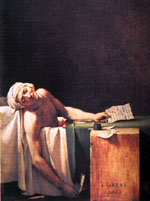
Jacques Louis David: The Death of Marat, France, 1793.
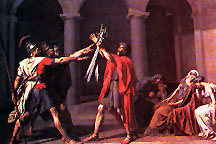
Jacques Louis David: Oath of the Horatii, France, 1785.
Jean-Auguste Dominique Ingres: Apotheosis of Homer, France, 1827
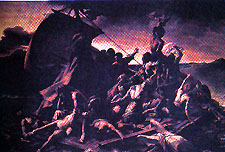
Theodore Gericault: The Raft of the Medusa, France, 1819.
Eugene Delacroix: The Lion Hunt, France, 1861.
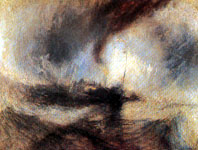
Joseph Turner: Snow Storm, England, 1824.
Gustave Courbet: Burial at Orrans, 1849, France.
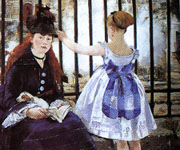
Edouard Manet: Gare Saint Lazare, 1873, France.
Winslow Homer: Breezing Up, America, 1876.



