


THE SMALL BOX RESPIRATOR
The Small Box Respirator was without a doubt the single most important piece of equipment carried by a WWI soldier on the battlefields of France. The mask carried by the Doughboys was either a British mask or a virtual copy of that worn by the British. It consisted of a rubberized fabric face piece held in place by elastic straps. A supply hose ran from a canister containing a variety of filtering elements. Inside the mask was a mouthpiece similar to that found on a snorkel. There was also a clip that was placed over the nose to prevent breathing any air that was not drawn directly through the mouthpiece. A one way flutter valve on the front of the mask allowed exhaled air out but hopefully kept gas from entering the mask. The mask and filter canister were carried in a canvas bag that was worn secured in the center of the chest for easy and quick access. The entire arrangement was clumsy and uncomfortable. The masks were hot and difficult to breath through. The eyepieces tended to fog up and limit vision. Movement was restricted by the necessity of making sure the mask did not get knocked aside or damaged. These factors, aside from the casualty effects on unmasked or improperly masked soldiers are what made gas warfare so effective. The enemy could be worn down physically and morale affected by repeatedly causing your opponent to don masks
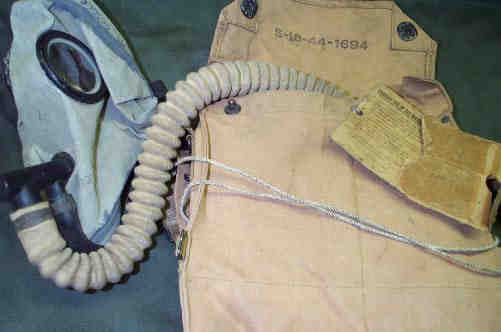

Inside view of mask showing mouthpiece and nose clip

The mask shown is a reproduction and can be purchased through SCHIPPERFABRIK
Bag with 27th Division Insignia.
Post-war Victory Parade item
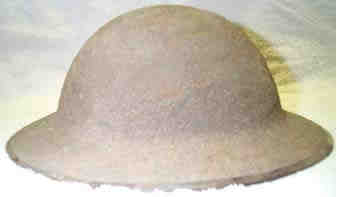
HELMET, M-1917


BELT, CARTRIDGE, DISMOUNTED M-1910
More commonly called a rifle belt. It held 100 rounds of rifle ammunition in 10 pockets; two 5 round stripper clips in each pocket. The top belt is of a woven construction and is called the "Mills Belt" after its manufacturer The bottom belt is of the more common sewn style. Holes along its bottom edge allowed equipment to be attached to the belt.
BELT, PISTOL, DISMOUNTED


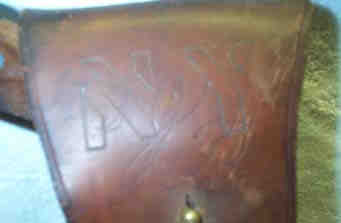
POCKET, MAGAZINE, PISTOL

Used to hold two magazines for the M1911 .45 cal automatic pistol
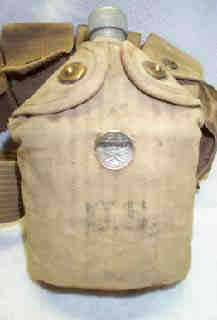

The brass equipment disk in the left view indicates use by a member of the 105th Infantry, 27th Division
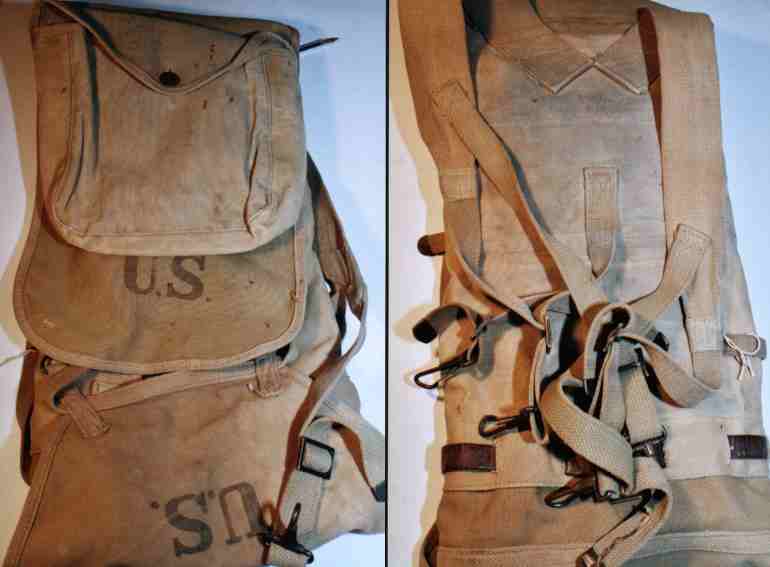
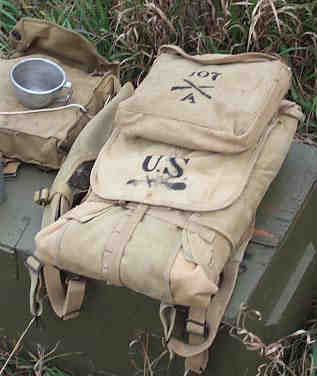
ENTRENCHING TOOL and COVER
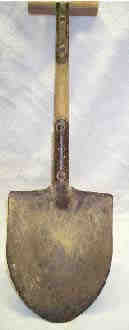

WIRECUTTER

Marked: US DCHS CO 1918
Length @ 14½"


M-1917 & M-1918 TRENCH KNIFE

Marked: U.S. L.F.&C. 1917
Blade- 9" O.A.L. 14"

Marked: U.S. 1918
Canvas covering on sheath is a field modification
PICK-MATTOX


BOLO KNIFE, M-1917

A heavy bladed chopping knife issued primarily to machinegunners for clearing lanes of fire
FIELD DRESSING POUCH


MEATCAN, M-1910 with UTENSILS & CONDIMENT TIN

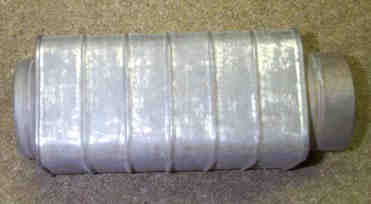
Condiment tin has compartments for coffee, sugar and salt
SHAVING KIT


A clean shave was a matter of life and death for the Great War Doughboy. Facial hair would have hindered the fit of the gas mask and caused it not to form a tight seal. This is one of many styles issued. Several styles were also sold commercially. Not shown in this view is the mirror that is part of this kit.


