
Invertebrate Fossils
There are many invertebrate fossils in NJ from the Cretaceous
and Tertiary periods.
The most common are oysters. A layer several feet thick
of oysters are at the base
of the Navesink formation, and can be seen at Poricy
Brook, Big Brook, and other
well known collecting spots.
 Cretaceous pelecypods
Although the original shell material of the thick oyster
shells usually survives, most
thin shelled clams and snails are usually destroyed,
leaving only a mold or cast of the
shell. The Woodbury formation is one of the few formations
to have well preserved
shell material of gastropods, ammonites, and delicate
clams. The thick, heavy clay
protected the shell from leaching, (a process where water
dissolves calcium carbonate
and other minerals from fossils.)
The best places to find fossils are either construction
sites with fresh excavations,
or quickly flowing streams eroding the stream bank.
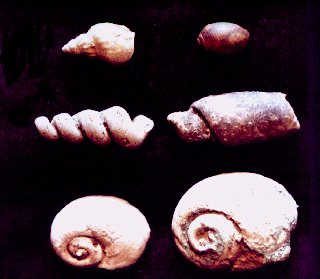 Cretaceous
gastropods
Cretaceous
gastropods
Ammonites are usually found as fragmentary casts, though
complete specimens
over 18 inches have been found. At Atlantic Highlands,
a unique fauna of
well-preserved ammonites are present.
Crustacean fossils include crabs and lobsters, but only
the claws are common.
| Go to Vertebrate Page |
